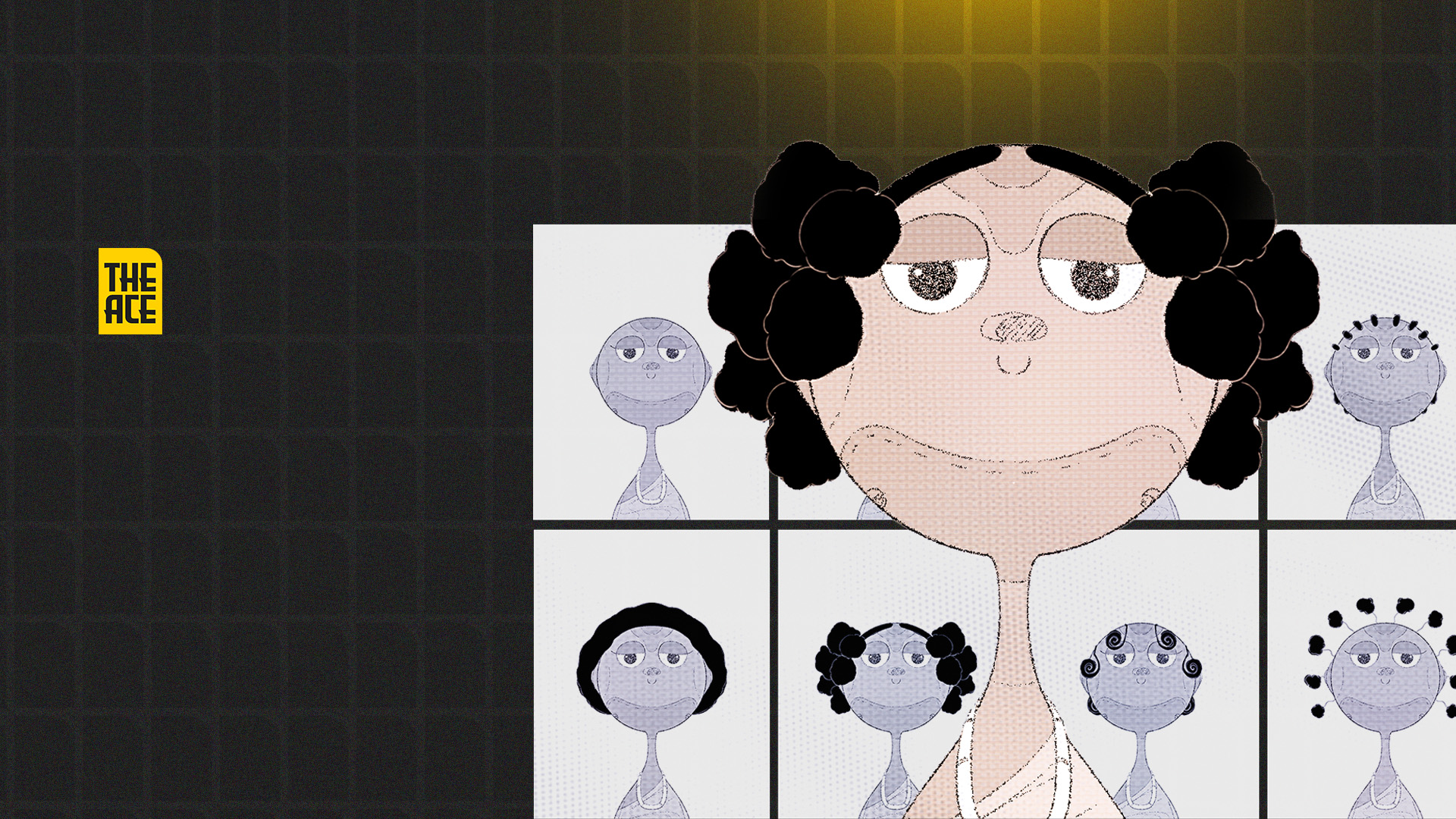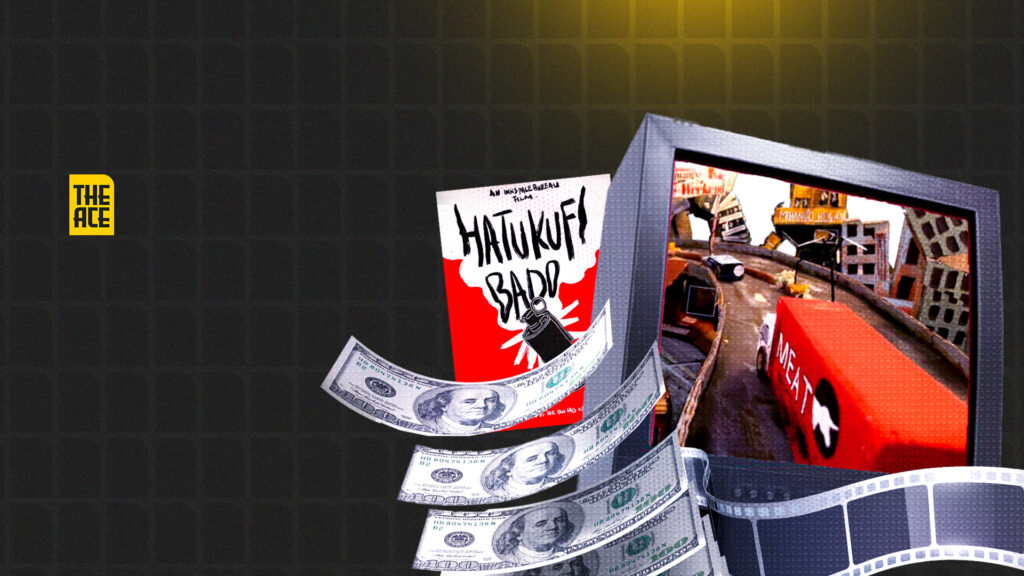
A thirty-second scene can take a full day to shoot. The puppet moves a fraction of an inch, the frame is exposed, the puppet moves again, and that sequence repeats itself dozens of times for every second that will eventually appear on screen. Before any of that begins, there is a week of story work, storyboarding, and building the sets and characters that will be photographed one frame at a time. After it ends, there is compositing, cutting, and sound design still to come. There is no fast version of stop-motion animation. There is only a version where somebody has already decided to pay for the time it demands, and a version that never gets made.
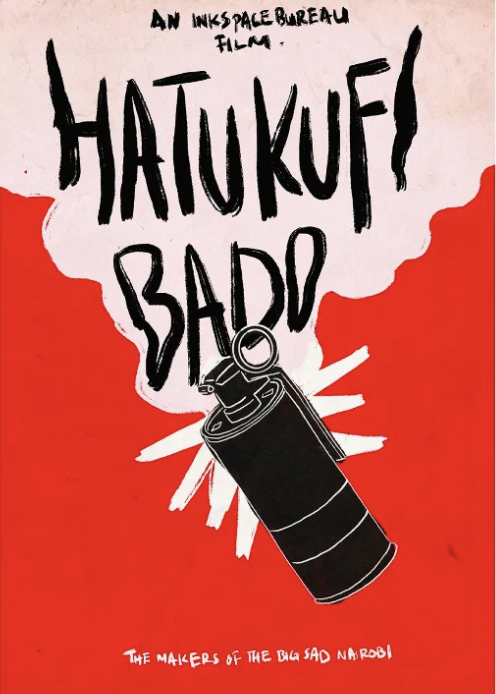
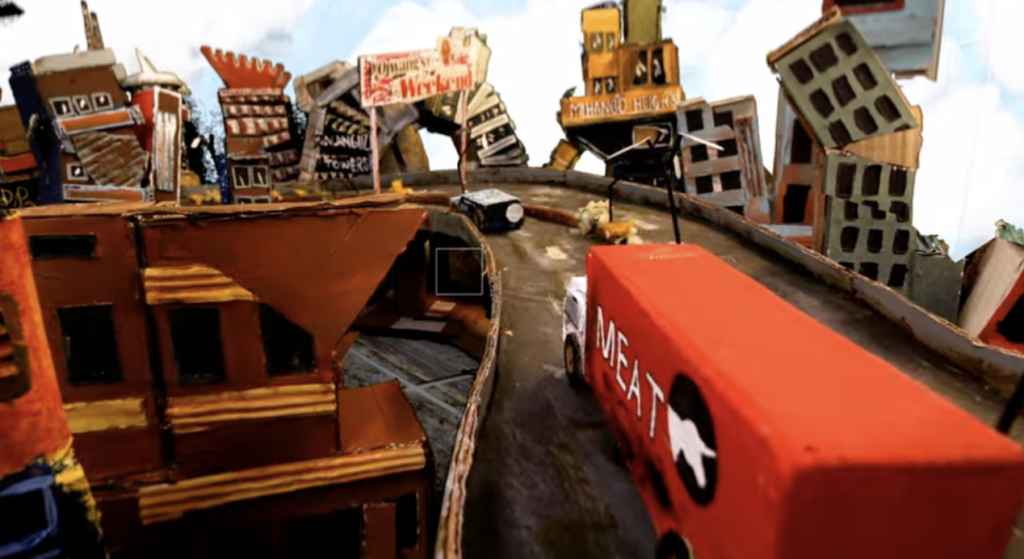
Hatukufi Bado, the second stop-motion film from Nairobi-based studio Inkspace Bureau, is an active case study of how that time gets bought. The film, a twenty-five-minute work following two young women, Shinde and Joy, through a single day of protest, art, and state repression in Nairobi, is the follow-up to Inkspace’s earlier short The Big Sad Nairobi. That previous project used a goat character to carry the daily emotional weight of ordinary life in the city, earning the studio festival circuit runs across two instalments (Streamline Feed, 2026; The Star, 2023). Inkspace describes itself as an independent studio making handcrafted animated and live-action work “told entirely on our own terms” (The Inkspace Bureau, 2026), and Hatukufi Bado is the clearest test yet of what that independence costs, and how it must be funded.
The first thread of financing came through Kyansimire Oroni, a stop-motion animator with Inkspace Bureau, as well as the collective efforts of the partners, Kinyeki Karani and Mutei Ndumbo. They received a grant of Ksh 2 million from the French Embassy’s Hii Stage II fund, a programme supporting digital and performance artists in Kenya, specifically to shoot the film (Owino, 2025). The second came recently, when communications consultant and storytelling instructor Nepurko Keiwua joined the production as Executive Producer, putting in funding at what she has described as the top tier the team offered, as a creative investment. Writing about the decision, Nepurko was direct about what the role of an Executive Producer actually involves on a project like this: finding money and removing the obstacles that stand between a team and the time it needs. She described watching Inkspace’s founders make things that, in her words, should not have been financeable, and finance them anyway, a track record she pointed to as the reason the investment was not a difficult decision for her to make (Nepurko, 2026). The third thread is public. Inkspace co-founder Sheldon Mutei, a stop-motion animator and fine artist, has been running a crowdfunding campaign for the film alongside the grant and the private investment, which he has described as a roller coaster in a business he otherwise lives day to day. At the time of writing, Mutei reports the campaign has reached thirty per cent of its target, a figure he shared publicly alongside thanks to the people who have already contributed to it (Mutei, 2026).
Three funding sources, three different logics. A government-adjacent cultural grant awarded to an individual artist for a specific production. A private, at-scale investment from someone newly attached to the project as Executive Producer, made based on a working relationship rather than a pitch deck. And a public crowdfunding campaign, still open, still short of its goal, run by the studio’s own co-founder in parallel with both. None of the three on its own appears to be enough to fully fund a twenty-five-minute stop-motion film. Together, they represent the kind of patchwork financing that independent animation in Kenya, and arguably across much of the continent, is currently built on: institutional support that arrives project by project rather than studio by studio, private capital that depends on personal relationships and conviction rather than established investment channels, and public appeals that ask an audience to fund what the market has not yet decided to fund on its own.
Set against each other, the three threads pull in different directions, and each solves a problem the others cannot. The grant is the fastest and least personal of the three: money awarded on the strength of an application and a track record, arriving with reporting obligations attached but no ongoing claim on the film itself, and no requirement that Oroni convince anyone privately that the work is worth backing. It is also, by its nature, capped and one-off; the same grant does not fund the next film. Nepurko’s investment is the opposite kind of instrument. It is larger and more flexible than a grant, and it came without a pitch deck or a formal application process, but it exists because of a specific working relationship built over previous projects, including an experiential sketch event the two sides had run together (Nepurko, 2026). That is capital that depends on being known personally by someone with money to place, which does not scale to studios without that kind of network, however much conviction they have.
The crowdfunding campaign is the most democratic of the three and the least reliable: open to anyone, requiring no relationship and no institutional approval, but also the only one of the three still short of its target at the time of writing, dependent on sustained public attention that a studio the size of Inkspace has limited capacity to manufacture on its own. None of the three, alone, resembles the kind of financing that a feature or television production in a market with an established funding pipeline could expect to draw on. Together, stacked and run in parallel, they cover the gap, but the fact that three different mechanisms were needed at once is itself the story: there is no single door in the Kenyan market that a stop-motion production this size can currently walk through.
That gap between what the medium costs and what the market is willing to pay for is the argument Nepurko made explicitly in her own account of joining the production. The talent, she wrote, was never the question; Inkspace had already proven it could make festival-ready work. What the market wants is speed, and stop-motion, structurally, has none to offer. That mismatch is what makes the Executive Producer’s job less about creative input and more about defending a schedule from everyone who wants it shortened, and explaining, repeatedly, why the format costs what it costs. It is a description of the role stripped of its more glamorous connotations, and it lines up closely with what the financing picture around Hatukufi Bado shows: a team spending as much effort securing the right to take their time as they are spending on the film itself (Nepurko, 2026).
That claim about the market is not just a producer’s frustration; it holds up against what the wider Kenyan production landscape is funding. Local broadcasters continue to commission dramas, telenovelas, reality shows, and documentaries, formats that can shoot and turn around episodes at a pace closer to weeks than months. Streaming platforms have brought real investment into Kenyan scripted content, but the money and the commissioning slots that exist are concentrated in exactly those live-action, fast-turnaround formats (Uncut Media, 2026). While tech and startup platforms in Kenya’s broader media and entertainment space have drawn over five million dollars in disclosed venture capital, virtually none of that institutional capital is structured to fund traditional film slates or artisanal, slow-turnaround animation studios (Tracxn, 2026).

Government support, through the Kenya Film Commission and instruments such as the proposed Creative Economy Support Bill, has focused on permits, incentives, and positioning Kenya as a filming destination for international productions, infrastructure that helps a location shoot far more than it helps a puppet-and-frame animation studio (Ochieng’, 2026). Nowhere in that funding conversation does stop-motion, or animation more broadly, appear as a named priority. Inkspace Bureau is not competing for a small piece of a pipeline built for its format. It is financing its work in a market whose pipeline was not built with this format in mind at all.
Mutei’s own framing of the crowdfunding push captures the same tension from the inside. Raising funds for a stop-motion film, he wrote, has been an emotional roller coaster precisely because filmmaking is his everyday work, not a side project he can be detached about. The campaign’s early momentum, and the public response behind it, appears to matter to him as much as the money itself, described as surreal evidence that people believe in the vision as much as its makers do (Mutei, 2026).
Hatukufi Bado is still in production and navigating its financing journey. What it offers, even mid-campaign, is a rare, documented case study of what it takes to fund a handcrafted, long-form animated project outside the handful of markets where that kind of production has an established funding pipeline. The actionable strategy it highlights for studios in similar markets is that treating these funding channels as sequential fallback options is a risk. Inkspace Bureau’s approach—stacking institutional grants, private relational equity, and public crowdfunding simultaneously rather than waiting for one to fail before trying the next- provides a practical roadmap for navigate-as-you-go cinema. In a market that lacks dedicated financing infrastructure for the format, the filmmakers who successfully get slow, expensive work made are the ones treating the fight for money as three distinct fights, fought in parallel from day one.
Written by Mubarak Jummah and Mujeeb Jummah
References
•	Nepurko K. (2026, July 20). What does an executive producer of a stop-motion film actually do. LinkedIn. https://www.linkedin.com/feed/update/urn:li:share:7484895977368301571/ (accessed August 2026)
•	Mutei, S. (2026, July 21). Raising funds for a stop-motion film| Sheldon Mutei. LinkedIn. https://www.linkedin.com/feed/update/urn:li:activity:7485419341174280192/ (accessed August 2026)
•	The Inkspace Bureau. (2026). About us. inkscape. https://inkspacebureau.com/
•	Owino, A. (2025, April 28). Kenyan artists bag Sh25m from French embassy to boost digital, performance arts. Home - TNX Africa. https://www.tnx.africa/arts-culture/article/2001517608/kenyan-artists-bag-sh25m-from-french-embassy-to-boost-digital-performance-arts
•	The Star. (2023, July 11). Kenyan films relay realities of everyday social struggles. https://www.the-star.co.ke/news/2023-07-17-kenyan-films-relay-realities-of-everyday-social-struggles
•	Streamline Feed. (2026, May 23). The Big Sad Nairobi review: Why the Kenyan stop-motion film matters. https://streamlinefeed.co.ke/news/the-big-sad-nairobi-review-why-the-kenyan-stopmotion-film-matters-0168faf7
•	Tracxn. (2026, July 30). Media & Entertainment Sector in Kenya. https://tracxn.com/d/explore/media-entertainment-startups-in-kenya/Uncut Media. (2026, July 22). The big screen is full. Kenyan stories need more screens.
•	UncutMediaKenya. https://uncutmedia.live/2026/07/22/the-big-screen-is-full-kenyan-stories-need-more-screens/Ochieng', J. (2026, January 28). 2025 year in review: 16 moments that defined Kenya’s film, TV and theatre industry.
•	Sinema Focus. https://www.sinemafocus.com/kenya-film-tv-theatre-industry-2025-year-in-review/
--------------------------------------------------------
--------------------------------------------------------
AI Use at TheACE
TheACE uses artificial intelligence tools to support research, drafting and analysis across Africa’s creative industries. All content is verified, edited and approved by our human editorial team to ensure accuracy, clarity and responsible storytelling. AI assists our work; it does not replace human judgment.