Truck-kun Central
Anyone who has watched enough anime knows what usually follows an unfortunate encounter with Truck-kun. One collision later, our protagonist wakes up in another world, occasionally with suspiciously convenient powers and an entirely new life ahead of them. Fortunately, getting isekai’d at Truck Central in Wuse required significantly less trauma. All it took was walking across the entrance, and for 9 and 10 October 2026, the third Abuja Comic Art Convention turned that corner of Abuja into a temporary world of comics, animation, games, cosplay and the people building communities around them.
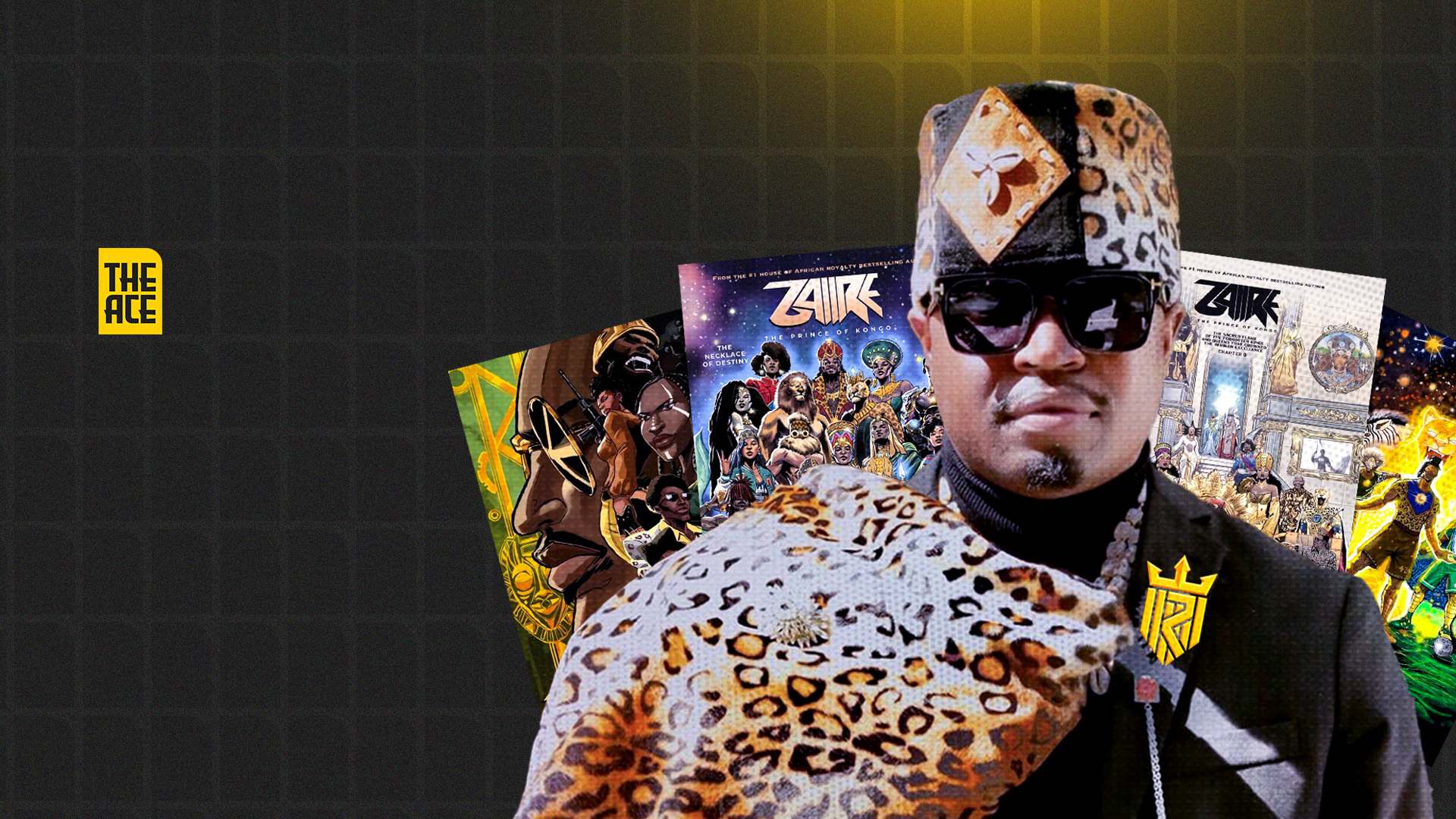
Unlike the conveniently placed gods responsible for most anime reincarnations, however, this world had very human architects. Almost immediately after entering, you could look to the left and right and find different pieces of Nigeria’s creative scene occupying the same physical space. ClubZella Comics were there. Teams from Symphonii Studios, Deeper Comics and Fable Forge made appearances, while independent artists including Maytrix XDX were among creators whose work could suddenly be encountered somewhere beyond an Instagram feed.
The tables also made the gathering feel less abstract. ClubZella’s team moved through the venue introducing attendees to Orisha Warz, its African-mythology-driven comic universe, which had grown to about five issues by the time of the convention. Symphonii Studios arrived with a wider stack that included My Cousin Is a Superhero! Issues 1, 2 and 3, One Chance, Unfamiliar Soils, MMANWU Vol. 2, and Crime and Attraction. These were not simply studio logos occupying booths; there were actual stories for people to pick up, ask about and follow beyond the event.
There were exhibitors, animators, comic creators, gamers, cosplayers and fans, all moving through a venue that made it increasingly difficult to tell where one community ended, and another began.
That mattered because after two days of attending ACAC and speaking with some of the people behind it, one word kept appearing in almost every explanation of what the convention was trying to accomplish: community.
Day One: First, We Had to Brush Our Teeth
The first day began with arguably the most important item on the itinerary: waking up and brushing our teeth. Somewhere between those preparations and arriving at Truck Central, the day became considerably more interesting.
Attendees were welcomed and given tags assigning them to different houses, including the Prophets, Giants, Travellers and Royal Family, turning strangers into temporary families and giving everyone somebody else to compete against. The house system would feed into games and activities across the convention, but the first day also made clear that ACAC wanted to operate on two levels at once. There was the convention as entertainment, where people could play, cosplay and meet others who shared their interests, and the convention as an industry gathering, where creators could argue about what the Nigerian comic sector needs if it intends to become sustainable.
The drawing competition was one of the places where those sides met. Artists worked while attendees watched, and the exhibition floor offered similar moments throughout the day, with creators displaying work that often exists more comfortably online than in a room where someone can stop, ask questions and meet the person behind it.
One of the more memorable conversations from Day One came from MerciRick, who approached the industry through media, storytelling and the question of how Nigerian creative communities communicate what they make. Her argument went much further than simply encouraging Nigerians to read Nigerian comics. For her, comics are one route through which African culture can travel, but they do not have to be the destination. Animation can carry the same stories. Film can carry them. Live action can carry them. Social and digital media can introduce them to people who might never think of buying a comic book in the first place.
That distinction matters because audiences rarely discover fictional worlds through only one medium anymore. There are millions of people who can explain Spider-Man’s powers, recognise Wonder Woman or argue about Marvel characters without having read the original comics that introduced them. During our conversation, I realised I was essentially one of those people. I know considerably more about several Marvel characters than the number of Marvel comics I have opened would suggest. Merci’s point was that African stories should be allowed similar freedom to move. A comic can become an animation; an animation can lead someone back to a book; a story rooted in culture can become something a younger generation encounters naturally rather than something preserved somewhere solely because it is considered traditional.
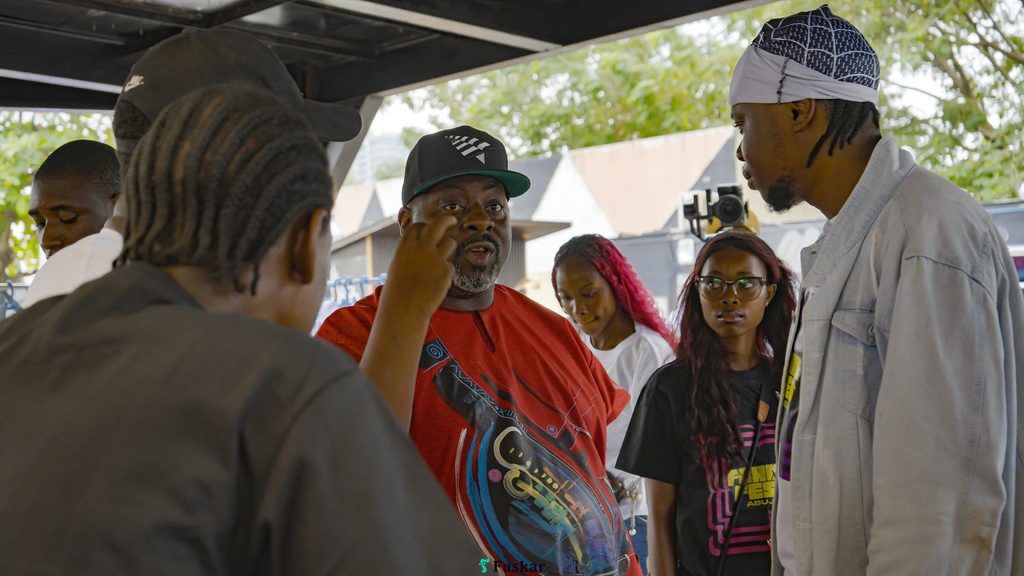
Her second concern was fragmentation. Nigeria does not lack artists, animators, comic studios, gamers or storytellers, but many of those groups are very good at existing within their own circles. In our interview, MerciRick described too many creatives as still “doing their own thing.” Her answer to that fragmentation was equally direct: “We can’t do it alone.” Studios build communities around themselves, artists develop individual audiences, gamers have their spaces and filmmakers have theirs. ACAC, she argued, should not be about one organisation declaring itself the centre of all of that. Its usefulness is in putting people who would otherwise be working separately into the same room and allowing the connections to happen there. Looking around Truck Central, the argument was difficult to ignore.
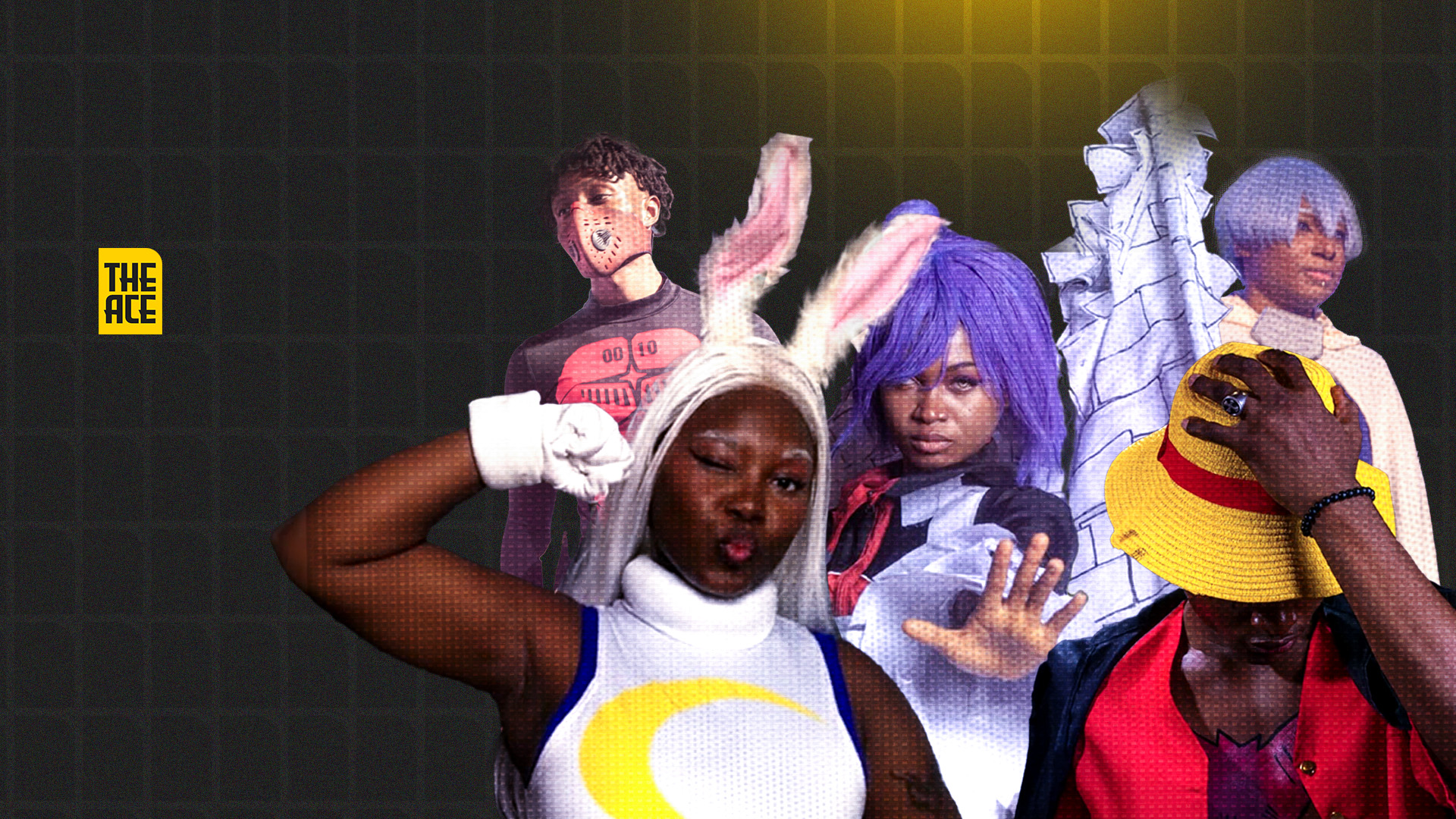
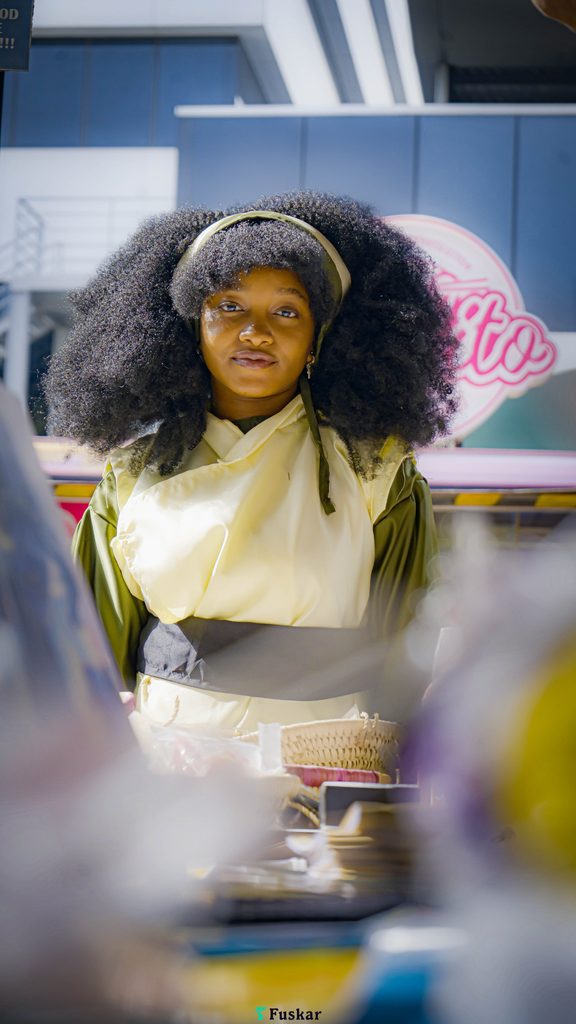
The cosplay crowd also ensured that the industry conversations never became too serious for too long. Familiar characters began appearing across the venue, including Toph from Avatar: The Last Airbender. Princess Kida from Atlantis: The Lost Empire appeared courtesy of Ella Senpai (@ella.senpai), and at another point we found ourselves talking with Tanjiro Kamado himself.
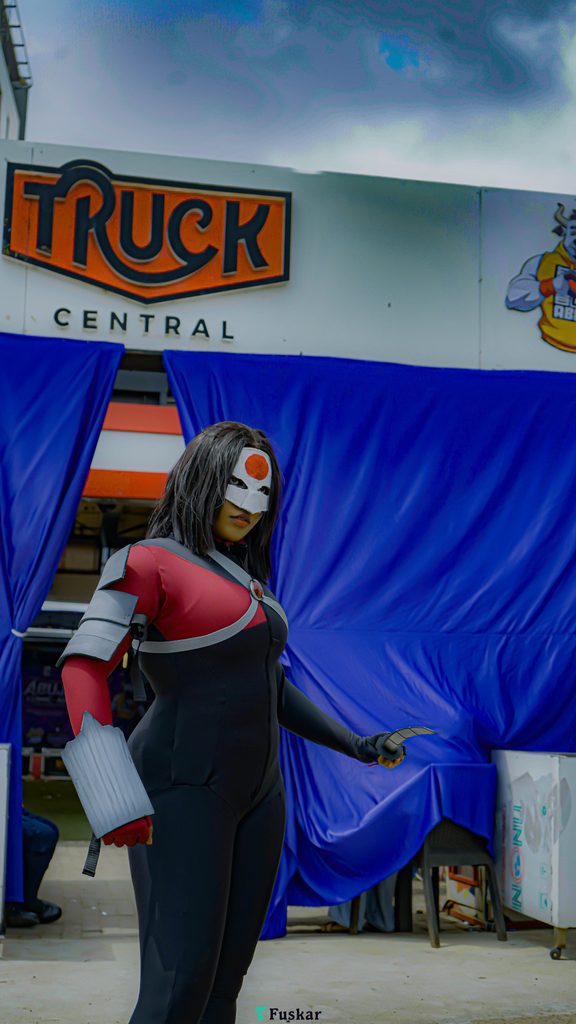
Then a smiling masked figure from Tenkuu Shinpan, or High-Rise Invasion, appeared, cosplayed by Sunday Adie Justine. Anyone familiar with the series knows that is usually a good reason to reconsider the safety of nearby rooftops, though Truck Central made it through without mysterious sniper fire.
That strange combination was part of the appeal. One minute could involve listening to people discuss intellectual property and the creative economy; the next could involve watching an artist draw or taking a photograph beside an anime character. The industry and the fandom were occupying the same space rather than being treated as unrelated worlds.
Day Two Was Apparently Not Interested in Calming Down
The second day behaved as though everything before it had simply been the tutorial level.
The house competition continued, and Kahoot entered the mix, with quizzes on general comic and pop-culture knowledge, including familiar properties such as Supa Strikas. It turned a few minutes of staring at phones into another chance for attendees to prove how much comic knowledge they had been storing up.
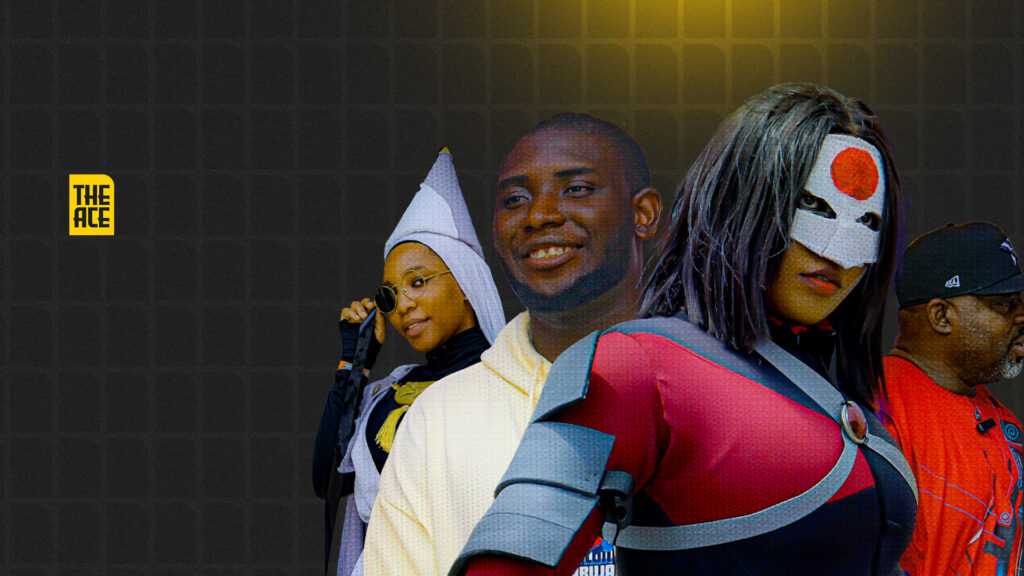
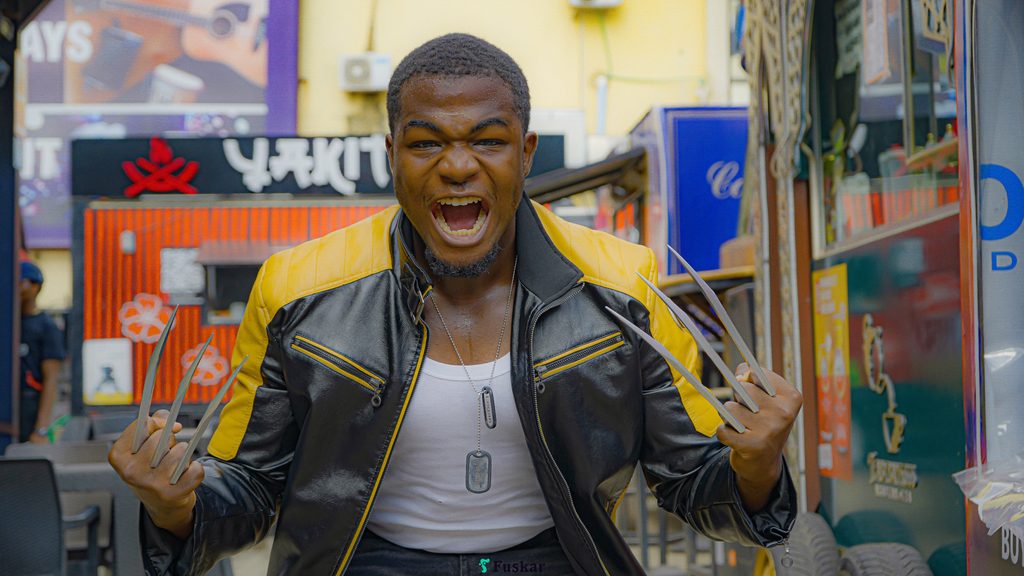
The cosplay runway gave costumes that had spent the previous day moving casually through Truck Central a more deliberate stage. Katana was among the characters represented, and Witch Hat Atelier had multiple cosplayers on the floor, including @cakey.cosplays, @doodle_bug and Douma Princess on TikTok. Wolverine appeared in two forms, a classic X-Men version and a cowboy-styled variation. One of the Witch Hat Atelier cosplayers took the top prize.
One of Day Two’s notable appearances was Serah Johnson, the actress who voices Iyanu in Iyanu, the Cartoon Network/Max animated series adapted from Roye Okupe’s graphic novel rooted in Yoruba culture. Her involvement at ACAC went beyond showing up as a recognisable name. Johnson led an approximately 30-minute voice-training session that included vocal warm-ups and introductory voice exercises, giving attendees a practical glimpse of the work that happens before a character can sound convincing behind a microphone.
Anyone who completed her session can therefore claim, with only a completely irresponsible level of exaggeration, to have begun their voice-acting training arc. Whether Cartoon Network is ready for everyone’s audition tapes is another matter.
Her presence also quietly represented something larger than celebrity. Here was a Nigerian performer whose voice now belongs to a character being watched beyond Nigeria, standing in a local convention and interacting directly with people who may eventually contribute to whatever the next stage of Nigerian animation becomes.
Day Two also brought Obi Asika, Director-General and Chief Executive Officer of the National Council for Arts and Culture (NCAC), into the exhibition space. Rather than limiting his appearance to the stage, Asika moved around the studio tables, looked through the work on display and commended creators for what they were building. He also appeared enthusiastic about seeing the convention return, an encouraging signal from a federal cultural agency at an event making the case that comics, animation and games belong inside Nigeria’s wider creative-economy conversation.
Abuja Does Not Need to Become Lagos Overnight
Of course, any conversation about Abuja Comic Art Convention will eventually run into another name: Lagos Comic Con.
The comparison is almost unavoidable. Lagos Comic Con has had years to build visibility, cultivate its audience and develop the kind of convention culture where cosplay, comics, gaming and fandom arrive with an audience already prepared to participate. Abuja is not there yet, and pretending otherwise would do ACAC little favour.
By my own observation across the two days, attendance at Truck Central often hovered around 20 to 25 people at a time, while fewer than ten cosplayers appeared on either day. Those numbers do not account for everyone who may have passed through at different points, but they give a fair sense of the scale on the ground.
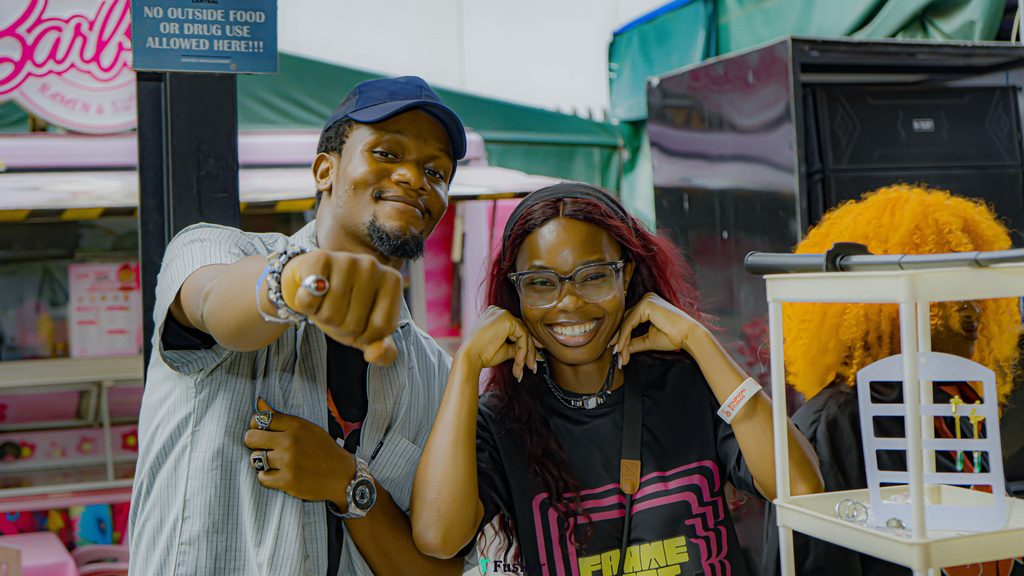
There was also a difference between being present and actively participating. A noticeable amount of the convention involved people mingling, talking and moving between groups, which is not necessarily a bad thing for an event trying to build community. But there were moments when the lack of engagement became harder to ignore. During Serah Johnson’s voice-training session, for example, she asked attendees to stand and join in a vocal exercise. Not everyone responded. Similar pockets of low participation could be felt during some of the panel sessions, even when the conversations themselves were worthwhile.
A comic convention cannot be created entirely by an organising committee. Organisers can book the venue, invite speakers, arrange a cosplay runway and create activities, but the atmosphere people associate with a Comic Con ultimately depends on the audience deciding to participate in it.
That is also why Lagos should perhaps not be treated as Abuja’s opponent. If anything, it is evidence of what sustained participation can eventually produce.
MerciRick herself spoke positively about what Lagos Comic Con has managed to build rather than presenting ACAC as something that needs to defeat it. Creative communities do not become stronger because one city loses attendees to another; they grow when more cities are capable of sustaining their own active scenes.
For Abuja, that means some responsibility rests with the people the convention is trying to represent. If the city’s anime fans, comic readers, gamers, artists, cosplayers and self-professed nerds want a convention floor packed with costumes, conversations and people who recognise the obscure character somebody spent three weeks recreating, then attending is only the beginning. They have to participate.
A community cannot be completely outsourced to the people arranging chairs, inviting speakers and booking venues. Perhaps that is the more useful way to read the comparison between Abuja and Lagos: not as a scoreboard, but as a wake-up call. Lagos shows what is possible. Abuja’s creative community still has to decide how much of that world it is willing to build for itself.
When Government Enters the Comic Conversation
ACAC was also joined by a representative of the Federal Ministry of Youth Development (name not provided on the day), bringing a different question into a room largely occupied by artists, studios and fans: if Nigerian comics, animation and gaming are serious about becoming industries, where exactly does government fit?
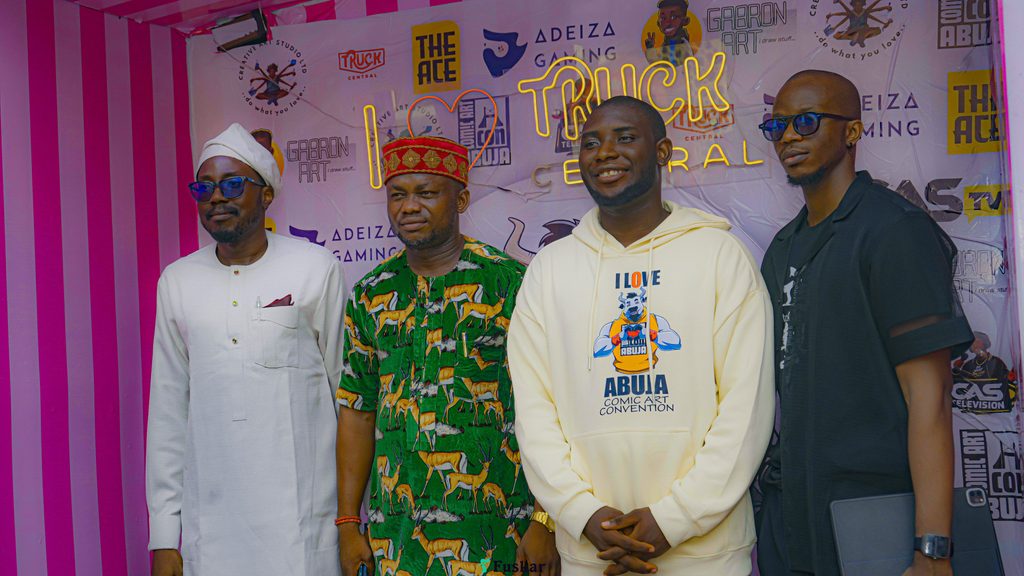
His response was not a promise that government would suddenly solve the problems confronting comic creators. Instead, he placed some of the responsibility back on the people in the room. He pointed to the National Youth Confab and encouraged young creatives to use those platforms to identify what they need from government, where they want public investment and what proposals could help their industries develop.
For comic and animation creators, that turns the vague demand for ‘government support’ into a harder question. Support for what exactly? Affordable production? Distribution? Training? Funding? Intellectual-property enforcement? Access to markets? A community asking government to invest in it has a better chance of being understood when it can identify the gaps rather than simply announce that the industry deserves help.
The representative also spoke about culture. Nigerian children already spend enormous amounts of time watching cartoons and other entertainment, so creators have an opportunity to place local stories, imagery and cultural ideas inside the media young audiences already consume. The challenge is not simply preserving culture because it is old, but making it visible in stories children and younger audiences want to watch.
That overlapped closely with MerciRick’s argument from Day One. They were approaching the problem from different positions, but both were essentially asking what happens when African stories are given access to the formats through which modern audiences build their imaginations.
The People Who Had to Build the World
For an attendee, two days can disappear quickly between booths, cosplay, games and conversations. For the people responsible for producing those two days, the experience looks considerably different.
When ACAC founder Emmanuel John Maduabuchi was asked what putting the convention together had been like, he laughed first: “Should I be honest or should I lie?” His honest answer was simpler: “A lot of work.”
For Emmanuel, however, the payoff was less abstract. Seeing people enjoy “the comics, the books, the games” made the work worthwhile. When asked how ACAC had managed to bring people such as Serah Johnson into the programme, he returned to the same word that had become increasingly difficult to avoid throughout the weekend: “Community.”
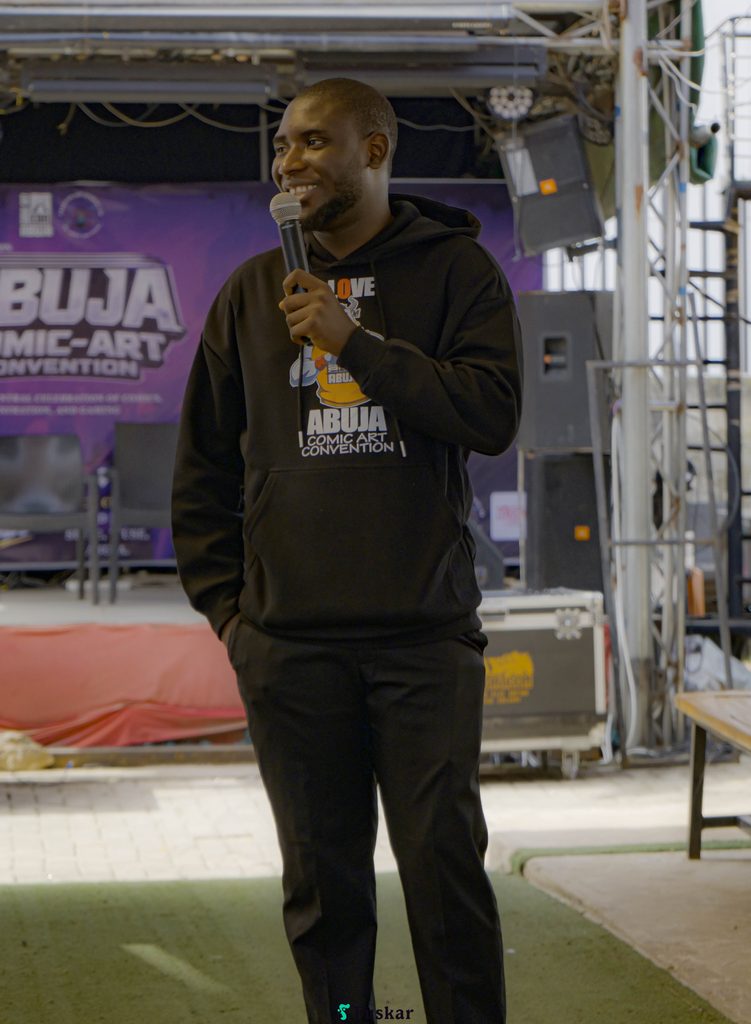
The organisers did not personally possess every contact required to build the programme. Sometimes somebody within their wider network knew someone who could reach somebody else. That connection could become a speaker, partnership or appearance. Rather than seeing those relationships as incidental, Emmanuel described them as something ACAC deliberately relies on.
Even with the visible growth, he was unwilling to give his own event a perfect score. Other people, he acknowledged, might tell him the 2026 edition was bigger and better than before. He agreed that it had grown, with more people, activities, partners and attention. Compared with what existed in his own imagination, however, he put it at “about 80 per cent.” His own target remained “100 per cent,” particularly when it came to eliminating the small errors organisers notice even when audiences do not.
His larger ambition, though, stretches beyond fixing the next edition. He does not want Abuja’s creative community to appear for one large weekend and then effectively go dormant until the following convention. He spoke about more gatherings and activities between editions, allowing relationships to develop throughout the year rather than forcing everyone to rebuild momentum each time Comic Con approaches.
That larger vision also depends on the less visible labour behind the event. ACAC co-founder Praise Samuel Ukochio, known as Lord Praise, spoke about the amount of effort required to make the convention happen, a reminder that the polished version attendees see comes after planning, coordination, partnerships and the logistical work of convincing a temporary world to function for two days.
Community may be the philosophy, but somebody still has to make the world appear.
Beyond Comic Con: The Afrogram Problem
Building a community is one problem. Giving that community somewhere to take its work is another, and this is where one of the more ambitious ideas Emmanuel discussed becomes important.
He called it Afrogram (waitlist: https://afrogram.lovable.app/waitlist), an initiative still being developed around a problem that repeatedly frustrates African comic creators: what happens after the work is ready for readers. The concept includes digital access, but the project team says one of its immediate priorities is “to solve print and distribution costs” by pursuing partnerships with printing and distribution brands and negotiating arrangements that can reduce what creators spend getting physical products into readers’ hands.
The difficulty arrives after the story has been written and drawn. There is printing, which can be expensive. Then distribution, and the question of how a physical comic created in one country reaches a reader elsewhere on the continent without logistics becoming a greater obstacle than producing the book itself.
Emmanuel’s example was deliberately simple. In the future he imagines, a creator in Abuja should be able to make a comic that a child in Uganda can discover, order and receive.
That ambition changes the conversation because African comics are frequently discussed as though the central question is whether the continent has enough good stories or enough talented artists. The creators at Truck Central offered an obvious answer. The harder questions are infrastructural. Where do readers find the work? How easily can creators print? How does a Nigerian publisher reach another African market? How much value does the creator retain? How does somebody make enough money from one project to justify producing the next?
Afrogram is being imagined as one attempt to operate somewhere inside that gap, combining digital access with a longer-term interest in physical distribution. The team also plans to launch a GoFundMe campaign to raise money needed to move the product towards release. That makes the community part of the financing problem as well as the audience: as the project was explained, “we need the community support.”
The convention is not supposed to be the entire ecosystem.
Emmanuel also spoke about taking smaller activities and expositions beyond Abuja, including into other northern states, while discussing the possibility of eventually extending the convention model towards Enugu or the wider South-East. Those ideas remain exploratory rather than confirmed events, but the direction is clear. The ambition is not simply to make one Abuja convention larger every year. It is to make the network around it larger.
If ACAC gathers the community in one physical space for two days, Afrogram represents an attempt to answer what happens to the stories produced by that community when everyone goes home.
And Then Everyone Had to Return to the Real World
For two days, Truck Central offered a strangely convincing miniature version of the creative ecosystem people inside Nigeria’s comic and animation industries regularly say they want.
Studios stood beside independent artists. Cosplayers moved between exhibitors. A government representative spoke directly to young creatives about bringing their proposals into policy conversations. Obi Asika moved through the studio tables as the head of the National Council for Arts and Culture. An actress whose voice belongs to an internationally distributed Nigerian-rooted animated character trained people who might only be beginning their own journeys. Industry discussions about intellectual property and culture took place within walking distance of Kahoot competitions and somebody dressed like they had just escaped an anime.
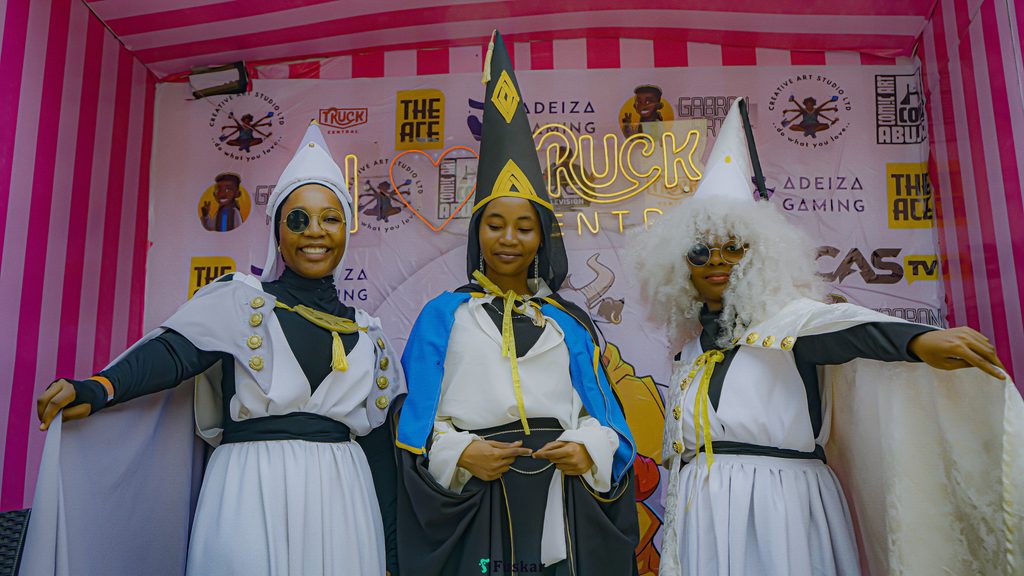
It was not perfect, and pretending it was would weaken the more interesting story. ACAC still has space to grow into the kind of convention that can make Abuja’s comic, anime and cosplay communities turn up in numbers large enough to rival the excitement generated elsewhere. Emmanuel himself believes the event reached only around 80 per cent of the version he imagined.
Perhaps that is why ‘community’ mattered so much over the weekend. Community is easy to print on a banner. It is considerably harder to turn into artists working together, companies distributing one another’s work, audiences buying local stories, fans showing up for local events, government understanding what creators need and conventions strong enough that people want to travel across cities to attend them.
ACAC did not solve all of that in two days. What it did was put many of those people in the same place and allow them to see what the larger picture might look like. Eventually, the exhibitors packed their work away. The cosplayers became ordinary Abuja residents again. The houses dissolved, people crossed back through Truck Central’s entrance, and everyone was effectively isekai’d into the real world once more.
The more important test of Abuja Comic Art Convention may therefore not be whether it can recreate that temporary world next year. It will be whether the community it gathered can keep building after the portal closes.
Written by Nehemiah Osarodion
Edited by Mujeeb Jummah
——————————————————–
——————————————————–
AI Use at TheACE
TheACE uses artificial intelligence tools to support research, drafting and analysis across Africa’s creative industries. All content is verified, edited and approved by our human editorial team to ensure accuracy, clarity and responsible storytelling. AI assists our work; it does not replace human judgement.