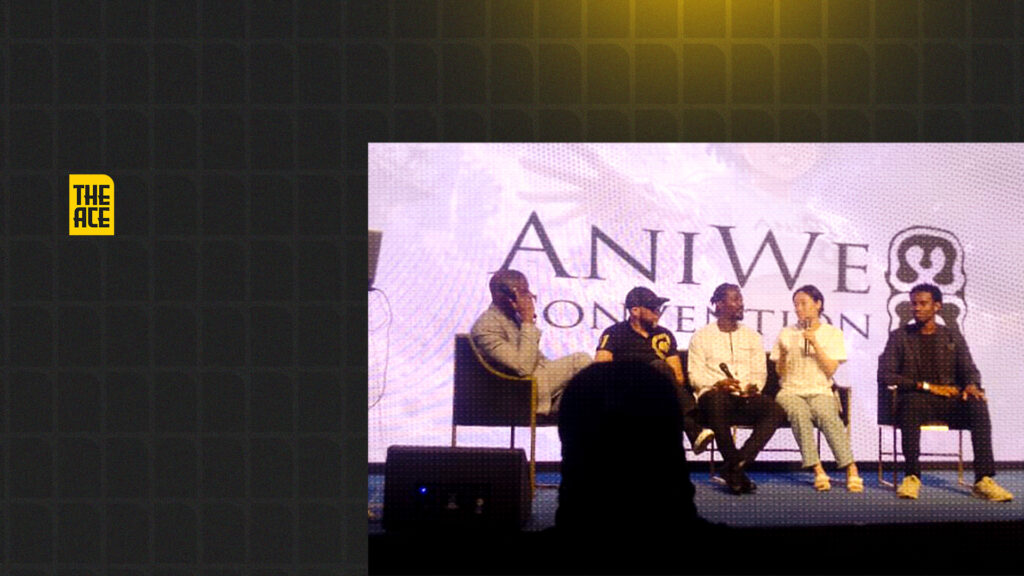
Japanese media corporations are actively targeting Nigeria’s population of over two hundred million people to establish a critical consumer base for their animation and gaming properties. This strategic focus was the central point of a panel on Japan-Nigeria creative collaboration during the AniWeCon 2026 convention. The event took place on Saturday, 15 August, at the Paradise Events Arena in Yaba, Lagos.
Halfway through the session, moderator Kenzy Udosen directed a question to the room’s sole Japanese panellist, inquiring what Japan stood to gain from the African creative ecosystem. The response bypassed traditional diplomatic language, focusing strictly on demographic leverage and scale.
“There are lots of people here; more than two hundred million,” said Aoi Torii, a Japanese executive and panellist. “That’s a massive audience. So, if we can have fandom from Nigeria, that’s a big number, and we can have more visibility there.”
Torii, who lived in Lagos between 2022 and 2024 working in finance, discovered the city’s anime community during her residency. Recognising a disconnect between local enthusiasm and official industry channels, she co-founded the Japan-Africa Entertainment Business Council (JAEBC) to formalise trade relations that had previously relied on fragmented, word-of-mouth networks.
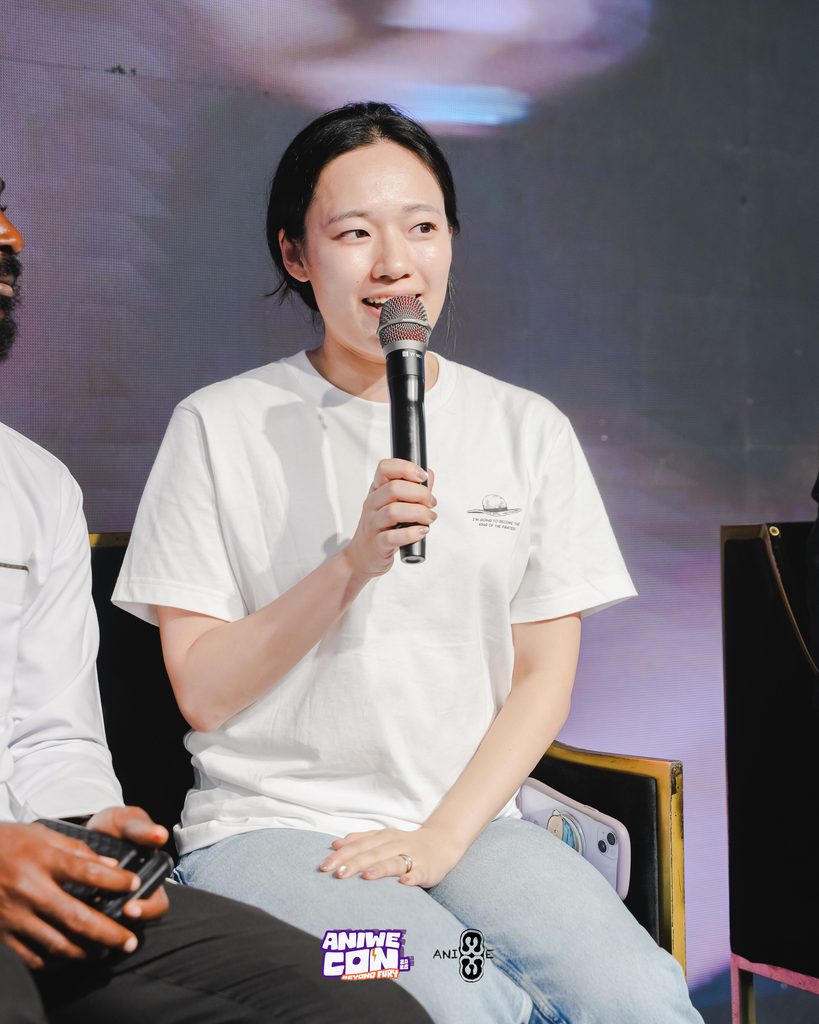
At AniWeCon 2026, Tori confirmed that she facilitated the attendance of representatives from five Japanese corporations, noting that several were visiting the African continent for the first time. Among the delegates was Tokyo Broadcasting Station (TBS), one of Japan’s major broadcasting companies. During the convention, TBS screened an anime premiere on-site, underscoring immediate interest in testing the Nigerian market.
Torii highlighted that while Japanese media giants possess over fifty years of production infrastructure, a significant portion of that content remains isolated domestically. While cornerstone franchises such as One Piece and Dragon Ball Z have achieved global saturation, the majority of Japan’s animation portfolio has never travelled.
“Some of the anime are not popular yet globally,” Tori explained to the audience. “We want to have that presence as well, global, global, global.”
The underlying economic reality of the exchange was echoed by African panellists on stage. Oscar Michael Esio, founder of Africacomicade, agreed that the scale of the local demographic is the primary currency driving international interest.
“The numbers,” Esio stated. “Clearly we have a lot of eyes here, and anything that picks up here has the potential to pick up globally.”
Panellists stressed that this cross-border dynamic is a commercial reality already under contract. Jide Martin, Chief Executive Officer of Nigerian publisher and production studio Comic Republic, informed the audience that Nigerian animators are currently earning foreign currency while working alongside Japanese studio Toei Animation.
Martin presented footage from a co-production titled Trials of the Spear. The animation project integrates voice acting from established Japanese talent associated with Dragon Ball Z, dubbing over Nigerian characters. Martin argued that these partnerships validate the commercial viability of local creators on a global stage.
Esio detailed parallel developments within interactive media, noting that Japanese gaming firms are operating locally. He highlighted GigBay, a Japanese company that established a presence in Nigeria to run a game development contest. Competition winners are contracted to travel to Japan, where they will finalise production alongside the company’s internal teams.
Chiemelie Ezeasor, a music producer whose work spans Nigerian and Japanese film projects, expanded the conversation to audio licensing and cultural exchange. Ezeasor detailed his post-production efforts integrating international scores with African instrumentation. He noted a specific collaboration with a Tokyo-based film composer who incorporates traditional African instruments, such as the Igbo Ogene bell, into Japanese cinematic soundtracks. Ezeasor stressed that modern digital connectivity allows creators outside primary commercial hubs to execute global deals directly from their mobile devices.
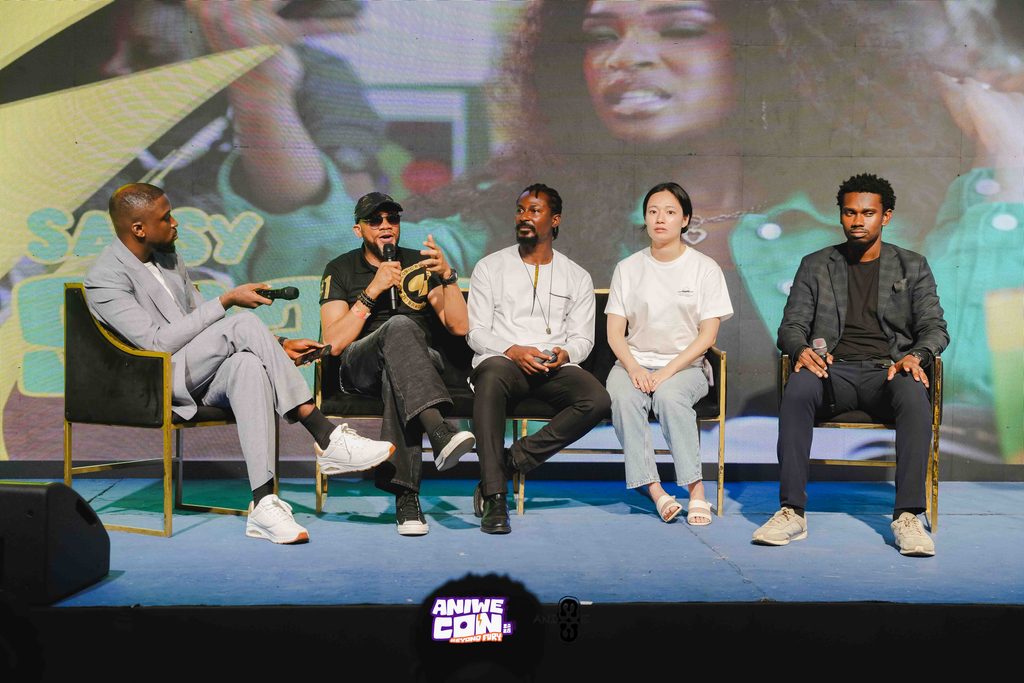
Despite foreign interest, panellists issued stark warnings regarding the local industry’s readiness to capitalise on these opportunities sustainably. Reflecting on a recent trade visit to Japan, where he engaged with executives across five distinct production houses, Martin observed that every firm attributed its longevity to decades of continuous output.
“They started doing anime over fifty years ago… everybody is just catching up to it now,” Martin said.
He urged local creators to prioritise consistency over immediate financial returns, recalling that Nigeria’s first comic convention took place in a small, cramped room, a sharp contrast to the audience gathered at the venue.
Martin was unequivocal regarding where long-term value resides, warning that simply fulfilling work-for-hire contracts for international studios is insufficient.
“The business is in creating assets,” Martin told attendees. “Content is the new oil. Create it, then index it: save it somewhere you control, build a structure to sell it, and then sell, sell, sell.”
Ezeasor reinforced the argument for strict intellectual property retention, drawing on cautionary precedents from the global music industry. He detailed his choice to work strictly with independent artists to ensure they maintain control over their copyright and licensing agreements. Ezeasor advised visual and interactive creators to familiarise themselves with basic legal and distribution frameworks before signing binding agreements with foreign entities.
When the moderator queried what specific barriers were preventing these international partnerships from scaling more rapidly, the panel moved away from complaints of insufficient funding. Esio explicitly cited a vacuum in organisational infrastructure and local policy.
“We lack the systems and infrastructure at all… there’s no comic artist union, there’s no game developer union that is very strong and is driving a change in policy,” Esio stated.
Esio elaborated that while mature media markets in Asia and the West rely on established trade guilds and structured policies for localisation and distribution, African creators remain largely fragmented. This lack of collective bargaining power leaves individual artists vulnerable during negotiations with heavily resourced international media conglomerates. Ultimately, the AniWeCon session clarified that while Japan is decisively looking toward Africa to secure its next generation of consumers, the responsibility falls squarely on Nigerian creators to establish the formal business systems required to negotiate these partnerships on equal footing.
——————————————————–
——————————————————–
AI Use at TheACE
TheACE uses artificial intelligence tools to support research, drafting and analysis across Africa’s creative industries. All content is verified, edited and approved by our human editorial team to ensure accuracy, clarity and responsible storytelling. AI assists our work; it does not replace human judgment.