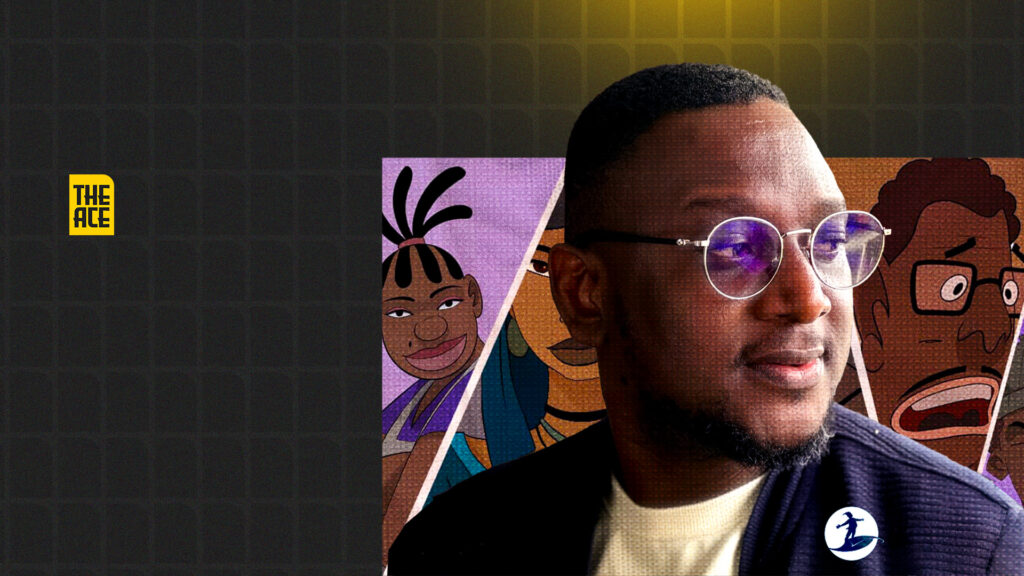
Talent isn’t the problem, says Magic Carpet Studios CEO Ferdy Adimefe. The real obstacle is the absence of patient capital and long-term training pipelines.
In a recent LinkedIn post, Ferdy Adimefe, CEO of Magic Carpet Studios, made a claim that cuts against how most people talk about Africa’s creative economy: talent was never the industry’s problem. The problem is that nobody has built systems willing to wait for it.
“Animation needs patient talent and patient capital,” Adimefe noted. Animation is often treated as a soft, instinct-driven craft, closer to performance than production. His point cuts the other way: it is one of the most people-intensive parts of the creative economy, a production model in which every film requires a chain of trained hands built long before the work begins. Unlike a live-action film, where a determined crew can shoot something on minimal resources, animation demands years of development, specialised skill, expensive software, and coordinated pipelines. It behaves less like a creative pursuit and more like infrastructure.

Adimefe’s post read as a plain account of the invisible work behind an industry most people only meet at its finished stage, the final output of artists, producers, technical directors, financiers, and educators whose work begins years before a single frame reaches audiences.
That invisible work starts with the fact that studios end up doubling as training schools. There are not enough universities producing pipeline-ready graduates, so studios do the job themselves. Rather than functioning purely as production houses, studios operate as schools. They recruit beginners and spend months shaping them into usable talent. For every film, Adimefe needs roughly fifty people; only a fraction is already trained. “We have to become a training school,” he said, a line that reframes what a studio even is.
But natural ability is only the starting point. Professional production demands consistency, software fluency, and the ability to work inside large teams under hard deadlines, skills that also have to be taught, not discovered. Training takes time, and time creates vulnerability. A trainee might be pulled away by family pressure: a father who calls drawing a waste of time, or a mother who worries there is no future in it. Some leave before they are ready. Others stay long enough to become useful, then get poached.
“Nigerians would rather poach than train,” Adimefe observed, a line that names a pattern that discourages long-term investment in the workforce. The point is not sentimental; it is structural. If studios train people only to lose them immediately, the incentive to train disappears, and the industry starts protecting itself from the cost of its own growth. Strong creative industries rarely get built by companies acting alone; they depend on a shared confidence that investing in people strengthens the wider sector rather than punishing whoever went first.
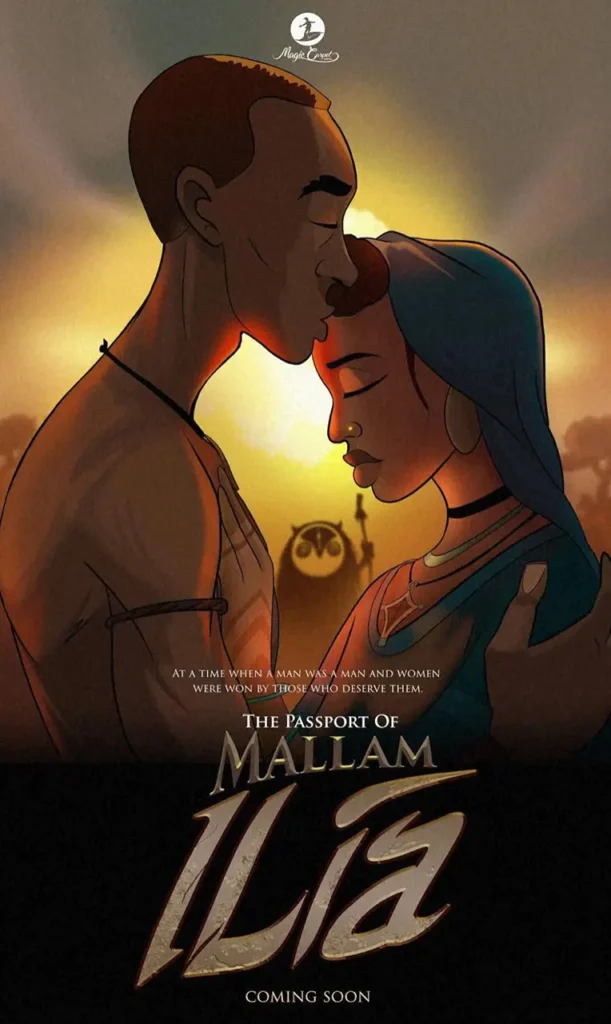
The most revealing part of Adimefe’s account has little to do with animation itself. He got into the industry to tell stories, not to master investment structures or corporate governance. But that became unavoidable: Magic Carpet Studios eventually worked with consultants to structure a Special Purpose Vehicle and issue non-convertible notes as part of its fundraising, instruments that belong to venture finance and corporate law, not animation. “The artist has to think in numbers,” as he put it. It is a situation playing out across Africa’s creative economy more broadly. Founders are now expected to be artists, entrepreneurs, negotiators, and strategists at once.
Adimefe returned repeatedly to a second issue that continues to frustrate creative entrepreneurs across Nigeria: access to capital. Building a studio is expensive long before a ticket sells or a licensing deal closes; artists need to be paid throughout development, and months or years can pass before a project earns a naira. Most businesses offset those early costs with loans backed by tangible assets: machinery, land, and vehicles. For an animation studio, the most valuable assets are scripts, characters, and production pipelines, intellectual property (IP) capable of generating revenue for decades but rarely recognised as security within conventional lending.
Magic Carpet Studios explored financing options, including discussions involving the Central Bank of Nigeria, and ran into a familiar wall. “The challenge,” Adimefe explained, “was that Nigerian law and banking practice do not easily recognise IP as collateral.” It is one of the industry’s clearest contradictions: African storytellers are pushed to create globally competitive IP, while the financial system struggles to treat that IP as an investable asset, a disconnect that slows growth long before audiences see the finished product.
At its core, Adimefe’s argument comes down to belief. Investors must believe a story can become a commercial property years before it reaches audiences. Studios must believe artists producing little value today will become indispensable tomorrow. Banks must believe intangible assets carry tangible value. That is arguably why he chose to learn finance rather than wait for finance to understand animation.
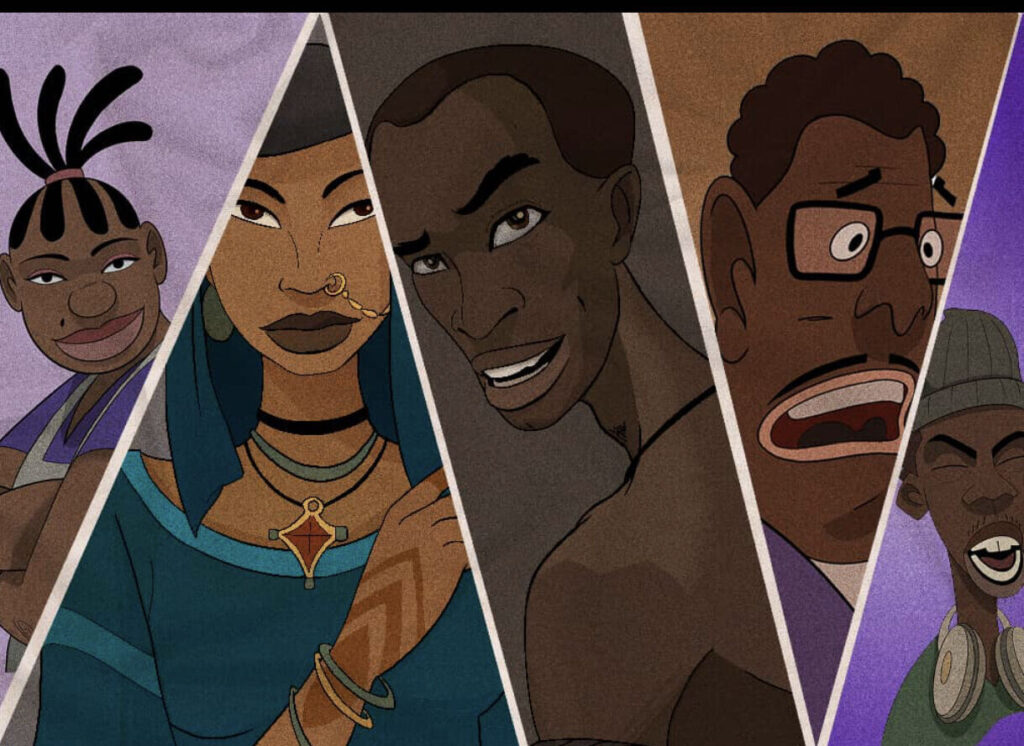
He made one more point worth sitting with: despite Nigeria’s creative reputation, no Nigerian animation studio has yet released a theatrical feature that has consistently competed on the global commercial stage. South Africa remains among the continent’s few notable exceptions, having distributed animated feature films internationally in recent years. The comparison is less about rivalry than scale: a single internationally successful animated feature can generate revenue rivalling dozens of conventional films because the commercial potential extends far beyond ticket sales. Licensing, streaming, publishing, gaming, and merchandising all compound around a strong IP, as Pixar, DreamWorks, and Disney have shown for decades.
Recent projects suggest African creators already understand the opportunity, even if the supporting structures have not caught up. Disney’s Kizazi Moto: Generation Fire and Iwájú, the latter made with Nigeria-founded Kugali Media, showed that African cities and storytelling traditions can anchor globally distributed animation without losing cultural specificity. Neither project solves the financing and training gaps Adimefe describes, but both prove the audience is already there. The market has moved ahead of the ecosystem.
This year marks five years since Magic Carpet Studios began. Against Hollywood timelines, that is short. Against the realities of building a studio in Nigeria, training artists, educating investors, and navigating a financial system not designed for IP, that milestone represents resilience. Creative industries tend to get celebrated for their finished products while the institution-building underneath stays invisible. Audiences remember the characters; investors remember the revenue. Almost nobody remembers the years spent assembling teams, teaching software, or convincing a family that animation is a real profession. Those invisible years are where the industry gets built.

It is tempting to look for a single breakthrough, one film, one investment, one partnership that transforms the sector overnight. Adimefe’s account suggests the real story is less dramatic: industries grow through accumulated experience, patient capital, and the steady development of people. Talent has already answered the question of whether Africa can tell great stories. What remains open is whether the continent can build the financial systems and institutional patience to carry those stories from sketchbook to screen.
Written by Nehemiah Osarodion and Mujeeb Jummah
AI Use at TheACE
TheACE uses artificial intelligence tools to support research, drafting and analysis across Africa’s creative industries. All content is verified, edited and approved by our human editorial team to ensure accuracy, clarity and responsible storytelling. AI assists our work; it does not replace human judgment.