Somewhere in Lagos, there is a comic store that has never once opened its doors to a customer. The air conditioners work. The shelves are built. The comics are printed and stacked, waiting to be picked up, flicked through, and paid for. Everything that a shop needs to become a thriving business is already there, except the one thing that makes it real: someone turning the sign from “closed” to “open.”
That store belongs to Martin Okonkwo, co-founder of Epoch Comics, one of the more decorated names to come out of Nigeria’s comic book scene in the last decade. He built it, stocked it, finished it, and then he left the country before it ever traded a single day.
“We had gotten the place, we had built it, finished it, put in everything, equipment, air conditioners, everything,” he says, still sounding faintly surprised by his own sentence. “Even stocked it. Printed and stocked it. And then this… something happened.”
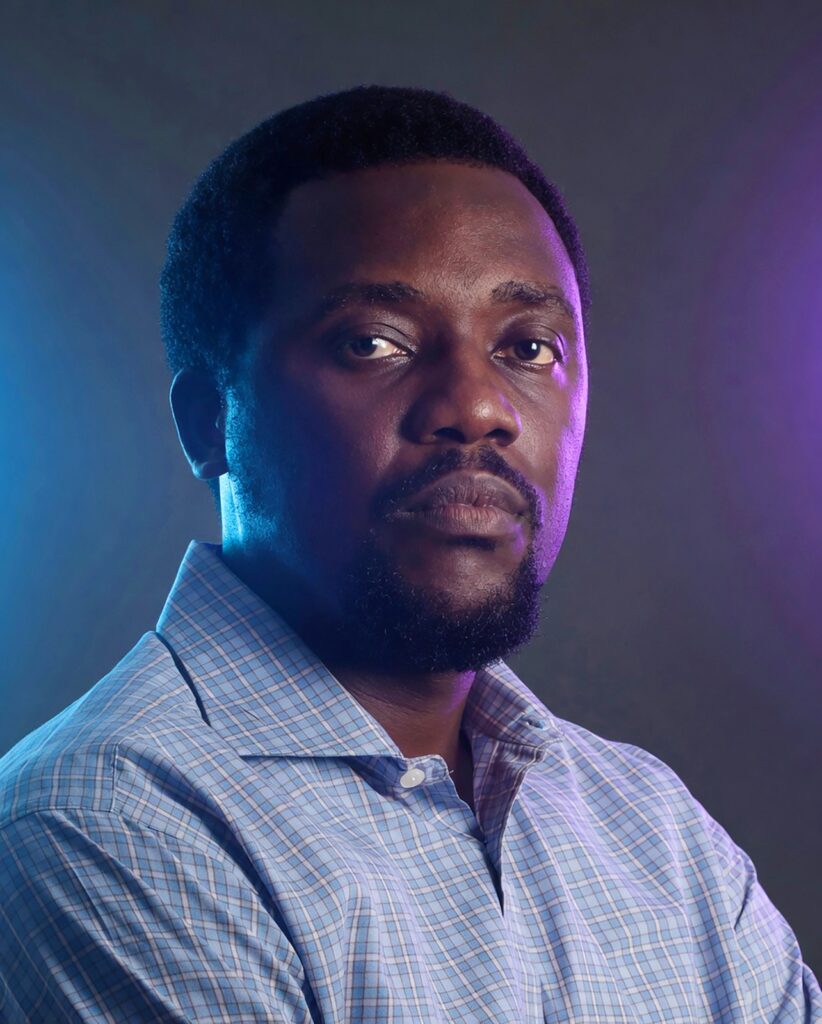
Whether the lease still runs, whether a caretaker checks on the stock, whether the air conditioner still hums, these are details Martin does not offer, and the story leaves them hanging, as the shop itself has been left hanging.
To understand how a fully realised business could sit that close to launch and never cross the line, you have to go back much further than the store itself: to a teenage boy who liked to draw, a decade of Comic-Cons, a genre built on the idea of good outlasting evil, and an industry that peaked, dispersed, and is still deciding what it becomes next.
A hobby with a co-founder turned profession
Epoch Comics did not begin as a business. It began the way a lot of things begin, with two schoolboys who happened to be good at complementary things. Martin drew. His now business partner, Emmanuel Ezeabiama, wrote. Emmanuel saw Martin’s sketches, liked what he saw, and a partnership formed that neither of them treated as a career at the time.
The shift from pastime to publisher happened gradually, and then, as these things tend to, quite suddenly. Their first published work came while both were students at the University of Nigeria, Nsukka, a first tentative outing, mostly to see what the process even felt like. From there, they became fixtures at Lagos Comic-Con, exhibiting almost every year. Martins recalls exhibiting regularly from 2014 through to 2022, possibly 2023. The exact year blurs. Alongside Comic-Con, a website went up. Print distribution followed, then digital sales, then licensing arrangements with third-party platforms, some of which, Martin says, are still renewing those licences today, though he does not name them.
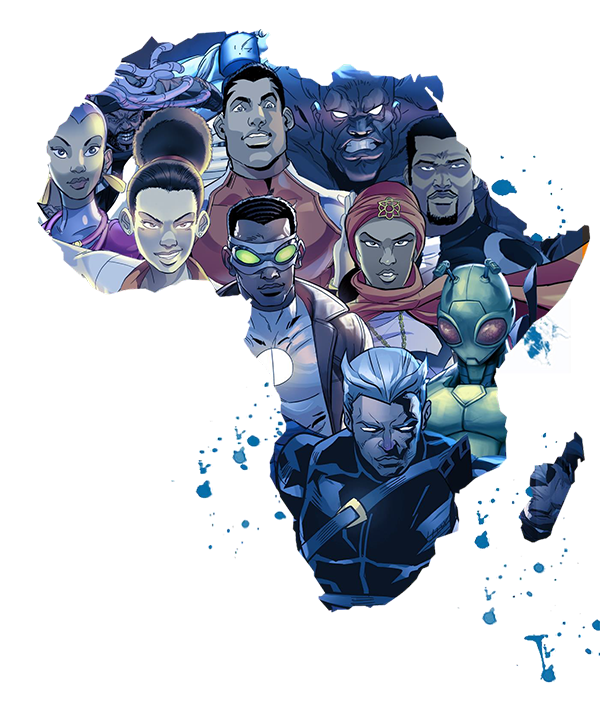
What set Epoch apart from the crowd of studios doing similar things wasn’t just consistency. It was a theme (as seen in our 2024 critique of Barikisu). Read enough of Epoch’s catalogue and a throughline becomes hard to miss: angels, demons, the tension between light and dark, and underneath all of it, a distinctly African expression of faith. It is most explicit in AEGIS, the studio’s most awarded title, with somewhere between five and six wins on its own, out of roughly nine across the wider Epoch catalogue.
“There is an underlying message in all our titles,” Martin says. “We are sending out a sort of spiritual message about the power of good over evil.” He is candid that he half expected readers to be lukewarm about a comic wearing its faith so openly. Instead, the opposite happened. “We found that people embraced it,” he says, and the awards that followed backed him up.
The peak, and the quiet after it
Ask Martin when the Nigerian comic industry was at its strongest, and he doesn’t hesitate: 2017 to 2019. Comic-Con crowds were enormous by local standards; the 2017 edition alone drew more than 7,000 attendees. Studios were everywhere, publishing regularly, competing for the same shelf space and the same fans. It was, by any measure, a scene.

What has changed since then, in Martin’s telling, is not a single dramatic event. It’s a slow leak. “There is a level of interaction between fans and creators,” he says, then corrects himself, “or there was.”
Some of the thinning is down to the migration of key players, drawing a proportion of the industry’s energy overseas. Martin himself now lives in the UK, and he rattles off a small diaspora of familiar names doing the same: Peter Daniel of Peda Comics, now in the US; Ayodeji Makinde of Comics DI, now in the UK; Youneeq Studios, likewise US-based. Each one, he says, represents a piece of the ecosystem that is no longer in the room. Those who remain, he notes, are not always well served by the platforms meant to hold them together. He describes, with visible frustration, groups where community posts would be approved a week late, by which point the conversation had already died, “by then you have forgotten you posted it,” he says.
Asked what he would do differently if he were starting Epoch Comics today, Martin does not point to the art or the writing. He points to the community. “What I would have done differently is to first of all focus a lot on building a community,” he says, “rather than focus on the product or the service that we offer.” Products, in his account, can survive a quiet year. Communities, tended properly, are what get a studio through the years that follow.
The move nobody planned for
It is tempting, from a distance, to read Epoch’s recent quiet years as simple burnout, or as the industry-wide slowdown catching up with one more studio. Martin’s own account is more specific than that and more human.
His relocation to the UK, he says, was not something he saw coming with much warning. “My movement to the UK was very sudden. Like, it was really sudden,” he says. “I didn’t even know I was going to move.” He was mid-project on the ground in Lagos at the time, including, as it turned out, midway through opening that physical comic store, in partnership with someone else already established in the Nigerian comics space. Martin did not name his partner for the project, but describes him as a fellow veteran of the Nigerian comic book scene (another voice in a story that, for now, remains incomplete). By any reasonable measure, the store was done. Then Martin’s own circumstances moved faster than the shop’s opening date, and the whole thing was left exactly where it stood: finished and shut.
The UK brought its own version of the same pattern. Keen to keep exhibiting, Martin tried to get a stand at a Comic-Con local to where he had settled, made enquiries, and offered to pay whatever was required. “I’m not sure I got a reply from them,” he says. “Even if I got replies, they had a lot of excuses.” He eventually let it go. “I decided to just drop it altogether,” he says, without ever quite deciding whether the fault lay with the organisers or with something less easy to name about breaking into an unfamiliar market from scratch.
It is a smaller echo of the same shape as the Lagos store: something built in good faith, extended outward, and left unanswered.
What kept it going anyway
None of this, notably, reads to Martin as a story about giving up. Epoch Comics has never really been profitable in the way a straightforward business is meant to be. In the early years, Martin funded Comic-Con appearances directly from his salary at an advertising agency. “It was not even in the registered company’s account that the funds came from,” he says. Unit sales of individual comics, even now, are not what keep the lights on.
There was one clear exception. During the COVID period, digital engagement with African comics spiked noticeably. Martin links the timing loosely to the cultural moment around Black Panther, and Epoch saw a real bump in leads, conversions, and new client relationships as a result. “We really fared well at that period,” he says. It was proof, briefly, that the appetite was there when circumstances aligned.
What has carried the studio through the quieter years, in Martin’s own framing, is not revenue. It is something closer to stubbornness. “If you read Myles Munroe’s book, you see that once the vision is clear, it’s hard for discouragement to come,” he says.
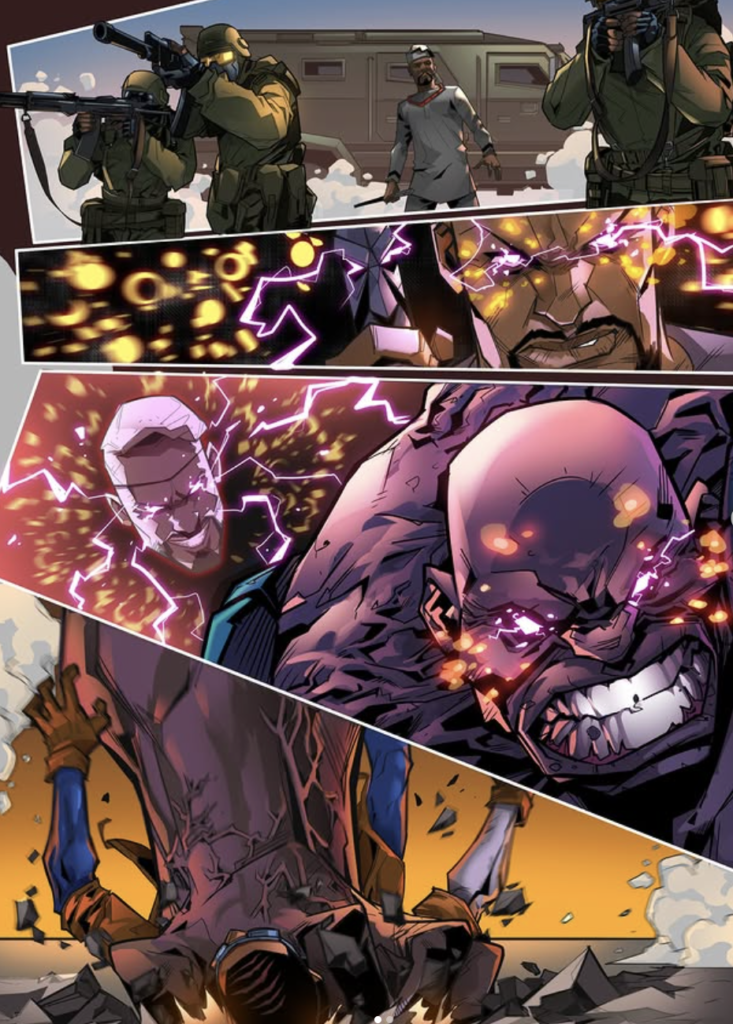
Client work, design, illustration, commissioned comics for third parties, has helped subsidise Epoch’s own titles for years, sometimes taking priority over the studio’s original output simply because it pays the bills, the fan-facing work doesn’t. Behind that client work, though, Martin insists there are still multiple original projects moving. “There are stuff that we’re doing behind the scenes,” he says. “Very soon they’ll come out in the open.”
Epoch has teased the release of Moondust Issue 5 in the early hours of Thursday, July 2nd, 2026, a small but concrete signal that the pipeline Martin describes is moving.
The door, still there
Which brings the story back to where it started: a finished, silent shop in Lagos, exactly as it was left.
Neither Martin nor the people who sat down to hear his story treat that store as a closed chapter. Both sides of that conversation arrived, independently, at the same conclusion: that a dedicated physical home for African comics, done properly, would be genuinely transformative for a scene that has spent years without one. Nobody has called the idea dead. Nobody has taken the stock off the shelves.
Martin, for his part, still talks about the shop the way you talk about something that paused rather than something that ended. “It would have done really well,” he says, of the store as it stood before he left. He does not say “would have” in the past tense. He says it the way a person finishes a sentence they still intend to complete.
“The door is still there.”
—
Martin Okonkwo is the co-founder of Epoch Comics. He currently balances Epoch’s original titles and client commissions with a full-time remote role and continues to develop AI-assisted film adaptations of Epoch’s comics alongside new print releases.
--------------------------------------------------------
--------------------------------------------------------
AI Use at TheACE
TheACE uses artificial intelligence tools to support research, drafting and analysis across Africa’s creative industries. All content is verified, edited and approved by our human editorial team to ensure accuracy, clarity and responsible storytelling. AI assists our work; it does not replace human judgment.