There is a Nigerian comic creator somewhere in Lagos, Ibadan, or Abuja who has done everything right. They have built a story rooted in culture. They have published consistently. They have found an audience, sometimes thousands of readers deep, through Instagram threads, WhatsApp drops, convention tables, and scattered digital platforms. Their work travels. It is shared. It is discussed.
And yet, on paper, it does not exist. Not in the systems that define global relevance. Not in the datasets that investors read. Not in the analytics dashboards that publishers use to measure growth. Not in the reports that shape how the world understands the comic industry.
In a global market driven by data, this is not a small problem. It is an existential one. Because in today’s comic economy, visibility is not determined by creation. It is determined by measurement. And Nigeria, despite all its creative output, remains largely unmeasured.
To understand the scale of that absence, we have to first understand the machine Nigeria is trying to enter.
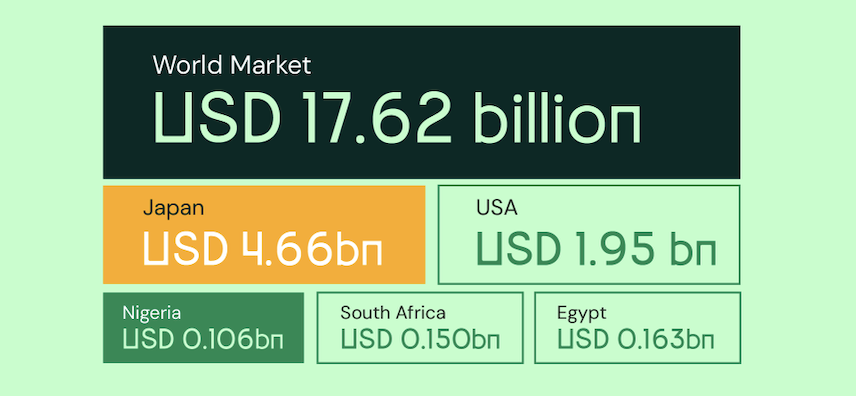
The global comic industry is not just a cultural space. It is a structured, data-rich economic system worth over $17 billion, projected to more than double within the next decade. It is an ecosystem where stories are not just published, they are tracked, monetised, licensed, and repurposed across film, animation, gaming, and merchandise.
In Japan, comics are not simply read; they are quantified down to the last copy sold. Weekly sales are tracked through tightly integrated retail systems, producing rankings that influence everything from publishing decisions to media adaptations. In South Korea, digital comics have been engineered for mobile consumption, with platforms capturing granular user behaviour, how long readers stay, where they drop off, and what they binge. In the United States, a concentrated publishing market feeds into sophisticated distribution and point-of-sale tracking systems that allow industry players to benchmark performance in near real time.
These are not just markets. They are infrastructures. They are built on standardisation; ISBN systems, retail integration, platform analytics, and coordinated reporting mechanisms that transform creative output into measurable economic activity. And that is where Nigeria diverges.
On paper, Nigeria is not invisible. It is simply small.
Estimates place the country’s comic market at approximately $106 million in 2024, accounting for less than 1% of the global market. Growth projections suggest steady expansion, though at a slower pace than global averages. But even this figure comes with a caveat: it is an approximation. Because the systems required to measure the industry accurately do not yet exist.
There is little reliable data on unit sales, pricing structures, or readership distribution. There are no centralised dashboards capturing digital consumption. There is no unified reporting framework aggregating performance across publishers, platforms, and retailers. What exists instead is a fragmented landscape of activity, visible in motion, but invisible in metrics.
At the same time, something else is happening beneath the surface. Imports of foreign comics into Nigeria have declined in recent years, particularly in the post-pandemic period. In their place, local creators and publishers have stepped in, filling the gap with homegrown content distributed through informal and digital channels.
This is not stagnation. It is a substitution. The industry is not shrinking. It is reorganising itself, outside of the systems that would normally make that growth legible.
If the supply side is fragmented, the demand side is anything but.
Nigeria’s demographic profile reads like the blueprint of a digital-first comic market. It has one of the largest youth populations in the world, with a significant portion of its population under the age of 35. Smartphone penetration continues to rise, and digital consumption is heavily concentrated among young, mobile-native users who spend their time on visual, story-driven content across social platforms.
In more mature markets, these same conditions have fueled explosive growth in digital comics. In South Korea, mobile-first platforms dominate, with the vast majority of comic consumption happening on smartphones. In Japan, digital formats now account for over 70% of total manga sales, driven by sustained adoption among younger readers. Nigeria shares the same foundational conditions, youth, mobile access, and appetite for visual storytelling. What it lacks is the infrastructure to convert that attention into structured, measurable consumption.
Few brands like Comic Republic, Galatoons, Narra+ are moving in the right direction to offer solutions, but there is yet to be any dominant local platforms with integrated payment systems, analytics, and content ecosystems. No standardised pipelines are turning casual readership into recurring revenue. Discovery happens through social media. Distribution happens through direct sharing. Engagement is real, but it is diffuse. The audience is ready, but the system is still trying to catch up.
This is where the illusion breaks.
From the outside, Nigeria appears to be a small, emerging player in the global comic market. But from within, it tells a different story, one of active production, engaged audiences, and growing creative ambition. The disconnect lies in structure.
The global comic industry runs on systems like BookScan, point-of-sale tracking services that aggregate sales data across thousands of retail outlets, and Oricon-style reporting frameworks that rank titles based on verified transactions. These systems depend on standardisation: ISBN registration, formal retail networks, and integrated reporting channels.
Nigeria operates largely outside of these frameworks. A significant portion of locally produced comics circulates without ISBNs or through informal distribution channels. Sales happen at conventions, through direct messaging, or via small-scale digital storefronts that are not connected to global tracking systems. Even when Nigerian creators publish on international platforms, the fragmentation of their distribution limits the visibility of their aggregate performance.
The result is a structural blind spot. Nigeria is producing comics. Nigeria is distributing comics. Nigeria is consuming comics. But Nigeria is not being counted. And in an industry where data determines investment, partnerships, and global positioning, what is not counted might as well not exist.
This invisibility carries consequences.
For investors, the absence of reliable data makes the market appear riskier than it actually is. Without clear metrics, it becomes difficult to assess scale, identify trends, or justify capital allocation. For policymakers, the lack of formal documentation weakens the case for cultural and economic support. An industry that cannot be measured cannot be prioritised. For creators, it limits discoverability beyond local networks. Their work may travel informally, but it struggles to penetrate the systems that would amplify it globally.
What emerges is not a lack of potential, but a failure of translation, the inability to convert creative activity into a recognised economic signal. But once the problem is understood as structural rather than creative, the path forward becomes clearer.
Therefore, it is a fact that the Nigerian comic book space needs systems that can see its stories, track them, and position them within the global market. This is where documentation becomes more than an academic exercise and more of an infrastructure. The act of collecting data, mapping ecosystems, and standardising information is not just about understanding the industry; it is about making it legible to the world. It is about turning visibility into leverage.
This structural gap is why we developed TheLibrary and The Bookause Report. What you have read here is a narrow window into a much larger system, one that spans creators, publishers, platforms, events, and audiences across Nigeria and beyond. While this analysis highlights the systemic challenges, the full report provides the granular data needed to move the industry from obscurity to global recognition. Industries do not grow simply by existing; they grow by being understood.
Download The Bookause Report to access the complete dataset and visit TheLibrary to see how we are building the future of African comic infrastructure.
--------------------------------------------------------
--------------------------------------------------------
AI Use at TheACE
TheACE uses artificial intelligence tools to support research, drafting and analysis across Africa’s creative industries. All content is verified, edited and approved by our human editorial team to ensure accuracy, clarity and responsible storytelling. AI assists our work; it does not replace human judgment.