The Memory Before the Panels
A child in Lagos can recognise Gotham City, Naruto’s headband, or Thor’s hammer long before recognising the cosmology of Sango, the migrations of the Akan, or the symbolic language of an Egungun masquerade. Across West Africa, generations have grown up consuming worlds imagined elsewhere while many of their own narrative systems remain suspended between oral memory, academic preservation, and fragmented recollection.
This absence does not exist because West Africa lacks stories. The region possesses one of the deepest reservoirs of oral tradition on the continent; histories, cosmologies, migration narratives, and spiritual philosophies that travelled for centuries through performance and communal memory. Across many societies, memory lived in human voices before it lived on paper.
The griot occupied a role larger than entertainment. They functioned as archivist, historians, genealogists, and custodians of collective memory. Through oral performance, entire kingdoms survived across generations without dependence on written institutional archives.
That structure carried remarkable resilience, but also vulnerability. Urbanisation, colonial education, language erosion, and the dominance of imported media weakened the communal environments that once sustained oral transmission. Stories survived, but often in fragmented forms, detached from younger audiences and flattened into simplified folklore. What fractured was not simply information, but a relationship with memory.
Across West Africa, comics and animation now occupy an unusual cultural position within that fracture. They are no longer functioning solely as entertainment products or commercial creative industries. They have become spaces where oral memory can transition into visual architecture. Through panels, colour, movement, sound, and sequential storytelling, histories that once depended entirely on speech begin acquiring durable visual form. This shift carries consequences larger than aesthetics.

Visual storytelling changes the conditions of memory itself. A myth translated into comics no longer functions exactly as oral tradition once did. Performance becomes panel composition. Communal narration becomes authorial interpretation. Rhythm becomes pacing. Symbol becomes design language. Animation introduces atmosphere, movement, voice, and emotional immediacy into stories that once travelled primarily through spoken repetition.
What becomes of it is not preservation in a static sense, but reinterpretation. Older memory systems begin entering contemporary visual language without remaining trapped inside historical display cases.
That process has become more visible across West Africa’s comic and animation landscape. In Ghana, studios such as Leti Arts, Studio Parables, and Soultown KiNEMA explore storytelling spaces shaped by local mythology, speculative imagination, and African-centred visual worlds. Eyram Tawia and other creators working within the region continue pushing African narratives beyond decorative representation toward culturally grounded storytelling systems.
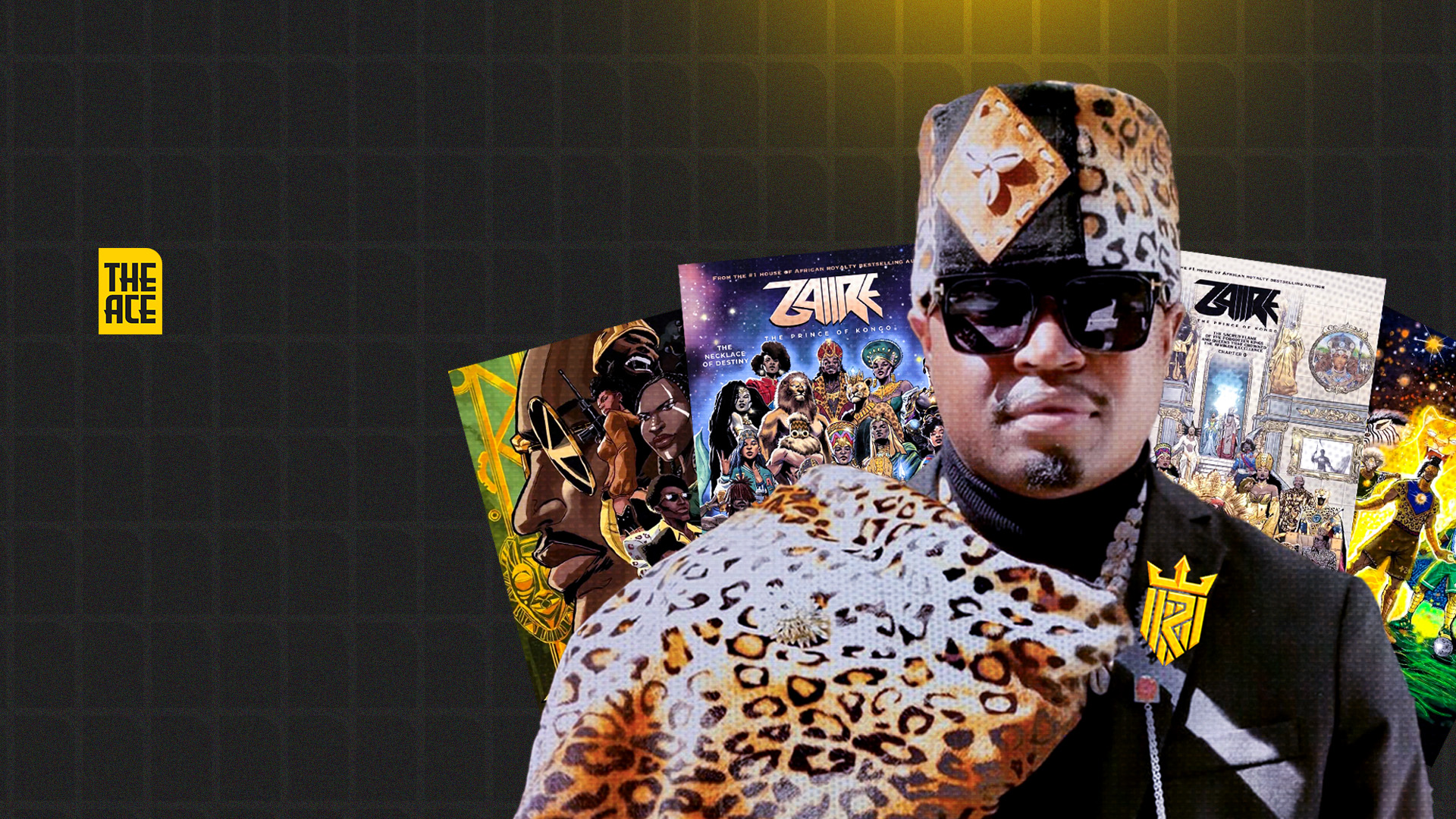
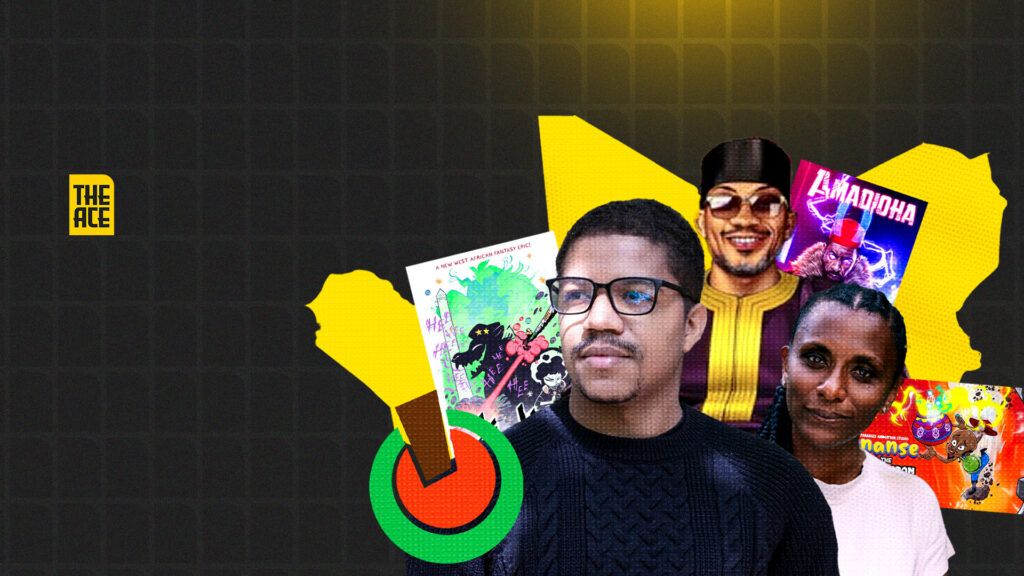
In Nigeria, studios and publishers such as Comic Republic, TheMachine, and Panaramic Entertainment build speculative universes drawing from indigenous cosmologies, historical memory, and contemporary African realities. Across Nigeria, Côte d’Ivoire, and Senegal, creators such as Jide Martin, Adja Mariam Soro, Marguerite Abouet and Juni Ba contribute to visual storytelling traditions shaped by regional histories and lived cultural experience.
None of these projects operates as an exact reproduction of oral tradition. They function instead as acts of cultural translation. And translation always transforms what it carries.
When Mythology Loses Its Language
One story from the Kono people of eastern Sierra Leone illustrates the narrative depth already embedded within West African oral tradition.
According to the myth, there was once a time when the world existed entirely in daylight. God entrusted the Bat with a sealed bag and instructed him to carry it safely to the Moon without opening it. During the journey, the Bat stopped to rest. While he slept, other animals discovered the bag and tore it open out of curiosity. Instead of food or treasure, darkness escaped and spread across the world for the first time. Ashamed of his failure, the Bat withdrew from daylight permanently and has since flown only at night, endlessly attempting to recover the darkness he lost.
The significance of stories like this extends beyond cultural uniqueness. The myth operates simultaneously as cosmology, morality tale, environmental observation, symbolic reflection, and philosophical inquiry. It contains ideas about responsibility, shame, consequence, curiosity, and humanity’s relationship with imposed boundaries. It also explains the existence of night and the nocturnal nature of bats through narrative imagination.
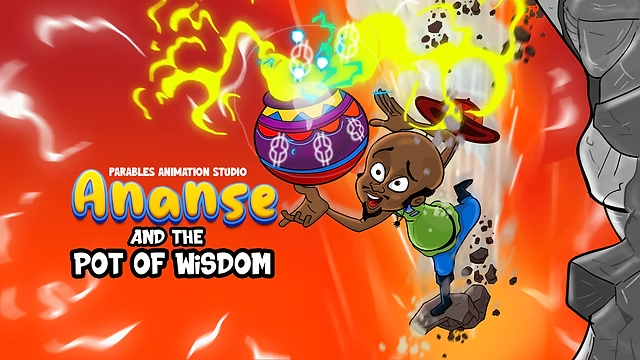
Many West African oral traditions contain this same narrative density. Anansi stories from Ghana interrogate power, intelligence, greed, and social manipulation through trickster narratives. Yoruba cosmology contains intricate metaphysical systems populated by Orishas embodying elemental forces, moral contradictions, and political symbolism. Sahelian epics preserve dynastic histories and migration memory through heroic oral performance. Vodun traditions across Benin and neighbouring regions sustain symbolic worlds where spirituality, ritual, ecology, and social philosophy intersect continuously.
These are not shallow folklore fragments. They are complex narrative systems capable of sustaining expansive visual storytelling traditions.
Comparable mythological systems elsewhere have undergone cycles of adaptation until they became embedded in global entertainment; Greek myths through theatre and cinema, Japanese folklore through manga and anime, Norse cosmology through blockbuster film universes. West African mythologies followed a different trajectory.
Colonial anthropology documented many African societies while simultaneously framing them through the language of primitivism and ethnographic distance. Spiritual systems became museum objects. Oral traditions were archived as anthropological material rather than treated as living narrative foundations capable of evolving within contemporary media. Even after independence, global visual culture remained dominated by external narrative frameworks distributed through publishing, television, cinema, and later digital platforms.
As a result, many African creators entered modern visual industries through imported storytelling structures. Superhero conventions, dystopian aesthetics, fantasy archetypes, action pacing, and genre expectations often arrived already carrying assumptions about what “modern” storytelling should resemble.
Cultural exchange itself does not constitute the problem. Artistic traditions have always evolved through interaction. The deeper concern is revealed when influence begins replacing excavation.
A considerable portion of African visual storytelling adopts global aesthetics while engaging only superficially with African historical or philosophical depth. African identity sometimes appears reduced to styling: unnamed kingdoms, patterned fabrics, generalised spirituality, symbolic ornaments, or vaguely ancestral imagery detached from the memory systems that originally produced them.
The distinction matters because visual storytelling shapes emotional memory as much as entertainment consumption. When younger audiences encounter external mythologies rendered with scale, seriousness, and narrative complexity while their own cultural worlds remain underdeveloped visually, inherited symbolic familiarity weakens gradually across generations. Stories stop functioning as cultural memory and begin functioning primarily as imported imagination.
The Difference Between Aesthetic and Inheritance
West Africa occupies a particularly complicated relationship with mythology because many of its symbolic systems remain socially alive.
Sango still exists within religious practice and popular consciousness. Vodun traditions continue through ritual and spiritual structures. Masquerade systems remain visible through ceremonial performance. Praise poetry survives across communal settings. Oral storytelling traditions continue within homes, festivals, and informal cultural spaces even as their broader transmission networks weaken.
West African creators are not reviving entirely abandoned cosmologies. They are translating living symbolic systems into contemporary visual language. That distinction changes the cultural responsibility attached to adaptation.
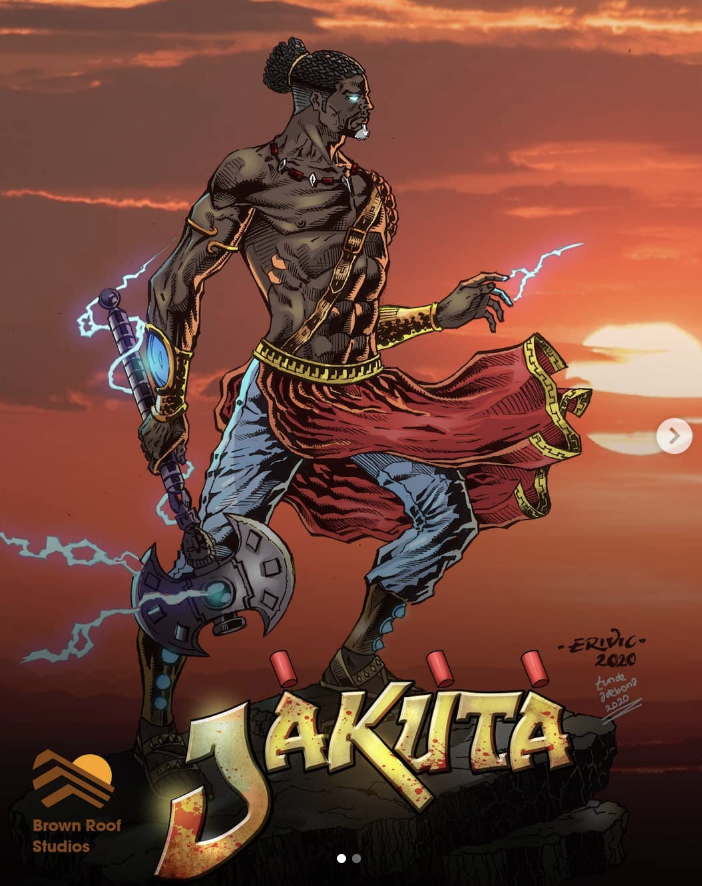
A comic inspired by Yoruba cosmology does not merely reinterpret ancient mythology. It engages philosophical structures that continue shaping spirituality, naming systems, moral imagination, and communal identity within contemporary society. Animation rooted in masquerade symbolism does more than reproduce costume aesthetics. It translates ritual movement, sacred performance, and embodied cultural meaning into visual media forms designed for modern audiences.
This complexity partly explains why adaptation within West African visual storytelling often feels different from simple fantasy world-building. The stories carry historical and emotional gravity that extend beyond entertainment. At the same time, adaptation changes tradition itself.
Oral storytelling thrives through communal participation and fluid reinterpretation. Comics introduce fixed visual representation. Animation introduces directorial control over movement, atmosphere, and voice. Market expectations shape pacing and genre decisions. Platform economics influence narrative accessibility. Global audiences affect how creators frame local symbolism.
The transition from oral tradition into visual media involves negotiation rather than direct preservation, decisions about what survives, what simplifies, what amplifies, and who controls interpretation. This reality sits beneath many contemporary West African visual projects, whether explicitly acknowledged or not. They also influence the broader infrastructure surrounding comics and animation within the region.
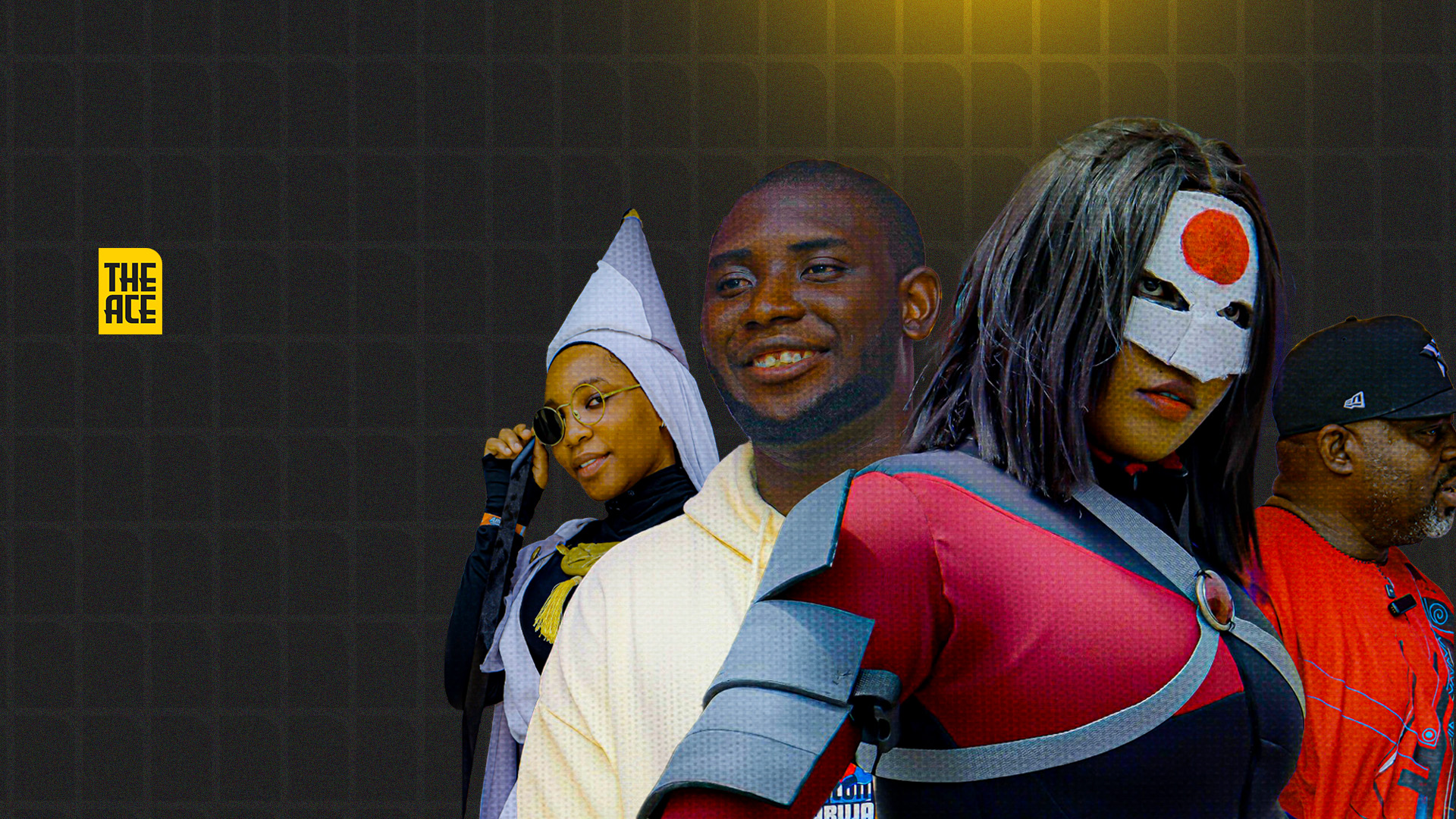
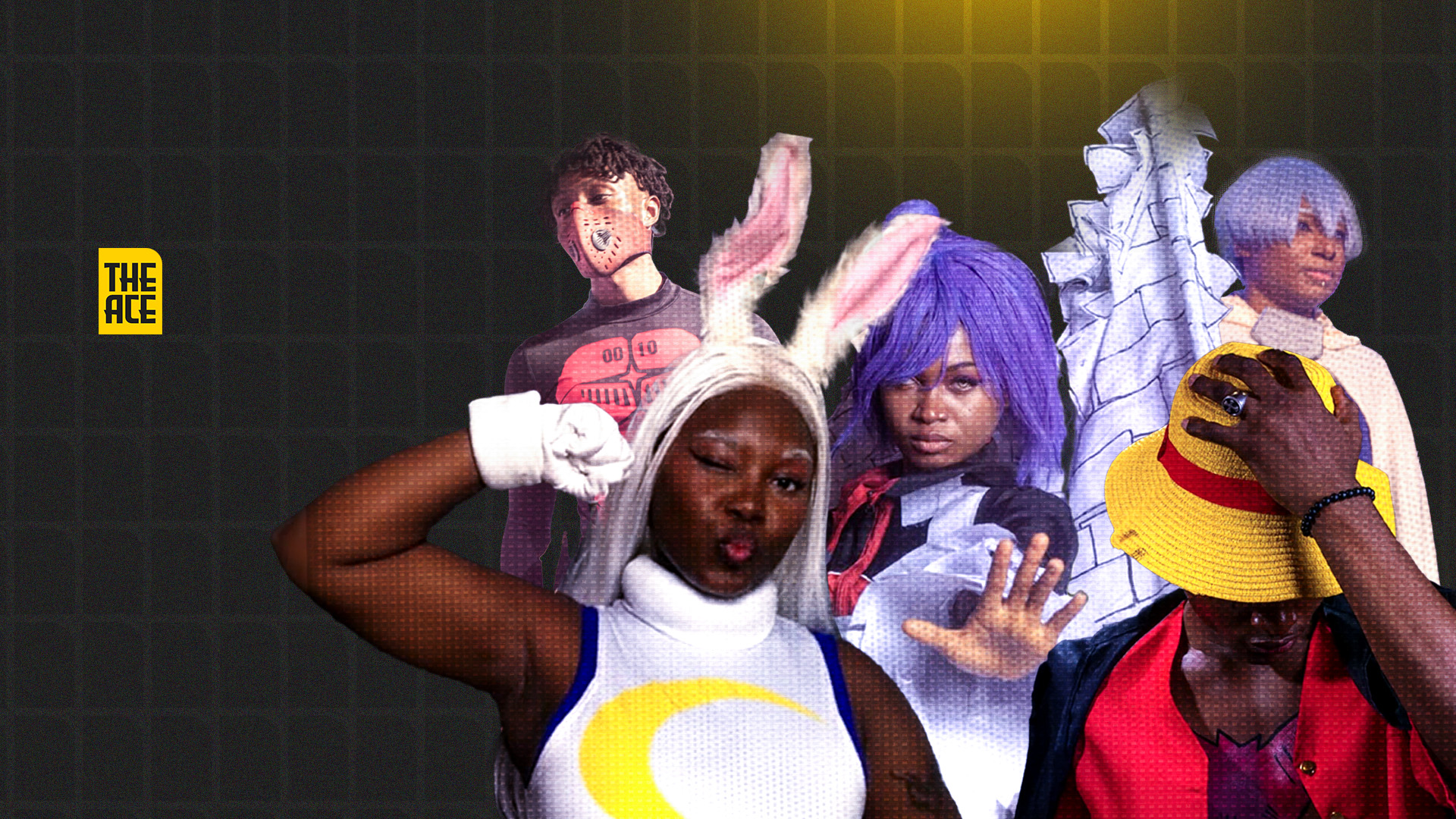
Festivals, literary gatherings, and visual storytelling communities continuously function as spaces where cultural memory receives public legitimacy beyond academic preservation. Events such as Comic Con Ibadan, Pa Gya! A Literary Festival, FESPACO, and others operate not only as entertainment gatherings but as cultural meeting points where visual storytelling traditions gain institutional visibility and regional continuity.
In oral cultures, stories survive communally. That communal dimension remains essential even after stories enter digital and visual forms.
Drawing the Living Kingdoms
The future of West African comics and animation does not depend solely on industrial expansion, streaming distribution, or technological improvement. Those elements matter, but they do not address the deeper cultural question emerging within the region’s visual storytelling movement. The larger question concerns memory.
Can comics and animation carry inherited symbolic worlds into contemporary life without flattening them into aesthetic shorthand? Can oral cosmologies survive translation into panels, storyboards, and digital screens while retaining philosophical depth? Can visual storytelling become a site of cultural continuity rather than another environment where external narrative priorities dominate local imagination?
West Africa possesses no shortage of narrative material. The region’s oral traditions already contain the political complexity, metaphysical structures, tragic archetypes, ecological imagination, and symbolic richness associated with major global fantasy traditions. The challenge has never been the scarcity of stories. The challenge has been the absence of sustained adaptation infrastructures capable of transforming those memory systems into durable visual ecosystems.
That transformation now unfolds gradually across the region through comics, animation, festivals, collaborative studios, and independent creators building narrative worlds from local memory rather than imported templates. The process remains unfinished.
Case Studies: A Deep Dive into the Mechanics of Translation
To fully grasp how West African narrative systems survive the transition to the comic page, one must move past superficial thematic analysis and examine the formal mechanics of sequential art. A comic book does not merely translate words into pictures; it translates oral performance into spatial architecture. When a story moves from the voice of a storyteller to the grid of a page, every element of performance must find a mechanical equivalent: rhythm becomes panel pacing, vocal range becomes line weight, and cosmic principles become visual design language.
The following case studies offer a forensic look at how contemporary creators are navigating this technical and cultural translation.
1. Spatialising the Mythic: The Anatomy of Page Layouts
The structural challenge of this medium is vividly illustrated by the Kono myth of the Bat and the basket of darkness touched upon earlier. In an oral performance, the climactic release of night across the world is an entirely auditory transition that is achieved through a sharp drop in the griot’s vocal register, a calculated pause, or a sudden, resonant strike on a drum.
When translated into the architecture of a comic book, this moment demands a completely different set of structural choices. The darkness cannot simply be described; it must dictate the physical layout of the page. An artist parsing this scene must decide whether the escaping night literalises itself by bleeding out of the panel borders and swallowing the gutters, thereby fracturing the reader’s sense of sequence.
The descent of night requires a structural shift: moving from open, borderless panel arrays that evoke the initial, endless daylight, to claustrophobic, ink-heavy, low-angle compositions where dense blacks physically overwhelm the page. By forcing oral rhythm into the physics of panel pacing, the comic book medium transforms a communal, time-bound vocal performance into a permanent, spatially organised visual experience.
2. The Theological Grid: Jakuta vs Amadioha
This tension between inherited forms and imported structures is acutely visible in how contemporary Nigerian creators navigate indigenous cosmologies, particularly through thunder deities. In Comic Republic’s Amadioha series, there is a palpable struggle between Western superhero templates and indigenous metaphysical weight. Western superhero comics are fundamentally built upon the concept of a static world order. Characters like Thor or Superman fight to preserve an ongoing status quo, where their power is individualistic and their environments remain largely unchanged.
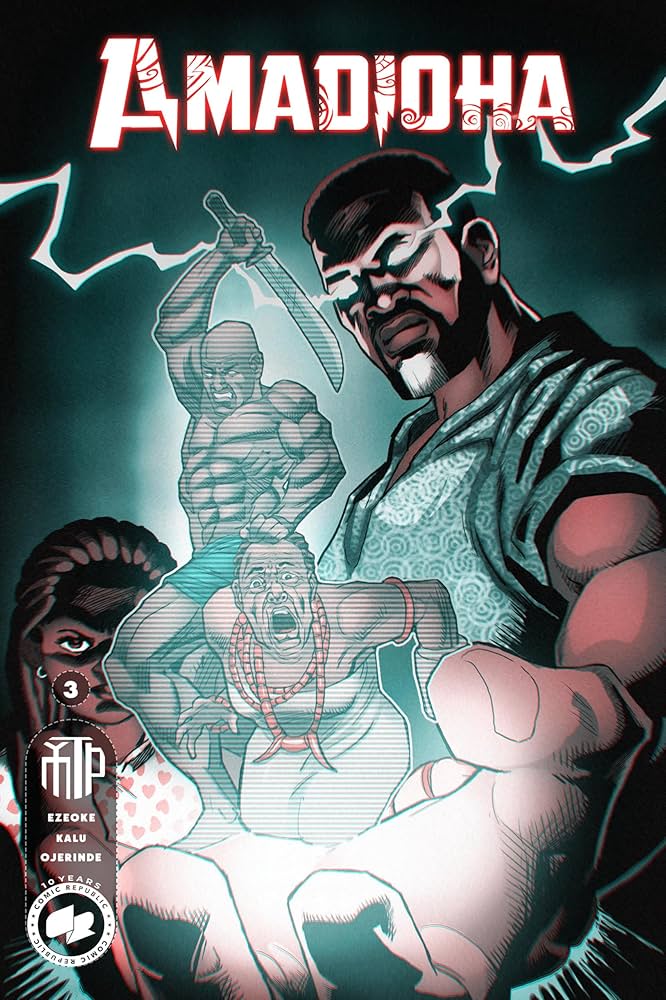
Amadioha frequently flirts with these exact imported tropes, leaning heavily on the high-octane pacing, cinematic action beats, and stylised poses characteristic of Marvel or DC blockbusters. Yet, the character of Amadioha cannot be fully contained by the “super-heroic” frame; he is an embodiment of cosmic justice and communal equilibrium. When the narrative leans too close to Western capes-and-cowls conventions, it risks flattening a complex deity into a mere regional variant of a comic book vigilante.
In contrast, Brown Roof Studios’ Jakuta approaches the translation of Shango’s mythology by actively attempting to dismantle this imported template. Instead of adopting the sleek, digitally smoothed look of contemporary American comics, Jakuta embraces a raw, historically grounded aesthetic that behaves more like a visual excavation than a corporate product. The comic explores Jakuta not as a polished, invulnerable hero, but as a deeply flawed, volatile figure navigating political intrigue and mortal vulnerabilities.
By prioritising atmospheric world-building and humanising the legend, Jakuta avoids the trap of surface-level aesthetic branding. It demonstrates that for an indigenous cosmology to survive the transition to the panel, the creator must reject the Western obsession with the indestructible “superhero” and instead honour the tragic arcs, ecological connections, and moral contradictions that made the original oral mythologies so enduring.
3. Radical Formalism: Juni Ba’s Djeliya
To see this translation operating at its most radical, formalist boundary, one must look to the work of Senegalese creator Juni Ba, particularly his graphic novel Djeliya. Ba does not just make use of West African folklore as a decorative backdrop; he integrates it directly into the mechanical DNA of his line work and page architecture. Heavily influenced by the kinetic, minimalist geometry of Genndy Tartakovsky’s Samurai Jack and the expressive exaggeration of late-1990s shōnen manga, Ba’s style uses bold, scratchy, linocut-like linework and a restricted palette saturated in striking reds, greens, and yellows, which are the literal colours of the Senegalese flag.
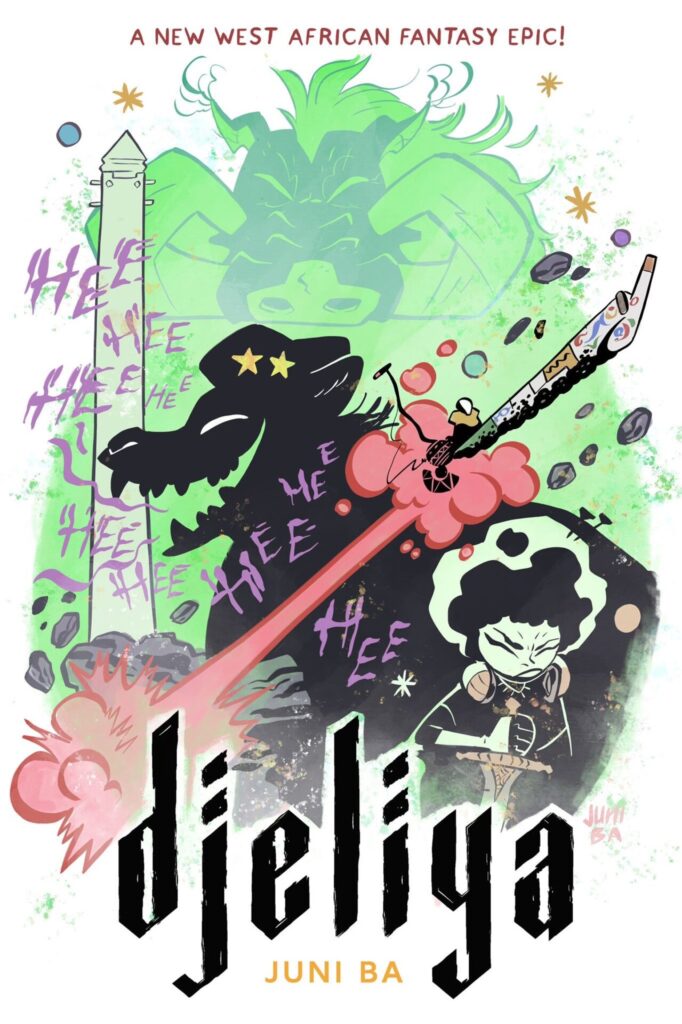
More importantly, Djeliya treats the comic page as a meta-narrative on the power of storytelling itself, following a prince and his djeli (griot) through a post-apocalyptic landscape. Ba entirely rejects the rigid, Western nine-panel grid. His panels expand, collapse, and vibrate with a chaotic, crackling energy where sound effects are hand-lettered into the scenery itself. The music of traditional instruments is rendered in chalky, organic white letters that break through panel borders.
By using distorted, non-Euclidean layouts and prioritising emotional velocity over realistic anatomy, Ba creates a comic that behaves like an oral tale: mutable, loud, and unburdened by Western cinematic realism. It is a masterclass in how a creator can use international comic book language to serve, rather than dilute, an authentic West African narrative voice.
4. Critical Infrastructure: Festivals as the New Griot Spaces
This shift from commercial product to critical cultural continuation, as demonstrated by these case studies, is precisely what festivals across the region are negotiating. They have evolved beyond marketplaces for selling books or securing streaming distribution; they are becoming the primary geographic sites where critical frameworks for indigenous comics are built.
Gatherings like Pa Gya! A Literary Festival in Ghana has uniquely bridged the historic gap between traditional text-based literature and sequential art, creating spaces where comics are critiqued with the same academic and artistic rigour as contemporary novels.
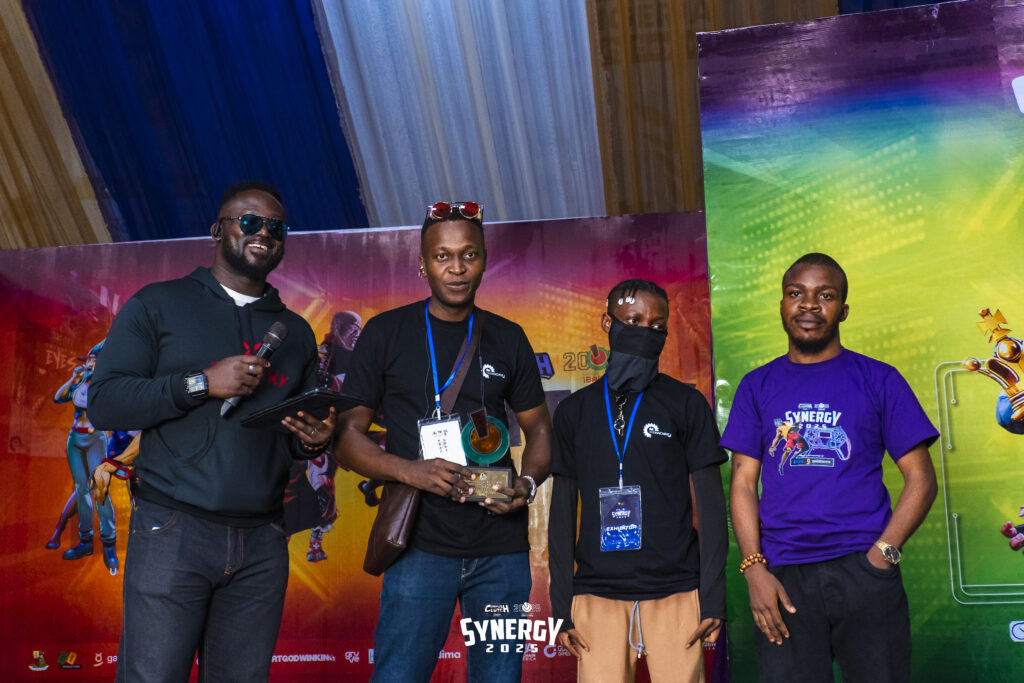
Similarly, while the historic FESPACO, the Pan-African Film and Television Festival of Ouagadougou in Burkina Faso reinforces the cinematic and atmospheric standards for animation, the Kids Film Festival (KIFEFE), or the occasionally held Festival International de la Bande Dessinée de Ouagadougou (FEBDO), DakarAnim Festiva and Ziguinchor International Film Festival & Animation (ZIFFA) in Senegal, Abidjan Animation Film Festival or Festival du Film d’Animation d’Abidjan (FFAA) in Côte d’Ivoire, Lagos Comic Con and Comic Con Ibadan in Nigeria, and others like with regional partnerships linked to the Festival International de la Bande Dessinée provide vital alternative distribution networks.
In an economic landscape heavily dominated by Western tech platforms and algorithmic gatekeepers, these festivals mirror the communal gatherings of the past. They offer a physical space where creators, critics, and audiences can collectively decide how their shared memory is archived, ensuring that the visual architecture of West African comics remains accountable to the communities that birthed those stories.
Concluding the Panels
None of this is guaranteed to succeed. Some projects still approach African mythology as surface-level aesthetic branding rather than narrative philosophy. Others struggle against distribution limitations, funding instability, fragmented infrastructure, or the pressure to imitate globally dominant storytelling formulas. The tension between commercial accessibility and cultural specificity is not going to resolve itself anytime soon.
However, something important has already begun. Across West Africa, comics and animation allow inherited memory to re-enter the public imagination in contemporary form. Kingdoms once carried through griot performance are appearing inside panel grids. Spiritual systems once confined to fragmented recollection are gaining visual continuity. Myths that survived centuries through speech are moving across digital screens, animated frames, and illustrated pages.
The process is uneven, contested, and incomplete, which is precisely what makes it valuable. An oral tradition that passes unchanged into a new medium has not been translated; it has merely been documented. The uncertainty, the friction, the formal experimentation visible in works like Djeliya and Jakuta are signs that something genuinely new is being built, not simply preserved.
The stories never disappeared completely. They waited for new languages capable of carrying them forward. That work continues now, panel by panel, page by page, across a region whose narrative inheritance is finally acquiring the visual architecture it has long deserved.
Written by: Izevbigie Nehemiah and Mujeeb Jummah
--------------------------------------------------------
--------------------------------------------------------
AI Use at TheACE
TheACE uses artificial intelligence tools to support research, drafting and analysis across Africa’s creative industries. All content is verified, edited and approved by our human editorial team to ensure accuracy, clarity and responsible storytelling. AI assists our work; it does not replace human judgment.