Somewhere in Lagos this July, an animation studio is finishing a clean character design project, confident colour work, and a script that could hold its own anywhere in the world. In that same studio, someone is quietly searching for how to build a working interactive prototype, because the international distributor on the other end of the pitch wants more than a demo reel, and nobody on the team studied for that part. That gap between the creative work Africa is already producing at a genuinely high level, and the digital infrastructure needed to pitch it, scale it, or get paid properly for it, is the part of the story most coverage of the continent’s creative boom keeps skipping. Everyone wants to talk about the art. Almost nobody wants to talk about the tooling underneath it.
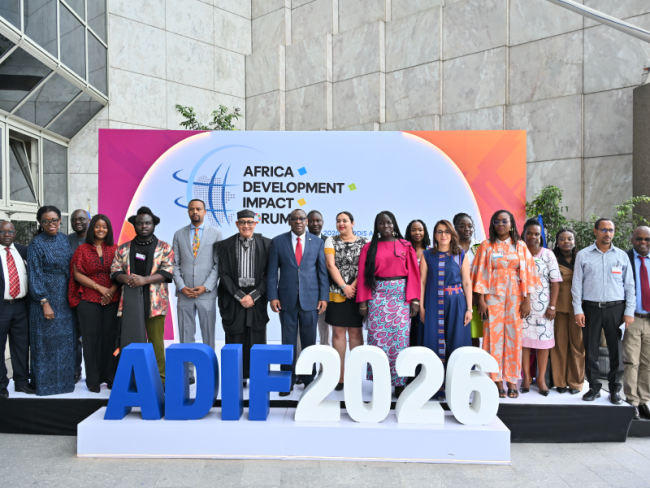
Africa’s creative industries employed an estimated five million people as of 2023, a workforce larger than many national economies would put in a single sector, and yet, for all that labour, the continent contributes just one per cent of the world’s trade in creative goods, a gap panellists at this year’s Africa Digital Innovation Forum called both a warning and an opportunity, depending on which direction the next decade takes it [Africa Digital Innovation Forum, UNECA, 2026].
Animation and comics sit right in the middle of that tension. The talent pipeline is real. Studios are multiplying, government attention is slowly warming to animation as an export category rather than a hobby, and events like Annecy have started to notice African work in a way they didn’t five years ago. But talent alone does not close a trade gap. Increasingly, the industries pulling ahead are the ones treating technical literacy, not just artistic skill, as part of the job description.
Gaming is the clearest example of this shift, largely because it is the sub-sector most openly built on both craft and code. A recent industry commentary out of Nigeria made the point plainly: gaming shouldn’t be dismissed as just entertainment, since it already fuses coding, storytelling, design, animation, and increasingly artificial intelligence into a single discipline [HP Nigeria, Vanguard, 2026]. Educational institutions across the continent are starting to catch up to that reality rather than resist it. Wits University in Johannesburg now runs a full degree in game design. Kenya’s Africa Digital Media Institute has partnered with a French gaming school to run a dedicated animation and game lab in Nairobi. Regional accelerators are training early-career developers in coding, design, and production and feeding them directly into working studios rather than leaving them to figure it out alone [Atlantic Council].
Comics are only a few steps behind gaming in this respect, and the direction of travel is already visible. Comic Republic’s own move into the webtoon scroll format and its shift to putting some of that content behind a paywall point to the same underlying truth: format changes like this aren’t just creative decisions; they’re technical projects involving reader infrastructure, payment systems, and platform logic that a purely artistic team doesn’t automatically have in-house. Zebra Comics has taken that logic further, building its own app and platform rather than relying entirely on third-party comics readers and using that infrastructure to host webtoons from creators across the continent rather than just its own catalogue. That’s the more ambitious version of the same idea: not simply having a website but owning infrastructure that other African creators can actually build on.
The payoff for getting this right extends beyond any single studio. A team with real technical capacity can collaborate with animators to adapt a comic into a series, or with developers to turn it into a game, far more easily than one that must outsource every technical step from scratch. It also matters for funding, at a moment when grant-makers are visibly drawn to projects that show technical ambition alongside creative merit, whether that’s AI, immersive formats, or platform-building. The European Union’s Africa–Europe Partnerships for Culture, a €70 million programme running through 2030, explicitly names digitalisation alongside arts and creative industries as one of its funding areas. Its Spaces of Culture strand, delivered through EUNIC, ran its most recent sub-Saharan Africa call this year, offering up to €50,000 per project to triangular partnerships between local cultural partners, European cultural institutes, and an EU delegation, though that particular application window closed in June. It is a useful marker that this kind of funding is heading toward projects that can show a technical backbone alongside the creative one [Africa-Europe Partnerships for Culture, European Commission; EUNIC, Spaces of Culture 2026].
None of this is an argument against creative training, which Africa is investing in seriously; UNDP’s Independent Animators Capacity Building Programme is putting twenty emerging animators from across the continent through four months of technical and business development this year alone [UNDP, 2026]. It is an argument that creative training and technical training are no longer separate tracks feeding two different industries. They are the same pipeline, and the studios treating them that way are the ones actually converting five million jobs into more than one per cent of global trade.

For readers looking to build the technical side of that equation specifically, like coding, digital tools, and the kind of practical tech literacy studios are starting to expect by default, the recently concluded Fiztech Ironclad’s SkillUp Bootcamp and other trainings like the Teen Tech Quest are places currently teaching that mix. Beyond individual training, Fiztech Ironclad also works directly with studios and platforms looking to build the kind of higher-end technical infrastructure this piece describes, rather than only sending their people through a course and hoping it adds up.
It is worth remembering that studios have solved exactly this problem before. Gaming studio Maliyo Games ran into the same wall years ago: more storytelling ambition than the local technical ecosystem could support. Rather than wait for someone else to fix it, founder Hugo Obi built GameUp Africa, an in-house talent accelerator training developers in coding, design, and production. It has since grown into a thirty-person, pan-African team spread across five countries [PocketGamer.biz, 2026; Google Play #WeArePlay]. Ergo, the animation studio finishing its pitch deck this month does not need to invent that solution from scratch. The model already exists, a few hundred kilometres away, and it worked.
--------------------------------------------------------
--------------------------------------------------------
AI Use at TheACE
TheACE uses artificial intelligence tools to support research, drafting and analysis across Africa’s creative industries. All content is verified, edited and approved by our human editorial team to ensure accuracy, clarity and responsible storytelling. AI assists our work; it does not replace human judgment.