Long before many African boys become men, they are handed a script to be strong, endure quietly, protect others, do not cry for too long, do not fail publicly, and do not appear weak. Across homes, schools, religion, and popular culture, masculinity is often introduced as performance long before it is understood as identity. Boys are taught heroism early, but vulnerability much later. In many stories, men become symbols before they are allowed to become people.
African comics, fantasy, and speculative storytelling have not been entirely exempt from this tradition. Heroes have often appeared as warriors, kings, conquerors, protectors, and chosen saviours. Their value is measured through sacrifice, resilience, and survival. Tenderness, when it appears at all, is usually secondary.
However, beneath the gods, kingdoms, monsters, and fantastical worlds, something has begun to emerge in contemporary African storytelling. Increasingly, some creators are asking different questions of masculinity. What if strength could look like care? What if boys were allowed softness without shame? What if heroism did not require emotional silence?
This Boy Child Day, The African Comics & Cinematic Empire (TheACE) examines the kinds of heroes African boys are often asked to become, and the stories beginning to imagine something more.
The Boys Who Inherit Silence
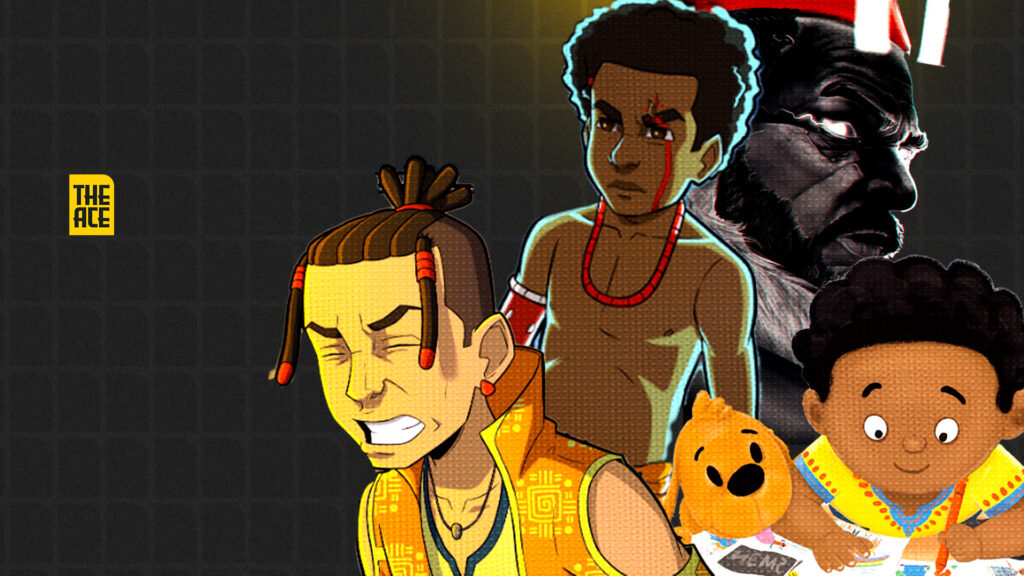
Perhaps one of the most emotionally devastating explorations of masculinity and inherited pain appears in “Son of a Father”, one of the stories featured in TheMachine’s 2025 anthology, WORLDS. At the centre of the story is a prince rejected by his own father for appearing weak. His inadequacy is not measured by morality or character, but by performance, strength, and expectation. He is judged according to whether he resembles the kind of son his father believes he should be.
At one point, the father tells him, “After this sorry performance of yours, you are not worthy of my name. And even yours, I am certain I will forget.”
It is a brutal line, not merely because of its cruelty, but because of how familiar its emotional architecture feels. Across many societies, boys are often taught that affection is conditional. Respect must be earned through competence, toughness, and emotional restraint. Weakness risks humiliation, while vulnerability risks rejection.
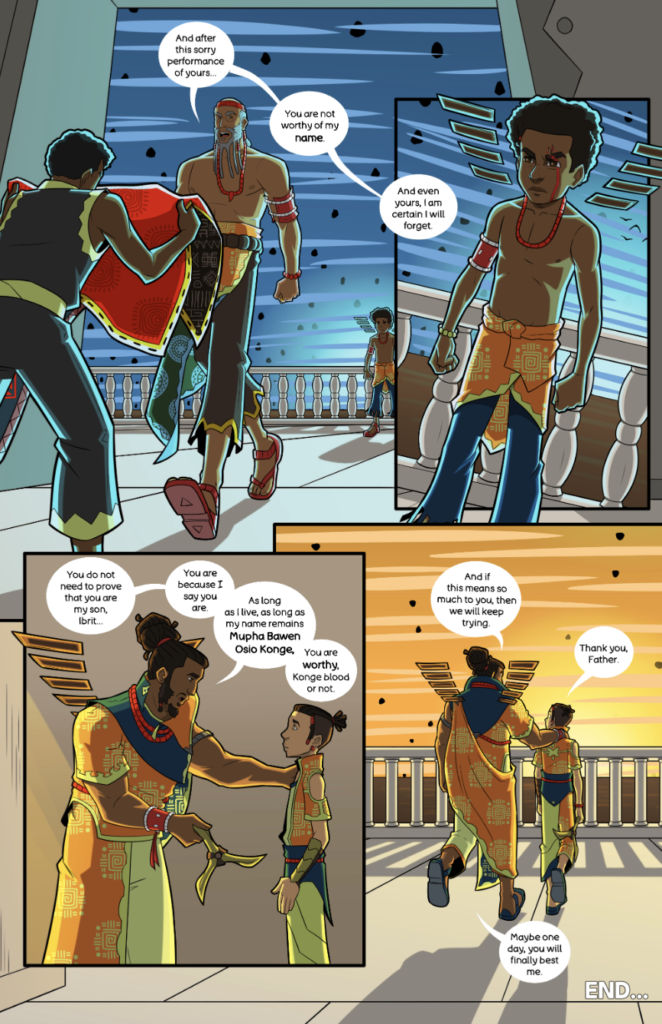
In “Son of a Father”, masculinity is inherited like armour: protective, rigid, and bruising. Yet the story’s greatest triumph is not that the wounded prince eventually becomes king. It is that he refuses to pass the same pain forward.
Later, speaking to his own son, he says: “You do not need to prove that you are my son, Ibrit. You are because I say you are.”
The contrast between the two statements becomes the emotional heart of the story. One father weaponises identity, while the other restores it. In that moment, the story stops being about power and becomes about interruption, the interruption of inherited emotional violence and the refusal to make another boy suffer to become a man.
Speaking on the inspiration behind “Son of a Father”, creator CuisEl Peach explained that the story emerged from a much larger narrative he has carried for years, but that the father-son dynamic at its centre possessed a thematic weight strong enough to stand on its own.
“The message I hoped to pass was about breaking generational holds and traditions that alienate father-son relationships,” he said. “Mupha is a character who hopes to do what is right. One of those actions is being a better father to his son than his father was to him.”
That perspective gives more weight to the story’s emotional resonance. Mupha’s evolution is not simply about becoming king or proving strength. It is about choosing empathy where he once received rejection, and understanding fatherhood not as authority alone, but as emotional responsibility.
That is what makes the story resonate so deeply. It understands something many boys quietly carry: the fear that love disappears the moment strength does.
When Power Chooses Presence
If “Son of a Father” examines the wounds boys inherit, Comic Republic’s Amadioha imagines another possibility entirely: masculinity expressed through care.
Known in the mortal world as Kalu Akanu, Amadioha is a god whose journey into fatherhood becomes one of the story’s most compelling emotional dimensions. In many mythologies, power often creates distance. Gods become untouchable. Fathers become emotionally unavailable. Masculinity becomes associated with authority rather than intimacy.
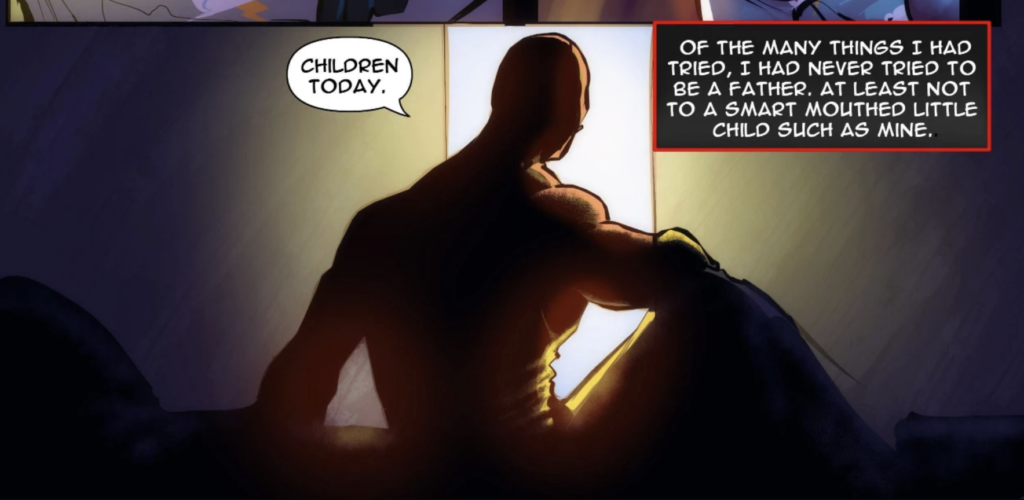
Amadioha complicates that image. At one point in the story, Kalu reflects: “Of the many things I have tried, I had never tried to be a father.”
The statement shows an honourable kind of vulnerability. For a figure associated with power and divinity, the admission feels deeply human. Fatherhood is not presented as instinctive mastery, but as unfamiliar terrain, something to grow into.
Later, he continues: “And when I got the chance, through divine twists of fate, I realised that destiny had not given up on me yet.”
In many stories, men abandon their families in pursuit of destiny. Amadioha does the opposite. Destiny reveals itself through fatherhood, transforming care into something sacred rather than secondary. That distinction matters because his strength is not merely in thunder or godhood, but in his willingness to remain present, to care, and to descend from power into relationship.
Within the context of African masculinity, where emotional distance is sometimes mistaken for strength, that portrayal becomes particularly meaningful. Amadioha suggests that protection is not only physical. Sometimes it is an emotional presence. Sometimes it is choosing to stay.
The Boys Allowed to Imagine
Not all boys dream of becoming warriors, kings, or saviours. Some simply want to draw. That truth sits at the heart of Alaba Onajin’s Oh No, Ojó!, a playful but deeply thoughtful picture book centred around a young boy whose love for drawing begins to spill onto places it probably should not.
On the surface, the story is humorous and light-hearted. Beneath its charm, however, is something more significant: a narrative that allows a boy’s creativity to exist without ridicule or suppression.
In discussing the book, Onajin described it as: “A fun manual for parents, teachers and guardians whose toddlers/wards have suddenly discovered their inner Picasso…”
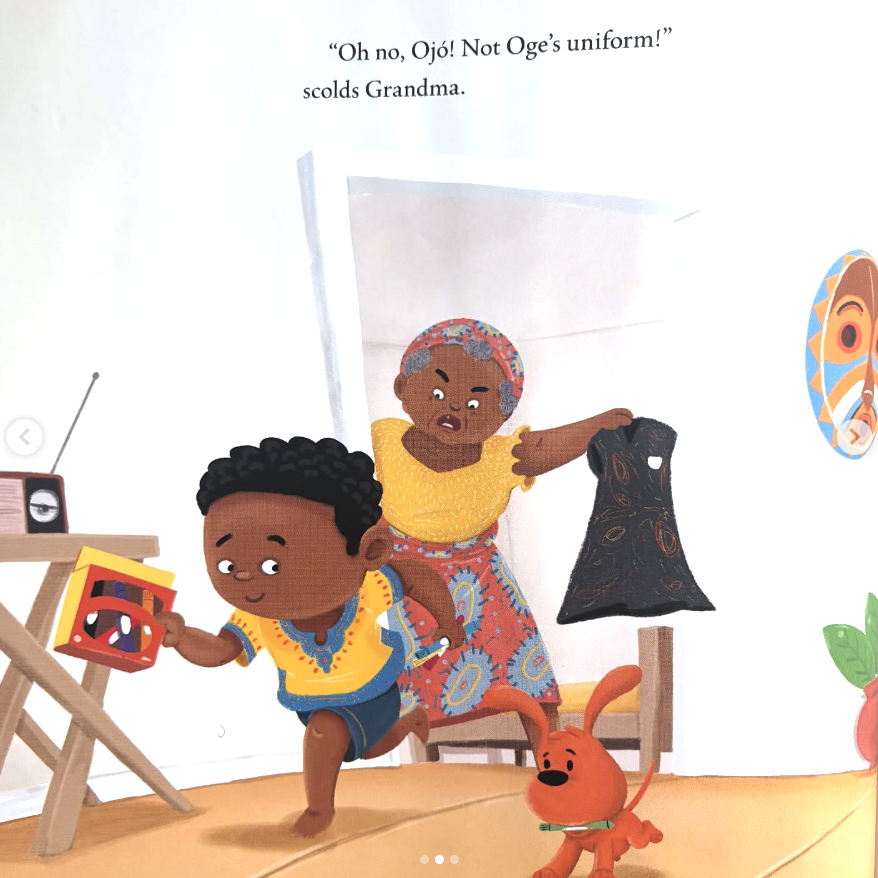
He also referred to it as: “A humorous story dealing with a common preschooler issue and great for all young creatives.”
Those descriptions matter because boys are often encouraged to create value long before they are encouraged to create art. Ambition, toughness, competitiveness, and practicality are usually easier to celebrate in young boys than artistic sensitivity or emotional curiosity.
Ojó represents a different kind of masculine possibility: the imaginative boy. He is not trying to conquer anything. He is simply trying to express himself. Importantly, the story does not punish him for it. Instead, the adults around him slowly learn how to nurture that creativity responsibly rather than crush it entirely.
In many ways, that gentleness feels radical. Stories like Oh No, Ojó! remind readers that softness is not failure, curiosity is not weakness, and creativity is not a distraction from boyhood, but part of it.
Or as Onajin puts it: “Let’s make those creative kids happy!”
The Heroes African Boys Are Asked to Become
Across many African stories, boys are still frequently shaped through familiar archetypes: the warrior, the heir, the protector, the chosen one, the emotionally silent son, and the sacrificial provider. Strength remains central to masculinity’s mythology. What is interesting, however, is how some contemporary African stories are beginning to widen that emotional vocabulary.
In these narratives, boys and men are not solely defined by conquest or endurance. They are allowed uncertainty, emotional wounds, compassion, creativity, presence, and healing. The prince in WORLDS becomes heroic not because he inherits power, but because he refuses to inherit cruelty. Amadioha’s godhood becomes meaningful not because of domination, but because of care. Ojó’s story matters because it protects something many boys lose too early: imaginative freedom. Together, these stories challenge the idea that masculinity must always be emotionally restrictive to be respected.
Perhaps that is where storytelling matters most. Not merely in showing boys who survive the world, but in imagining boys fully allowed to live within it. Ergo, the problem was never that African boys were asked to become heroes. It was how narrowly heroism itself had been defined.
--------------------------------------------------------
--------------------------------------------------------
AI Use at TheACE
TheACE uses artificial intelligence tools to support research, drafting and analysis across Africa’s creative industries. All content is verified, edited and approved by our human editorial team to ensure accuracy, clarity and responsible storytelling. AI assists our work; it does not replace human judgment.