What does ownership look like in an industry that is still being built? And when African stories begin to move through systems designed elsewhere, who ultimately shapes the way those stories are told?
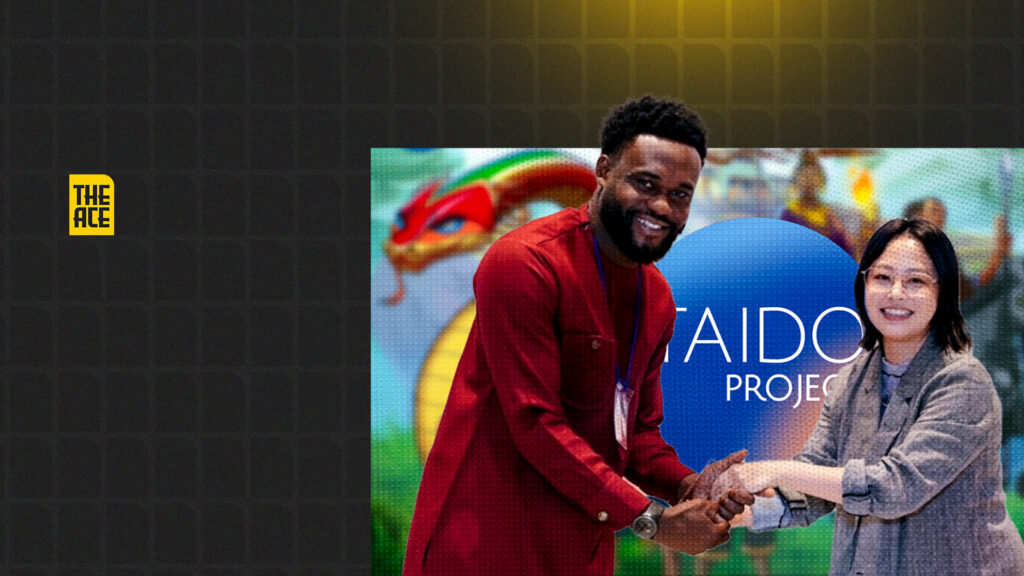
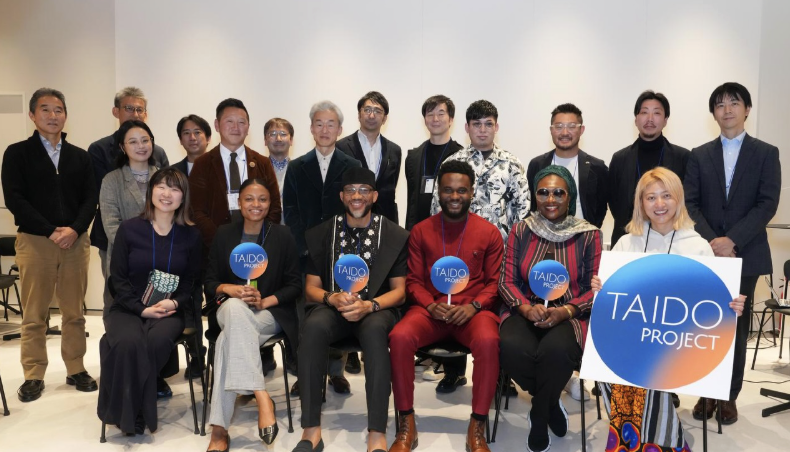
At the centre of this question sits the TAIDO Project, a cross-border co-creation initiative launched in late 2025. Driven by Arc & Beyond, a Tokyo-based creative agency established with backing from the Sony Group, alongside the Japan External Trade Organisation (JETRO), the project connects seasoned Japanese anime professionals directly with emerging African creatives. The foundational concept relies on an exchange of technical discipline and industry experience to co-develop original animated short films.
On the surface, it reads like a standard cultural exchange programme. Underneath, however, it raises a much more complicated question. TAIDO is not simply facilitating artistic collaboration; its organisers explicitly describe it as an effort to establish sustainable co-production and global distribution pathways between African studios and Japan’s animation industry. Ergo, is this simply support, or the early blueprint of an industrial ecosystem Africa does not yet structurally possess?
The reality across much of the continent is simple, but unresolved. Animation talent exists in staggering abundance, but the infrastructure that sustains it does not. Local studios frequently operate without institutional funding, stable distribution access, or government policy frameworks that recognise animation as a high-value economic sector. Creators navigate a fragmented cycle of freelance gigs and self-funded projects, manufacturing immense imagination without the machinery required to scale it.
So,when a structured framework like TAIDO appears, it does more than fill an operational gap. Backed by Japan’s immense animation heritage, it introduces concrete production discipline, from storyboarding to character design, linked directly to one of the world’s most successful creative pipelines. A profound question, however, lingers beneath the surface: if the system is taught from the outside, does it remain fully yours when you finally build it yourself?
The Architecture of the Pioneers
To understand how this tension plays out in practice, one must look closely at the two regional heavyweights selected to anchor the TAIDO Project’s inaugural cohort: Ghana’s Animax FYB Studios and Nigeria’s CR Motion Plus Ltd. These are not mere passive beneficiaries of foreign mentorship; they are established production hubs already pushing the boundaries of African intellectual property (IP).
In Accra, Animax FYB Studios, led by Creative Director Francis Y. Brown, has spent a decade building an authentic repository of African stories. Known for its award-winning, globally recognised visual style, the studio has consistently used animation to confront local structural challenges like youth unemployment. Their involvement in the TAIDO Project has served to improve their commercial focus.
Working alongside international partners, Animax FYB has been pushing forward major export-ready franchises, such as the Afrofuturistic action-drama ORAYA, executive produced by Ruth Ojougboh and presented at the Cannes Film Festival’s Marché du Film. For Brown, the partnership is less about receiving charity and more about absorbing industrial scale: leveraging Japanese pipeline expertise to ensure that African-owned IP can compete in a global market that generated over $300 billion in revenue, where Africa has historically been a consumer rather than an earner.
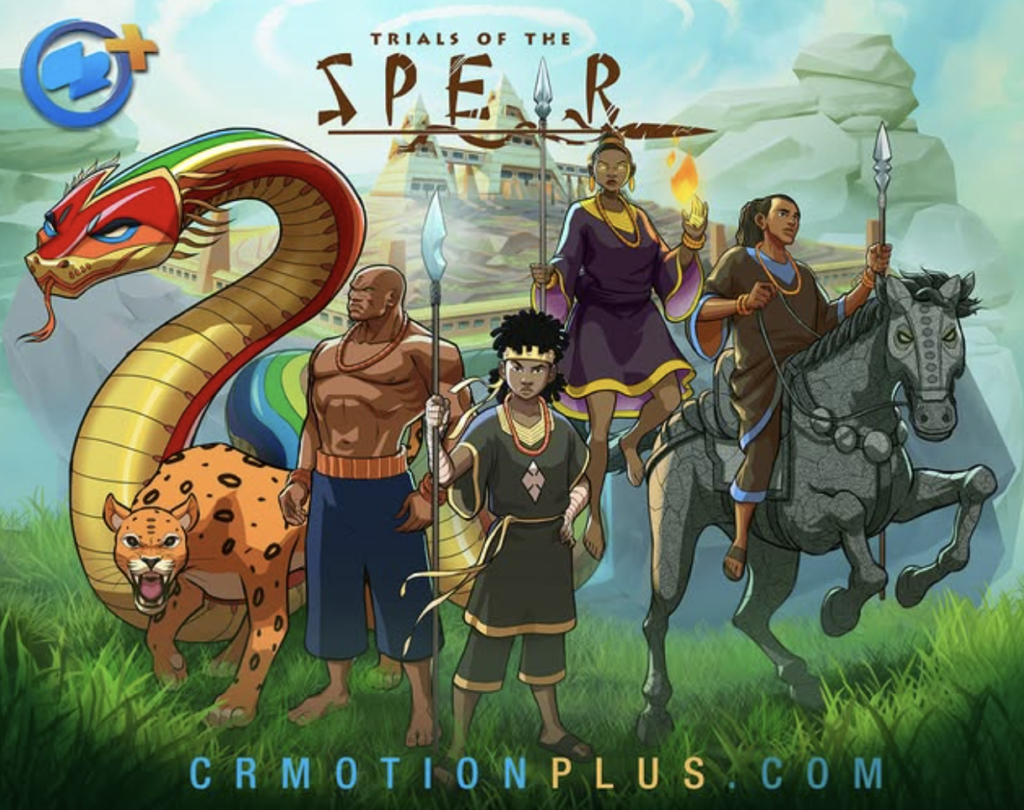
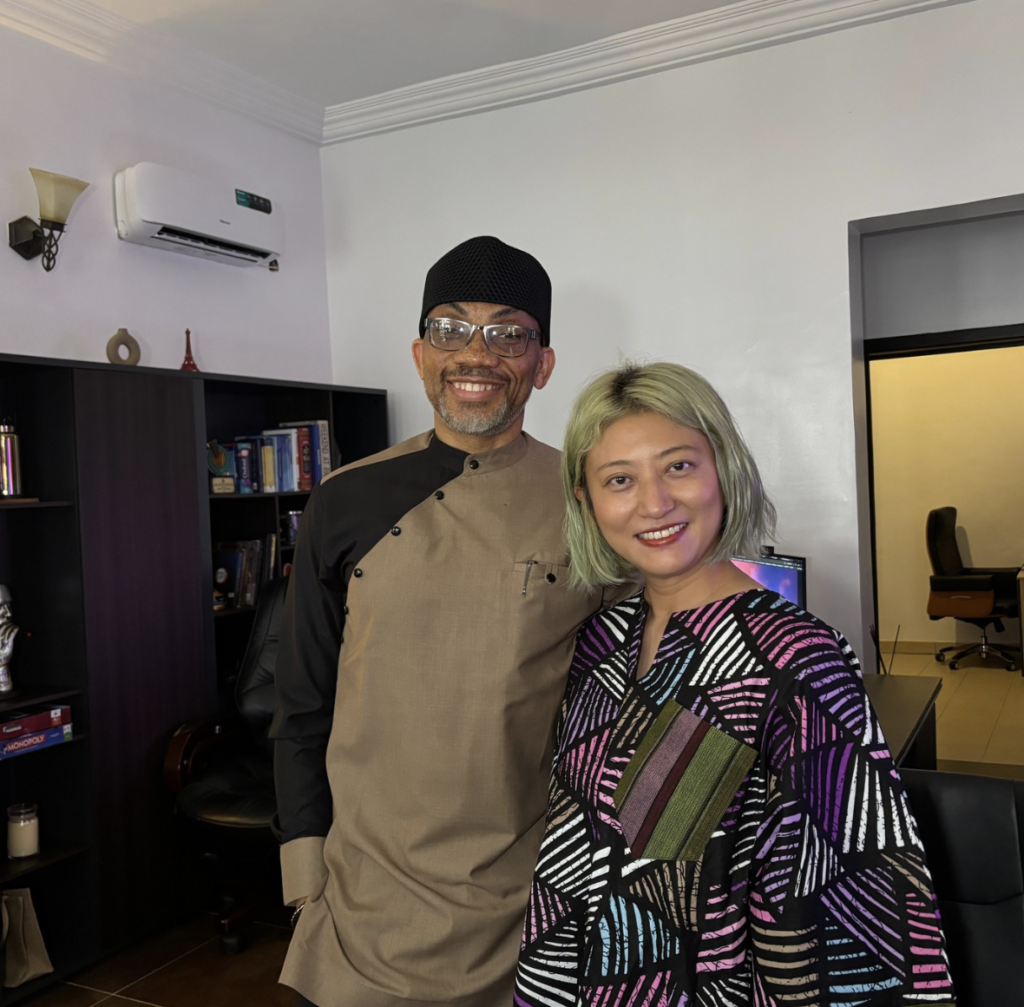
Simultaneously, in Lagos, CR Motion Plus, the animation and multimedia arm of the prominent entertainment firm Comic Republic, is utilizing the partnership to pioneer a new visual language. Known for creating dense, mythologically rich superhero universes, the studio partnered through the TAIDO initiative with veteran Japanese professionals, including One Piece production manager Megumi Okawa, to produce Trials of the Spear. The project adapts a local comic book following an outcast defending his people, blending Nigerian folklore and cinematic combat choreography with the precision of Japanese anime artistry. For CR Motion Plus and Comic Republic CEO Jide Martin, this represents a deliberate hybridisation: using foreign scaffolding to elevate indigenous narratives without sacrificing the cultural authenticity of the voice.
| Studio | Country of Origin | Key TAIDO Focus/Flagship Project |
| Animation FYB Studios | Ghana | Pipeline scalability, ORAYA franchise |
| CR Motion Plus Ltd. | Nigeria | Visual hybridisation, Trial of the Spear |
| Arc & Beyond/JETRO | Japan (Sponsor/NPO) | Industry mentorship, Global networks |
The Historical Mirror: A Blueprint for Cultural Confidence
Japan’s relevance in this conversation is not accidental. It is one of the few global non-Western powers that successfully transformed local storytelling traditions into worldwide cultural hegemony without surrendering its identity to Hollywood models.
Anime did not capture the global imagination because Japanese studios tried to imitate Western tropes. It became a global juggernaut because Japan leaned deeper into its own folklore, its own distinct visual philosophies, and its own emotional aesthetics, amongst other reasons like domestic ecosystems and institutional investment.
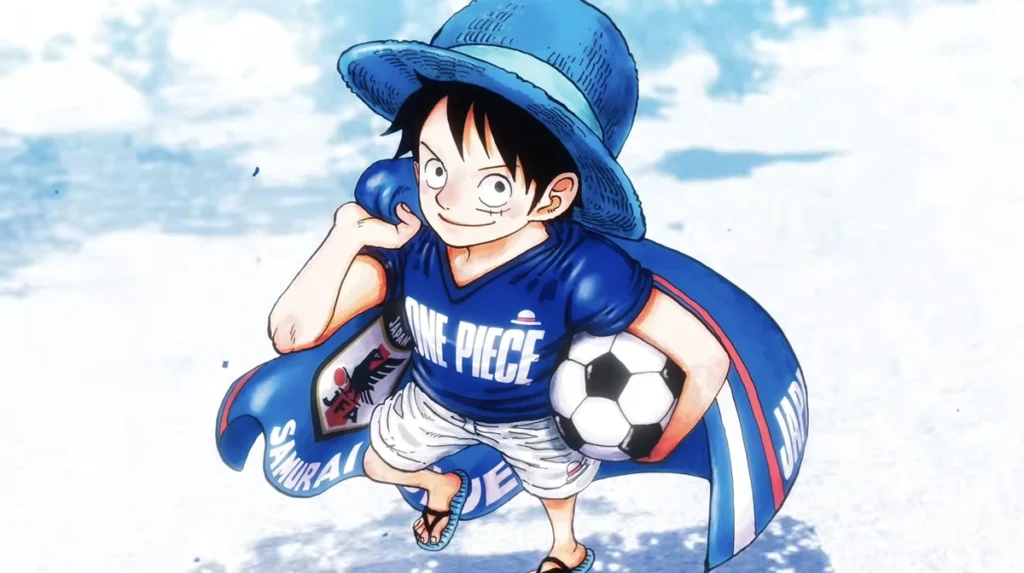
The absolute apex of this cultural export power is on display ahead of the 2026 FIFA World Cup. In a striking cultural crossover, Japan’s national football team, the Samurai Blue, has partnered directly with the One Piece franchise. The squad was gifted custom blue Straw Hats, fans are waving tournament support flags signed by manga creator Eiichiro Oda, and Monkey D. Luffy donned the national kit on the cover of Weekly Shonen Jump. It is a vivid demonstration of an IP so profoundly woven into the fabric of its home nation that it steps off the screen to march alongside the country’s elite athletes on the world stage.
“We don’t want to make ‘Japanese-style’ animation. We want to support authentic African stories, created by African studios, and bring new artistic voices to the world.” — Miyuki Kitabatake, TAIDO Project Leader, Arc & Beyond
This historical trajectory offers a powerful parallel for Africa. The continent possesses an inexhaustible wealth of mythology, oral traditions, and contemporary histories, alongside a hyper-digital, youthful population. What has consistently been absent is the underlying infrastructure, long-term capital, and rigorous distribution networks.
A partnership with institutions backed by the likes of Sony and JETRO, therefore, becomes symbolic. It provides a blueprint for cultural confidence. Strikingly, this collaboration is built on an explicit agreement: the participating African studios retain 100% ownership of their intellectual property. This model avoids the historic trap of international co-productions that extract talent while stripping the continent of its creative assets.
The Cautionary Tale of the Sonic Boom
The insistence on 100% IP retention within the TAIDO framework highlights a crucial awareness of history. To understand why this structural safeguard is so vital, one only needs to look across the creative aisle to the meteoric rise of the African music industry.

Before Afrobeats became a dominant global force, capturing Grammy Awards and filling Western arenas, the ecosystem was fiercely local. In the early 2010s, domestic studios, independent homegrown labels, and local entrepreneurs held a commanding share of ownership. They funded the production, controlled the narrative, and owned the masters. However, as the genre’s global commercial value became undeniable, major international record syndicates and Western conglomerates moved in with aggressive capital, global distribution pipelines, and expansive multi-album deals.
The result was a complex paradox. While these international partnerships catapulted African musicians into unprecedented global stardom, they fundamentally altered the industry’s ownership architecture. Today, a significant portion of the ultimate equity, master recording rights, and global distribution revenues of Africa’s biggest musical exports are anchored in offshore corporate boardrooms rather than local hands. The creative talent remains indigenous, but the structural leverage has largely been exported.
This sonic trajectory serves as a profound cautionary tale for Africa’s nascent animation sector. The TAIDO Project’s current model of leaving IP entirely in the hands of studios like Animax FYB and CR Motion Plus is an admirable and necessary departure from historical extractive practices. Yet, it exposes an underlying vulnerability: if African animation relies exclusively on foreign pipelines to reach the global market, it risks repeating the music industry’s fate. Without local capital to match foreign infrastructure, the line between an empowering collaboration and a structural takeover remains dangerously thin.

Beyond Scaffolding: Turning Talent into Industry
The true test of whether Africa can construct a self-sustaining animation ecosystem is not a question of creative capacity, but of systematic coordination. Interestingly, this challenge is not unique to emerging markets. Even within Japan’s highly mature animation sector, leadership is warning against the dangers of fragmentation.
Takeshi Natsuno, the CEO of Japanese media giant Kadokawa, recently raised alarms over the structural weaknesses caused by an abundance of tiny, independent studios. Natsuno noted that having “countless tiny companies, each with its own president and executives” spreads talent entirely too thin, making it difficult to compete against global behemoths like Disney or Marvel. Kadokawa’s antidote is aggressive consolidation, absorbing smaller studios so creators can focus entirely on art while a centralised corporate machine handles sales, marketing, and management.
If the world’s most established anime market is feeling the structural strain of fragmentation, the lesson for Africa’s nascent ecosystem is clear. The foundations are entirely visible across the continent: growing local comic and illustration cultures, rapid mobile internet penetration, and an unprecedented global appetite for African-centric narratives. But scattered talent must become a structured industry.
In this light, cross-border initiatives like the TAIDO African Animation Challenge are less about creating long-term dependence and more about strategic acceleration. They expose the critical gaps in domestic infrastructure while providing temporary scaffolding for rapid skill transfer, international networking, and strict production discipline.
Ultimately, however, an enduring ecosystem cannot be sustained by foreign grants or external platforms alone. A genuinely autonomous African animation sector will rely entirely on internal investment, both public and private, and protective policy frameworks that treat animation as a serious economic driver, capable of generating employment, boosting cultural exports, and exerting narrative power.
The challenge ahead is not one of imagination, but of architecture. It requires the deliberate, structural transformation of scattered regional talent into a unified, industrial powerhouse.
For further context on how these cross-border creative collaborations operate in practice, you can view the official project summaries on the TAIDO Project Channel, which showcases early animatics and production diaries from the participating studios.
Written by Mercy Warimu and Mujeeb Jummah
--------------------------------------------------------
--------------------------------------------------------
AI Use at TheACE
TheACE uses artificial intelligence tools to support research, drafting and analysis across Africa’s creative industries. All content is verified, edited and approved by our human editorial team to ensure accuracy, clarity and responsible storytelling. AI assists our work; it does not replace human judgment.