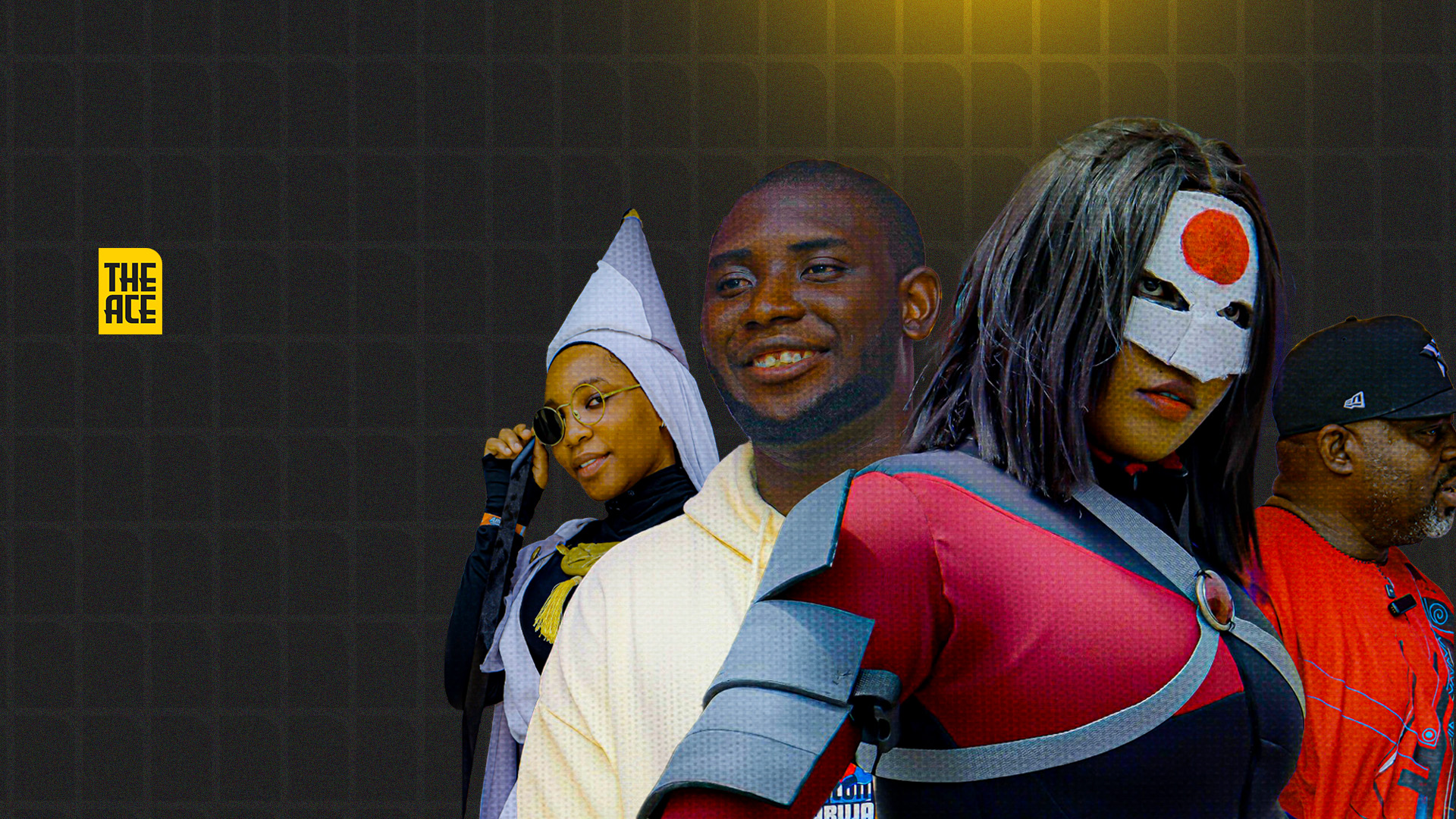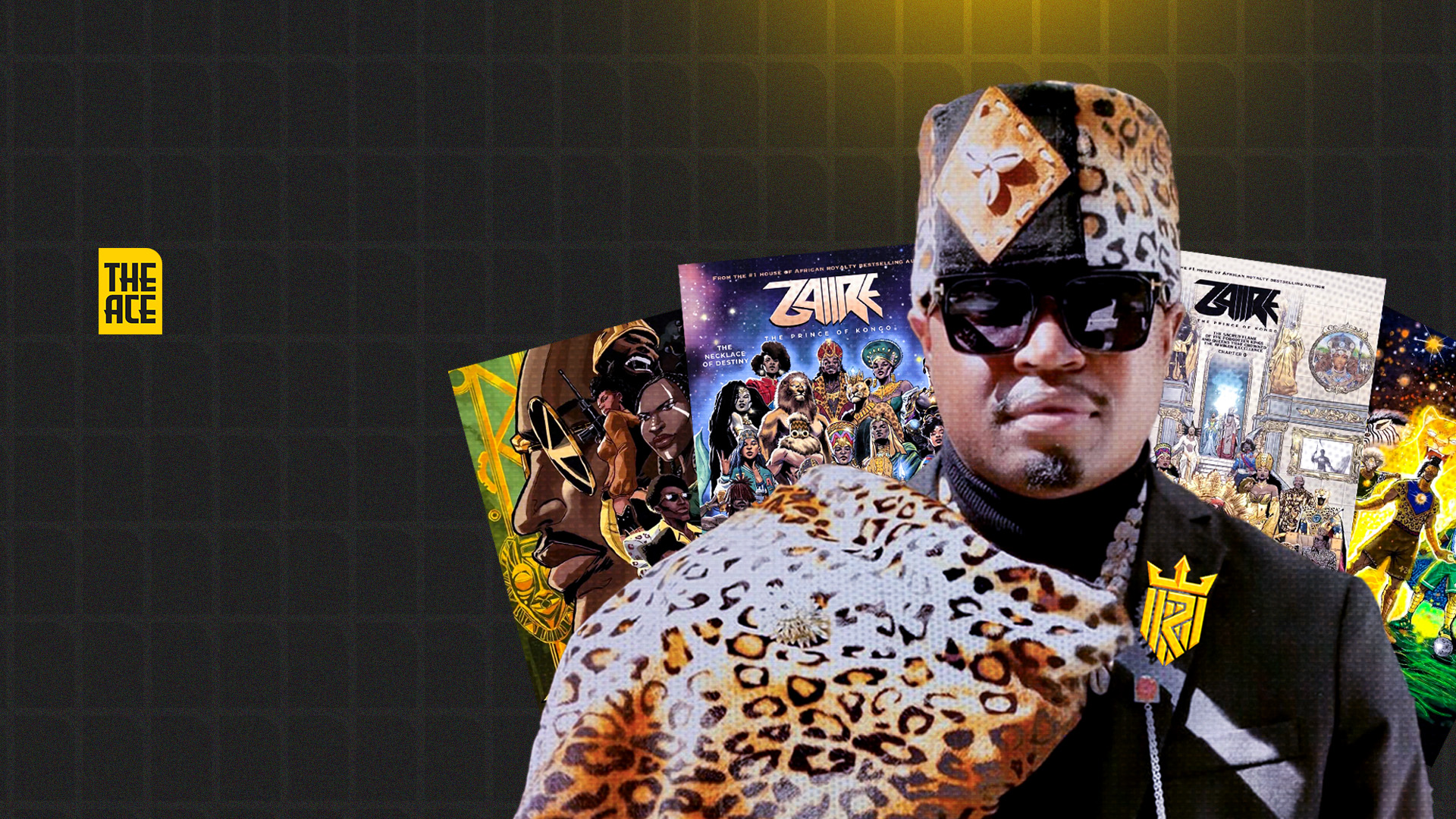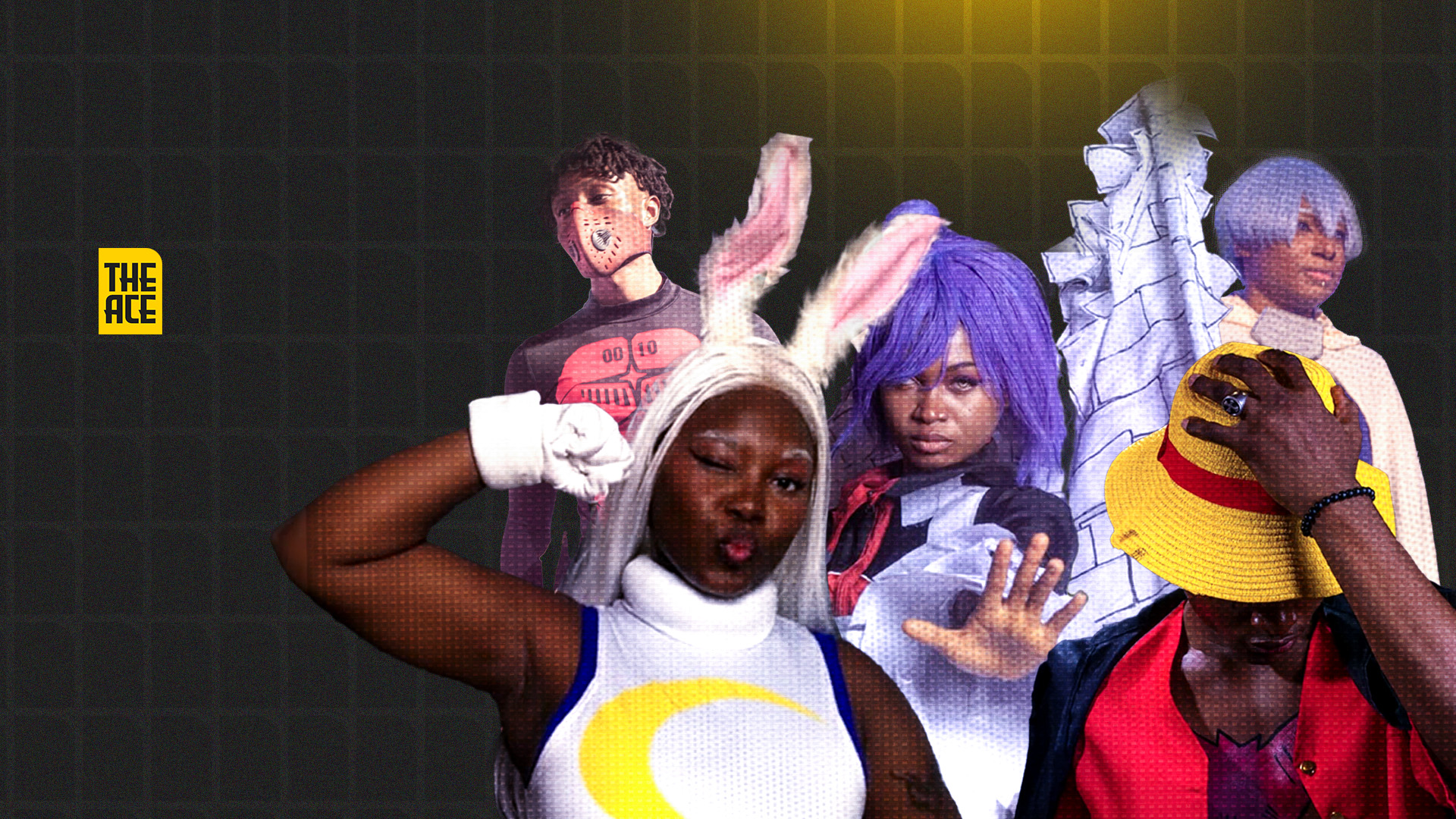
Days after Comic Con Ibadan closed its doors, with the Bookause Nigerian Comic Industry Report freshly launched and the conversation around the country’s comic scene still warm, we came across an award most African comic creators have never heard of: the Mahmoud Kahil Award. It is twelve years old, carries a total prize purse of $35,000, and belongs to the Arab world, not Nigeria, Kenya, South Africa, or most of sub-Saharan Africa.
That discovery is the starting point for this piece, but not its destination. The real question it raises is simple and uncomfortable: why does a twelve-year-old, university-anchored, internationally respected comics award exist for North Africa and the wider Arab world, while sub-Saharan Africa’s closest equivalent remains a single-benefactor prize run largely by volunteers, with a top category worth roughly a tenth of Kahil’s? And, more usefully, what would it take to close that gap?
What follows is our attempt to lay the evidence on the table plainly, region by region, so that the argument for what TheACE is proposing is built on something sturdier than frustration.
The Benchmark: What Mahmoud Kahil Got Right
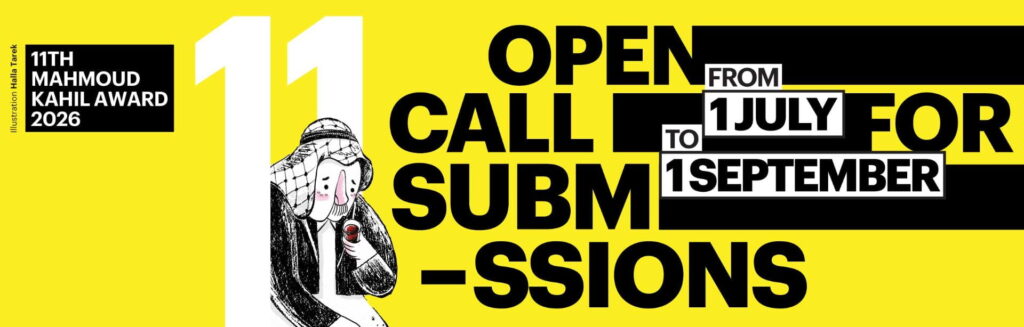
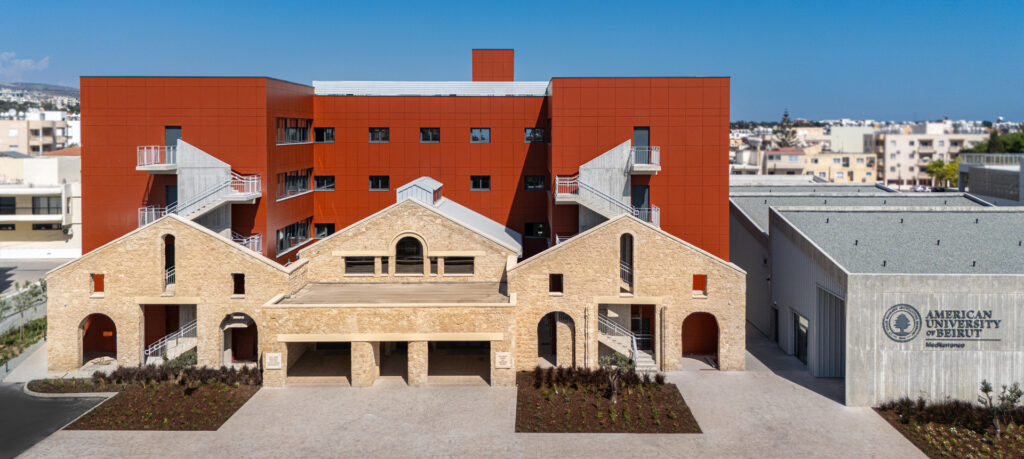
The Mahmoud Kahil Award was established in 2014, named for the Lebanese-British editorial cartoonist who died in 2003, and is run by the Rada and Mutaz Sawaf Centre for Arab Comics Studies at the American University of Beirut (AUB). It offers a total prize pool of $35,000, with individual category prizes of up to $10,000, across categories spanning editorial cartoons, graphic novels, comic strips, graphic illustrations, and children’s book illustration, alongside honorary Lifetime Achievement and Comics Guardian awards.
The detail that matters most is not the prize money. It is the institutional home. Mahmoud Kahil sits inside a university research centre, which gives it a degree of continuity that is less dependent on any single sponsor’s mood, any single government’s budget cycle, or any single founder’s continued involvement. Past winners include some of the Arab world’s most significant cartoonists: Egyptian caricaturist Doaa El-Adl, a two-time winner; Egypt’s Walid Taher, recipient of the Lifetime Achievement Award; Tunisia’s Seif Eddine Nechi and Zeineb Ben Haouala; and Lebanon’s Joseph Kai. Even its 2024 postponement, owing to regional security concerns around the ceremony venue in Beirut, did not threaten the award’s existence, because the institution underneath it was never tied to a single event.
Mahmoud Kahil is also not alone. It sits inside a wider cluster of North African and Arab-world comics infrastructure, much of it geographically African, that has been building for nearly two decades:
FIBDA, the Festival International de la Bande Dessinée d’Alger, launched in Algiers in 2008 under Algeria’s Ministry of Culture and runs annually each October. It is widely regarded as the major comics event of its kind across both pan-Africa and the Arab world, and its juried prizes for best drawing, best script, and humour have drawn entrants from well beyond North Africa, including Benin, Cameroon, Gabon, and the Democratic Republic of Congo in past editions. This matters for our argument: FIBDA shows that an African-anchored comics award can attract genuinely continental participation when the institutional backing is there.
CairoComix, established in Egypt in 2015, runs its own multi-category prize structure: Best Published Graphic Novel in Arabic, Best Digital Comic, Best Comics Magazine, and Best Comic Strip, among others.
Three serious institutions, each running annually or near-annually, each backed by either a university, a ministry, or a sustained festival infrastructure. That is not luck. That is what deliberate, funded institution-building over fifteen to twenty years produces.
What Sub-Saharan Africa has, and its Limits
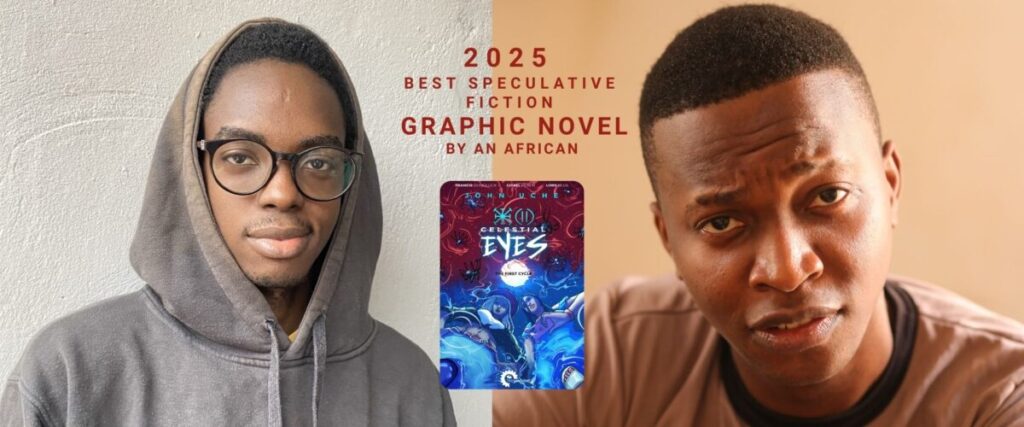
It would be inaccurate, and frankly unfair to the people doing the work, to claim sub-Saharan Africa has nothing. The Nommo Awards, run by the African Speculative Fiction Society (ASFS), have included a dedicated Graphic Novel category since the awards began in 2017 (with the exception of 2023), and they are genuinely pan-African in both scope and self-definition. Recent shortlists have pulled comics from Kenya, Nigeria, Zimbabwe, Uganda, and Rwanda, with 2025 finalists including Murewa Ayodele and Dotun Akande’s continuing body of award-nominated work.
But the structural differences become clear once you set Nommo against Mahmoud Kahil. Nommo’s graphic novel category awards up to $1,000, funded by a single benefactor, technology entrepreneur Tom Ilube, rather than an institution. The ASFS itself is a membership organisation that charges no membership fee and is run largely by volunteers. It was only formally incorporated as a Community Interest Company in the UK in October 2025, eleven years after Mahmoud Kahil already had university backing. And even within its own borders, the award has shown regional unevenness: a 2020 review of that year’s shortlist noted it was heavily skewed toward West Africa, with no nominations at all from North Africa.
That last point deserves emphasis, because it cuts in an unexpected direction. The gap in African comics recognition is not simply North versus sub-Saharan. It is also about which parts of sub-Saharan Africa get seen, and which language and publishing ecosystems dominate even within a single pan-African award.
Nigeria itself offers a useful microcosm of this fragility. The Bookause 2025 Nigerian Comic Industry Report, published by TheACE, documents at least three home-grown attempts at comic-specific recognition: the Fists Awards, which went into a long hiatus; the Comic Con Ibadan Awards, launched in 2023 and now emerging as one of Nigeria’s earliest dedicated comic awards; and the NICE Awards, whose 2025 edition had to move from a planned physical ceremony to a virtual one. Nerdwork Comic Con in Port Harcourt introduced its own contest categories in 2025 with a combined prize pool above ₦300,000 (roughly $200). These are sincere, valuable efforts. They are also exactly what you would expect from a sector with no institutional backbone: scattered, under-resourced, and vulnerable to cancellation at the first sign of budget pressure.
The Directory: Comics and Animation Recognition Open to Africans
Here is a working reference, organised by type, so the pattern is visible at a glance.
North Africa / Arab-anchored, with institutional backing
- Mahmoud Kahil Award (Lebanon/pan-Arab, draws North African winners). Founded in 2014. University-anchored (AUB). $35,000 total prize pool.
- FIBDA, Algiers. Founded in 2008. State-anchored (Ministry of Culture). Genuinely continental entrant base.
- CairoComix, Egypt. Founded in 2015. Festival-anchored, multi-category.
Continental / sub-Saharan, volunteer or benefactor-run
- Nommo Awards (African Speculative Fiction Society). Founded in 2017. Single-benefactor funded. Up to $1,000 (graphic novel category). Genuinely pan-African in self-definition, with documented regional unevenness in practice.
National-level, Nigeria (illustrative of the wider pattern)
- Comic Con Ibadan Awards. Founded in 2023. Convention-anchored, still building toward standalone status.
- NICE Awards. The recognition-focused 2025 edition was held virtually after a planned physical ceremony fell through.
- Bookause Comic Industry Impact Awards (BCII Awards). Held the first edition in 2025. Voting-based.
- Nerdwork Comic Con Awards (Port Harcourt). Contest-based, prize pool under $250 in 2025.
Adjacent but worth flagging
- Various national entertainment and creator-economy awards (e.g. AMVCA in Nigeria) occasionally touch animation or digital art categories but are not comics-specific and should not be counted as part of this ecosystem, however valuable they are in their own right.
The shape of this list tells its own story. North Africa’s entries are few but deep-rooted. Sub-Saharan Africa’s entries are more numerous but shallower, prone to hiatus, format downgrades, and prize pools measured in the low hundreds of dollars rather than the thousands.
Why the Gap Exists
It would be easy to read the above as a story about ambition or talent. It isn’t. The research, both continental and Nigeria-specific, points overwhelmingly to infrastructure and funding, not creative capacity, as the constraint.
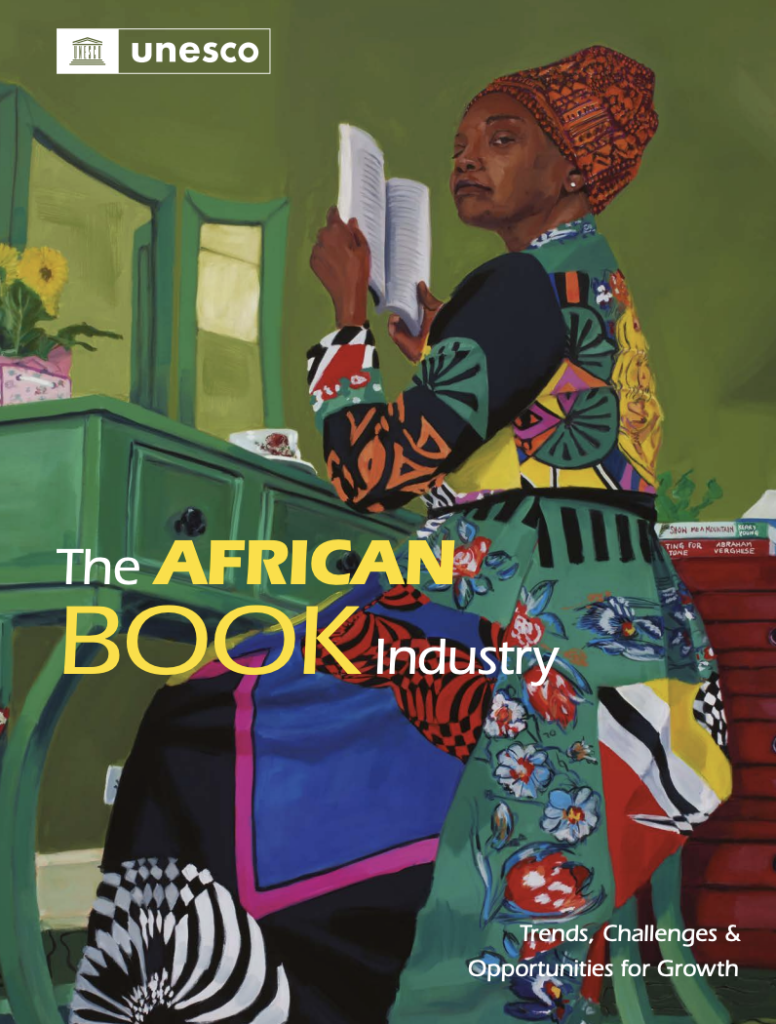
Start with scale. UNESCO and the Culture and Development East Africa partnership published the first-ever comprehensive mapping of Africa’s book publishing sector in 2025. It found that although Africa accounts for more than 18% of the world’s population, it generates only 5.4% of global publishing revenue. A comics award sits downstream of book and publishing infrastructure generally; when the wider sector is this undercapitalised, a juried comics prize is competing for attention and funding against far more entrenched, better-lobbied problems.
Then there is fragmentation versus concentration. A separate study mapping Africa’s research publishing landscape found a structurally similar pattern to comics: most publishing activity is run by single-entity operations embedded within universities, learned societies, or research institutes, which allows for locally driven work but leaves it constrained by limited infrastructure and a lack of professional publishing support. This is the precise inverse of Mahmoud Kahil’s model, which works because it is centralised inside one well-resourced institution rather than scattered across many under-resourced ones.
Language is not a soft cultural footnote here; it is a quantified structural barrier. Niger publisher Boubé Hama, speaking at the UNESCO report’s launch, made the point plainly: books matter on a continent with 54 countries and roughly 2,000 languages. Sub-Saharan Africa does not share anything close to Arabic’s relative linguistic unity across the Arab world, which is part of why a single pan-Arab award can function as one centralised institution in a way a single pan-African one cannot, at least not without a deliberate choice of working languages.
That, in fact, is the more useful way to think about the language problem, and it points toward a solution rather than just a diagnosis. Africa already has a model for managing this: the African Union conducts its business primarily in English and French, alongside Arabic, Portuguese, Swahili, and Spanish as official languages, accepting that continental unity does not require linguistic uniformity, only a shared working framework. A pan-African comics award could borrow this directly, anchoring itself in English, French, Arabic, and Swahili as core working languages, with Hausa, Xhosa, and other major regional languages recognised at the entry and category level. This would not erase the continent’s linguistic diversity. It would simply do what AU institutions already do: build one coordinating structure on top of it, rather than trying to dissolve it.
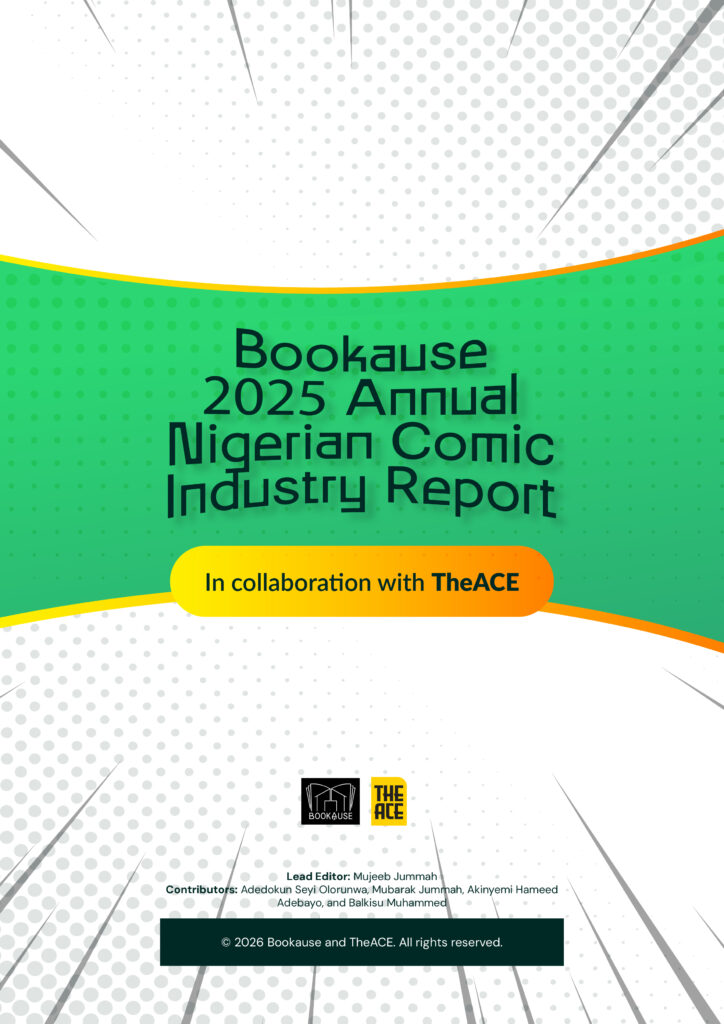
Then there is the money, and here the Bookause report gives us numbers that most general commentary on this subject doesn’t have. Nigeria’s Federal Ministry of Art, Culture, Tourism and Creative Economy received a ₦71 billion budget allocation in 2025. Comics received an explicit allocation of ₦0. Only 3.6% of surveyed Nigerian creators currently access any form of grant funding, while 28.6% identify lack of funding as their single biggest challenge. The average cost of producing one comic issue in Nigeria sits at roughly ₦375,000, with 32.1% of surveyed creators reporting costs above ₦500,000 per issue, covering writing, pencilling, inking, colouring, and lettering alone. Median annual creator income clusters at ₦300,000 or below for the largest single tier of respondents (32.2 percent), compared with an average Nigerian animator salary of ₦1.225 million, a roughly fourfold gap that the report attributes to comics functioning as an unpaid “IP pre-production layer” for better-funded downstream industries like animation, gaming, and film, rather than as a self-sustaining sector in its own right.
This is the same dynamic playing out at the continental level. Nollywood and Afrobeats receive government recognition, policy support, and institutional validation; Nigeria’s entertainment and media segment recorded an 11.2% revenue increase to roughly $4.1 billion in 2024, according to PwC. Comics, despite functioning as a documented cultural archive and a proven IP generator for those very sectors, as in Comic Republic’s Trials of the Spear adaptation deal with Japan’s JETRO or its Vanguards partnership with Universal Content Productions, remain almost entirely invisible to policymakers. One stakeholder interviewed for the Bookause report put it directly: with the level of investment Nollywood enjoys, the Nigerian comic industry would be able to compete with any industry in the world. The constraint is not creative. It is structural.
Worth noting too, as a genuine counterweight rather than a footnote: sub-Saharan Africa’s digital-first publishing model has produced real reach that older, more formal award cultures did not need to build, because their model was different. Nigerian creators report between 70% and 80% foreign digital readership for some titles, distributed through platforms like GlobalComix and Webtoon, alongside newer entrants such as the Zebra Comics App, despite marketing primarily to domestic audiences. That is a genuine achievement, and it is evidence that the underlying talent and audience appetite that this continent’s award infrastructure would need to draw on already exist in abundance. What is missing sits one layer up: the institutional scaffolding to recognise, fund, and sustain it.
A Hypothetical: The Africa Comic Awards
Picture this, purely as an illustration of what a properly resourced version of this idea could look like, not as an announcement of anything currently in motion.
Call it the Africa Comic Awards. It would not be housed inside a single country’s ministry, the way FIBDA is, nor entirely dependent on one benefactor, the way Nommo currently is. Instead, picture a consortium model: a small group of African universities with existing creative arts or media programmes, partnering with a continental cultural body such as the African Union’s own creative economy initiatives, or with development partners already active in this exact space, given UNESCO’s stated commitment to mapping and strengthening Africa’s book industry.
Funding would be mixed rather than singular: a modest endowment seeded by creative-industry sponsors, telecoms, streaming platforms, and entertainment conglomerates already investing in Nollywood and Afrobeats would be a natural first conversation, supplemented by development-partner grants tied to measurable cultural and literacy outcomes, the same framing UNESCO already uses to justify book-sector investment.
Judging would need to solve the language and regional-skew problem directly rather than hope it resolves itself. A regional heats structure, mirroring something like West Africa, East Africa, Southern Africa, North Africa, and Central Africa, each working primarily in whichever of English, French, Arabic, Swahili, or another major regional language fits, feeding into a continental final judged across all five working languages. This is the AU’s English-and-French-as-coordinating-languages model, simply extended to account for Arabic and Swahili’s importance in the comics-producing regions where they are dominant.
And critically, eligibility and archiving would need a data backbone that does not currently exist anywhere on the continent. This is precisely the gap TheLibrary, Africa’s Comics & Animation Intelligence Platform, is built to fill: a centralised, continent-wide database of creators, publishers, and published work that any serious juried award would need in order to function credibly. An award without a reliable archive of who is eligible and what has been published is not a serious award; it is a popularity contest with a trophy.
The Advocacy Ask
We are not proposing a single grand gesture. Two tracks, pursued together, make more sense than waiting for one perfect institution to appear.
The near-term, pragmatic ask is to properly fund and institutionally anchor what already exists. Nommo Awards already has the hardest part solved: a working pan-African definition, a track record since 2017, and real creator trust. What it lacks is exactly what Mahmoud Kahil has, and Nommo does not: a university or ministry partner willing to take on long-term institutional responsibility, and a funding base broader than one benefactor. Strengthening Nommo is faster, cheaper, and less politically fraught than building something new from scratch.
The longer-term ask is the institution-building case laid out above: a dedicated, juried, multi-language pan-African comics award, modelled on what FIBDA and Mahmoud Kahil have proven works at the North African and Arab-world level, backed by the kind of mixed funding and data infrastructure that has been missing every time this idea has been tried informally.
Either way, the precondition is the same: data. The Bookause report itself notes that the Nigerian comic industry currently has no registry of creators, no association-compiled sales figures, and no annual industry tracking, a gap that TheACE and TheLibrary already exist to close at the national level, and one that any continental award effort will hit immediately if it is not solved first.
Closing
This conversation did not start with us, and it should not end with us either. It started, informally, on the ground, at Comic Con Ibadan, at Nerdwork, at Geek Pop-Up, in every Comic Con organiser’s quiet frustration about prize pools too small to matter and ceremonies too underfunded to survive a bad year. What we have tried to do here is make that frustration explicit, put numbers next to it, and point at the institutions, Mahmoud Kahil, FIBDA, CairoComix, that prove the alternative is possible when the funding and the institutional will show up together.
We would like to hear from the people closest to this: creators, convention organisers, cultural policymakers, and anyone who has tried and failed to keep a comic award alive past its second year. What would it actually take, in your experience, to build something that lasts?
References
Awards & Institutions
African Speculative Fiction Society. About the Nommo Awards. www.africansfs.com/nommo-awards/about-the-awards. Accessed 1 July 2026.
African Speculative Fiction Society. The African Speculative Fiction Society (ASFS) Incorporates as a CIC and Opens Voting for the 2025 Nommo Awards. 23 October 2025. www.africansfs.com/news/the-african-speculative-fiction-society-asfs-incorporates-as-a-cic
American University of Beirut. Establishment of the Rada and Mutaz Sawaf Centre for Arab Comics Studies. Executive Bulletin, 21 December 2022. https://executive-bulletin.com/education/the-american-university-of-beirut-announces-the-establishment-of-the-rada-and-mutaz-sawaf-center-for-arab-comics-studies
Asharq Al-Awsat. “Doaa Al-Adl Wins Mahmoud Kahil Award for Political Cartoon.” 2 March 2017. https://eng-archive.aawsat.com/vivian-haddad/lifestyle-culture/doaa-al-adl-wins-mahmoud-kahil-award-political-cartoon
Mahmoud Kahil Award. About Us. mahmoudkahilaward.com/about-us. Accessed 1 July 2026.
Wikipedia. Algiers International Comics Festival. en.wikipedia.org/wiki/Algiers_International_Comics_Festival. Last updated May 2025.
Wikipedia. Cairo Comix Con. en.wikipedia.org/wiki/Cairo_Comix_Con. Last updated July 2025.
Wikipedia. Mahmoud Kahil. en.wikipedia.org/wiki/Mahmoud_Kahil. Last updated September 2025.
Wikipedia. Nommo Awards. en.wikipedia.org/wiki/Nommo_Awards. Last updated May 2026.
Industry Data & Reports
Bookause / TheACE. 2025 Nigerian Comic Industry Report. TheACE x Bookause, January 2026. Available at: https://thebookausereport.framer.website/
Brittlepaper. “Tlotlo Tsamaase’s Womb City Wins 2025 Nommo Award for Best Novel.” 26 November 2025. brittlepaper.com/2025/11/nommo-2025
Brittlepaper. “The African Speculative Fiction Society announces the finalists for the 2025 Nommo Awards.” 28 August 2025. brittlepaper.com/2025/08/the-african-speculative-fiction-society-announces-the-finalists-for-the-2025-nommo-awards
PwC. Africa Entertainment and Media Outlook 2025–2029: Africa’s E&M Shift: Fast, Focused and Future-Ready. October 2025. www.pwc.com/ng/en/publications/entertainment-and-media-outlook.html
PwC / ThisDay. “PwC Report: Nigeria Leads Africa Entertainment Media by 11.2% Growth, Trailed by Kenya, South Africa.” ThisDay, 24 October 2025. www.thisdaylive.com/2025/10/24/pwc-report-nigeria-leads-africa-entertainment-media-by-11-2-growth-trailed-by-kenya-south-africa
Radio Algérienne. “FIBDA 2025 : remise des prix aux lauréats des différents concours à la clôture du festival.” 5 October 2025. news.radioalgerie.dz/fr/node/71928
UNESCO. The African Book Industry: Trends, Challenges & Opportunities for Growth. First published Paris, June 2025. www.unesco.org/en/articles/african-book-industry-trends-challenges-opportunities-growth
UNESCO. “Africa’s Book Industry: UNESCO Highlights Its Economic and Cultural Potential.” June 2025. www.unesco.org/en/articles/africas-book-industry-unesco-highlights-its-economic-and-cultural-potential-new-report
UNESCO. “UNESCO and CDEA Launch Landmark Report on Africa’s Book Industry in Tanzania.” 3 September 2025. www.unesco.org/en/articles/unesco-and-cdea-launch-landmark-report-africas-book-industry-tanzania
UNESCO Creative Economy. Festival International de la Bande Dessinée d’Alger (FIBDA) — Policy Monitoring Platform. www.unesco.org/creativity/en/policy-monitoring-platform/festival-international-de-la-bande-dessinee-dalger-fibda. Accessed 1 July 2026.
--------------------------------------------------------
--------------------------------------------------------
AI Use at TheACE
TheACE uses artificial intelligence tools to support research, drafting and analysis across Africa’s creative industries. All content is verified, edited and approved by our human editorial team to ensure accuracy, clarity and responsible storytelling. AI assists our work; it does not replace human judgment.