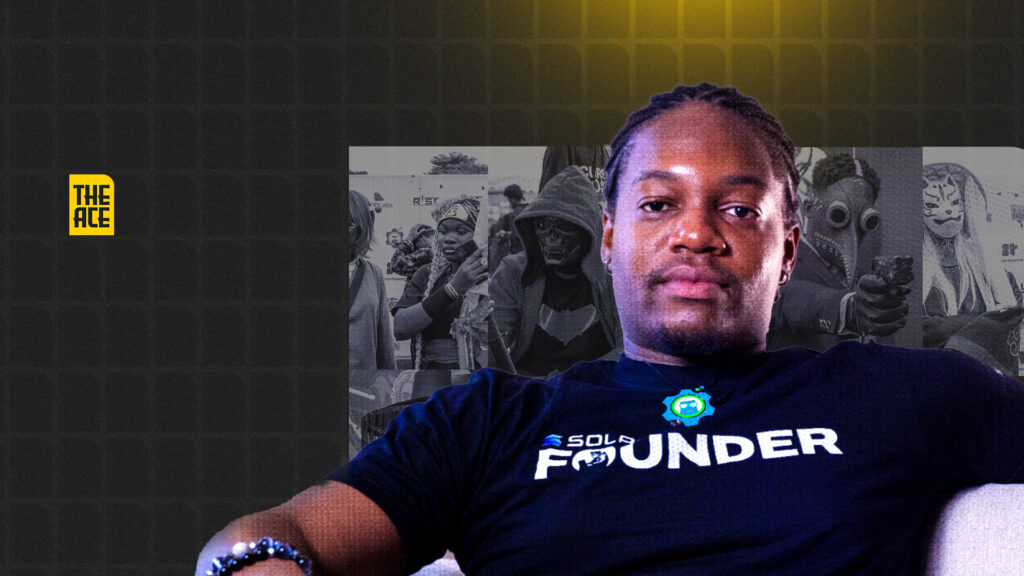
Benny Asitonka-Joe couldn’t afford to keep flying to Lagos for the thing he loved. So, he built it where he was standing, a comic con in Port Harcourt that refuses to sell you anime.
Around 2008, a teenage boy in Rivers State discovered Naruto, and something in him rearranged itself. He was not alone in it for long. A handful of boys in his neighbourhood were watching the same episodes, but not together. “When a new episode is released, we’d watch it separately, then we’d have a meeting point,” Benny Asitonka-Joe remembers. “We’ll now start talking about it, like, yo, this happened, that happened.”
They would talk for hours. Then they’d play video games, talk about Naruto, play video games, and do it all again the next week. That ritual, which included watching apart, gathering, and arguing, was the whole origin story, and it is worth holding on to, because everything Benny has built since is an attempt to give that ritual a bigger room.
Word travelled. A friend in another part of the city knew a friend. The circle widened, house by house, neighbourhood by neighbourhood, until what had started as a handful of boys comparing notes on Naruto looked, unmistakably, like a network. “They used to call me a nerd back then,” he says. “And the whole point of networking with nerds, that’s how the name came out.” Nerdwork was thus, in 2014, conceived.
They Said His Comic Con Looked Like a Party. He Never Denied It.
For years, that network had nowhere bigger to go. Nigeria’s geek scene, such as it was, lived almost entirely in Lagos, and Benny found his way there too, attending Lagos Comic Con from around 2016 while still at university. He kept going back. He made friends there he is still close to today; friendships that began, in at least one case, with a stranger from an anime group online.
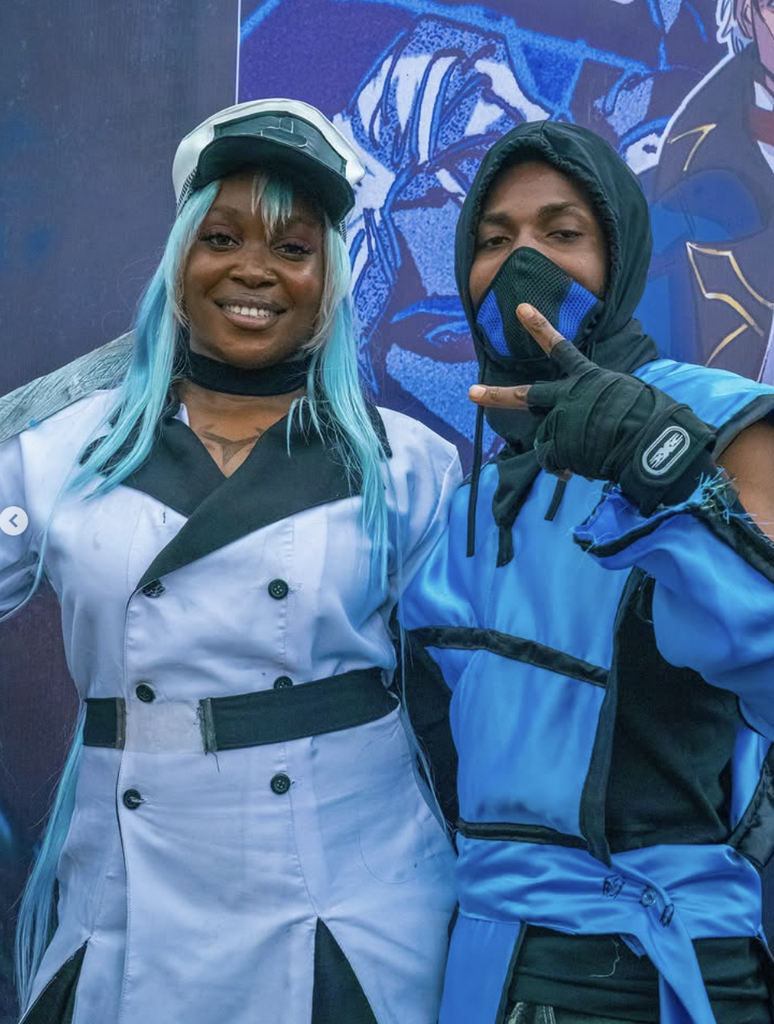
But the trip itself started to sit differently the more he made it. “Not everybody can go to Lagos Comic Con,” he says. “I’m grateful I was fortunate enough to make that trip, but not many people can afford it.” Rather than keep encouraging people towards a city most of them could not reach, he decided to build the thing where he grew up and still lived.
That decision is also the answer to a criticism that still follows Nerdwork online: that its convention looks more like a party than a comic con. Benny does not argue with it. “If you are in Rome, act like a Roman,” he says. Give a Port Harcourt audience the energy it already responds to, and the deeper culture follows once people are in the room.
He is candid about why. “Every time we bring the kind of vibe you bring to Port Harcourt, and you only have twenty audience at the most…” he trails off. The initial backlash was real: you’re not doing a proper comic con, this is not a comic con. His response was not to defend the format but to keep going. “You give to Port Harcourt what Port Harcourt wants. And then, like I said, you give people what they are already familiar with, then you drag them into what you want them to see.”
It sounds, on the surface, like a founder making peace with a compromise. It is, more precisely, the same instinct from the Naruto years running at convention scale: meet people where they already are, then walk them somewhere new.
He Isn’t Building the Comic Con You’re Expecting. On Purpose.
Anime was never the destination in any of this, only ever the way in. “I was in love with Japanese culture, but I also felt it was an opportunity to push our own,” he says. This year’s convention branding carries no Japanese IP at all, by deliberate choice. Every character on the floor belongs to a creator inside his own community.
That is a bolder move than it may sound. Most emerging conventions anywhere in the world survive on the footfall of imported properties: a Naruto headband, a One Piece flag, a queue for merch of something nobody on the organising team made. Benny has taken the thing that draws the crowd and set it aside, on purpose, to force his own creators to the front of the room.
“I used anime because I knew people already understood it,” he says. “Slowly, slowly, from there.”
The intention is easier to see on the floor than in the philosophy. He describes wanting someone to arrive at the convention and find a character from Erivic’s ÀÌKÚ, a school masquerade, rendered as regalia, or a villain from a game he was developing months ago, wandering the hall in costume. Not imported icons. Local ones. “That interaction between what we see online, what we’re going to be reading, and what’s happening in real life,” he says. “That’s my major vision.”
You cannot have that vision without content to feed it. Which is where the app comes in.
The Comic Con Is Servicing the App. The App Is Servicing the Comic Con.
The idea took years to become an event. Nerdwork’s first proper convention did not happen until 2021, and Benny is unsentimental about what it took to get there. “You think you can go crazy while building in Nigeria,” he says, catching himself mid-thought. What carried him through was collaboration, chased down deliberately rather than waited for. For months, he tracked down the most notable gamers and bloggers in his city one by one, cold, with the same pitch every time: this is what I’m doing, can we partner? Some of it paid off. Some of it didn’t. “There are some collaborations you even regret entering,” he says. But the lesson held: “You need people to help you build, whether you think you do or not.”
That same instinct, which is “community first, infrastructure after “ sits underneath Nerdwork Plus (Nerdwork+), the reading and creator platform he is still working towards a full launch. “The Comic Con is servicing the app, the app is servicing the Comic Con,” he says, describing the two not as separate projects but as one loop. Rather than build the platform first and hope readers followed, he spent years growing the audience and the creator base, and is now trialling the app’s naira micropayment wallet on two of his own IPs before opening it to anyone else.
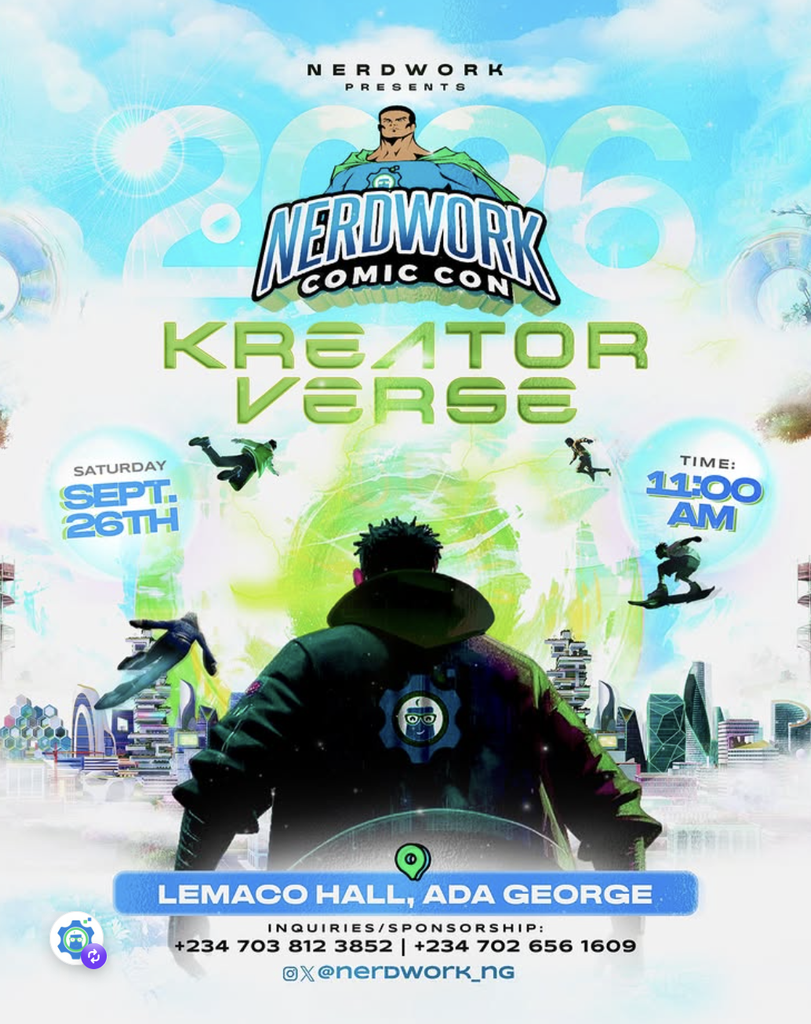
This year’s “Kreator Verse” convention, running 26 September at Lemaco Hall in Ada George, is that philosophy in motion: its Captain Do-All Art Contest requires entrants to read the story on Nerdwork+ before designing a villain and submitting a two-page fight scene, with a ₦100,000 prize and a cameo in an upcoming episode for the winner, alongside an EA FC tournament, a Mortal Kombat grand finale, and a Gran Turismo competition run with sponsor Block B.
It is worth being precise about what Nerdwork+ is and is not, because Benny is. It is not launched. We asked directly how many creators or how much content sits on the platform; his answer is unambiguous: “We’ve not launched.” The wallet is in testing. The marketplace is, in his words, “more of a marketplace” than a finished product, a place where creators can plug in their work and have it marketed, but one whose real value is the thing already running around it. “If you’re publishing on my platform, automatically you are plugged into the ecosystem,” he says. “There’s already a gear that’s moving. With or without these people, you are going to still be moving.”
The bigger problem, he argues, is not technology but culture. “If you want to buy comics online, they’ll tell you, buy this one-shot for three thousand, or five thousand. I feel like that’s not sustainable. You have to build a culture around it.” The comparison he keeps reaching for is not a rival Nigerian platform but the reading habit itself, the thing that makes manga audiences show up every week. “I don’t feel like anybody has properly built a culture around their IP,” he says. “Something where little kids want to familiarise themselves with it. That’s what we’re trying to do.”
“It’s Not About the IP, It’s the Person”
The same logic shaped Nerdwork+’s biggest licensing move to date. Erivic’s ÀÌKÚ: The Dead That Never Dies goes exclusive to the platform this November, with marketing and ecosystem support attached. Erivic approached Benny; the two met last year, talked for a long time, and found “too much in alignment” to ignore. The details of the arrangement, such as territories, duration, and exclusivity terms, remain undisclosed. What Benny will say is that the comic will be exclusive to Nerdwork+, and that the support extends well beyond hosting.
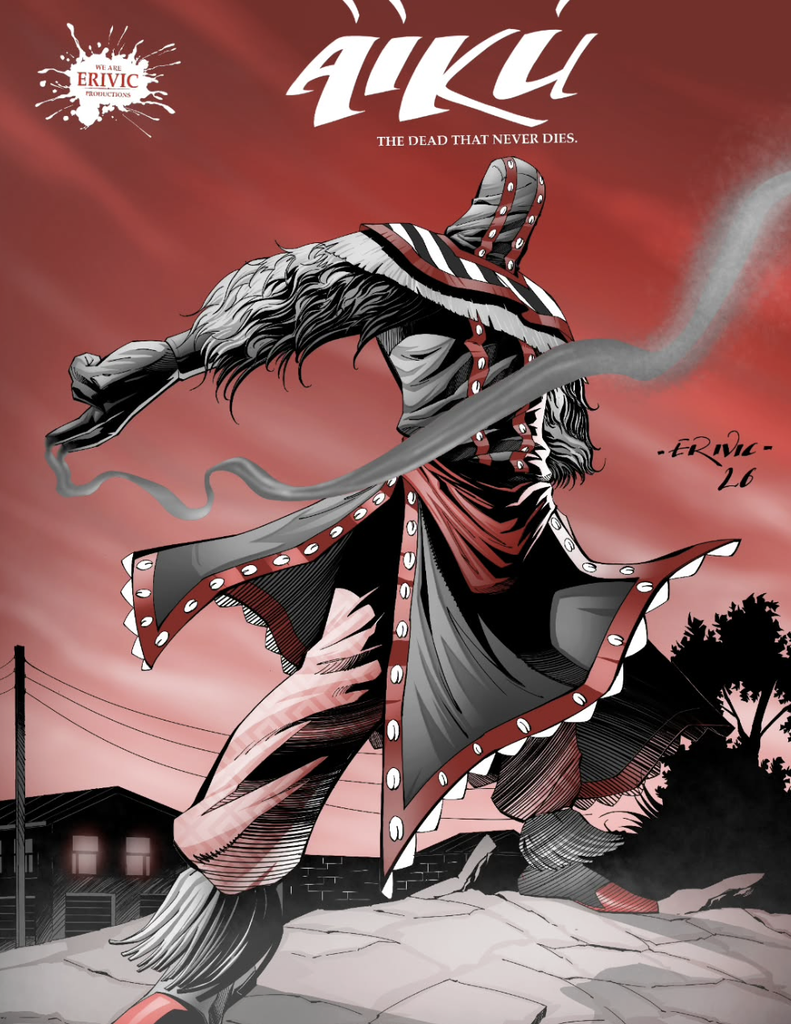
We asked what made the title right for that kind of deal, but Benny rejects the framing outright. “It’s not about the IP, it’s the person,” he says. What convinced him was watching Erivic keep pushing the work himself, long after most people would have called it finished. “Anybody can produce something good,” he says. “But how good is the person? I’ve seen people carrying a crew on their head, running around Nigeria, and nobody knows about them. That’s the problem I have with Nigeria.”
There is a tension here worth naming, and Benny does not flinch from it. This is a founder who has deliberately stripped Japanese IP off his convention floor, who will not sell imported icons to his own audience, and who has now signed an exclusive licensing deal for someone else’s property. The distinction he draws is person-first, not property-first: he is betting on creators, and the exclusivity is the price of the support that comes with being bet on. Fair enough. But it does mean the same platform that tells local creators their work is enough is also, quietly, becoming a gatekeeper for whose work gets the marketing budget. He would rather replicate the deal than defend it as a one-off. “We would love to replicate that,” he says. “But it’s funding.”
The Ecosystem Is Too Young for Rivals
If the economics are unsettled, so is the field around him. Nerdwork is not the only community of its kind; comic cons and anime conventions are springing up in Ibadan, in Abuja, in other cities, each building its own audience in parallel. We asked him whether those might one day collaborate formally, or whether competition serves creators better.
His answer is long and consistent: competition belongs to creators, not to organisers. “I feel like the ecosystem is still in its infancy, especially for us that are just starting,” he says. “In that infant stage, you don’t need competition. Competition will be good for the creators themselves, not the bodies. I’d rather have somebody see what Erivic has done with ÀÌKÚ and say, oh, I can give you something more spectacular than that. But for the bodies not to involve themselves in that. We love both of them. The more the merrier.”
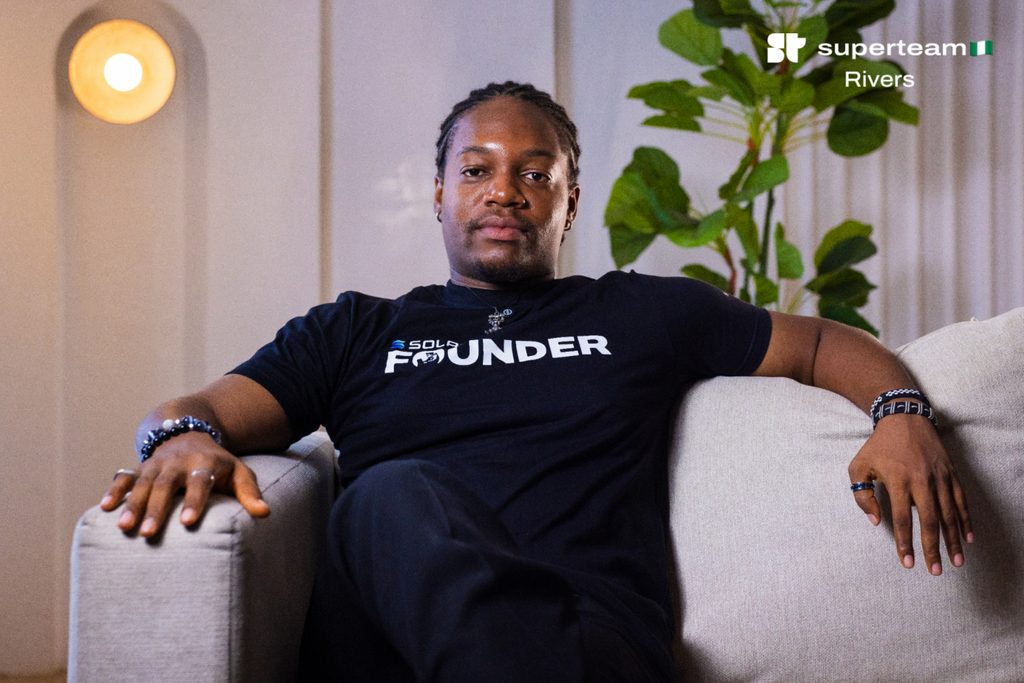
He is, by his own admission, “a very collaborative person”, the kind who turns up to other people’s conventions, as he did at AniWe Convention, not to spend money but because “this is a space where people like me are going to be.” We asked where Nerdwork+ sits relative to other African comics platforms; he declines the comparison entirely. “I’m just focused on building. The sky’s the limit for everybody.”
What Success Looks Like, and What It Doesn’t
Success, to him, is not measured in downloads. It is a creator who publishes twice a month and decides to do three instead, showing up at every convention along the way. “That drive, that push, that’s what makes sense to me,” he says. “Most of us are just so relaxed because we are producing and we’re just relaxed, and we just keep on whatever the wind takes us. I want that force inside the African ecosystem.”
He is more guarded about what comes next. Two further IPs of his own, due out in the coming months; one of them “controversial”, he is quick to clarify the terms. Not controversial in story or in plot. Controversial in medium. “The medium of expression.” He says he would rather not go into it now, and asks that we leave it there. He also mentions, half-reluctantly, an undisclosed initiative with “two or three notable influencers” that he hopes will act as a catalyst for creators, but does not want that on the record either. Some of what is coming, he is clear, is not for print yet, and it is worth noting that not everything a founder is building makes it, on any given day, into the story he is willing to tell.
What comes through, talking to him, is not a founder executing a plan on schedule, and not a man with metrics to prove the case. It is someone still doing exactly what he did back in 2014: finding the people already gathered around something they love, wherever they happen to be standing, and building them somewhere to belong.
——————————————————–
——————————————————–
AI Use at TheACE
TheACE uses artificial intelligence tools to support research, drafting and analysis across Africa’s creative industries. All content is verified, edited and approved by our human editorial team to ensure accuracy, clarity and responsible storytelling. AI assists our work; it does not replace human judgment.