“You need to speak my language. The only language I know is numbers.”
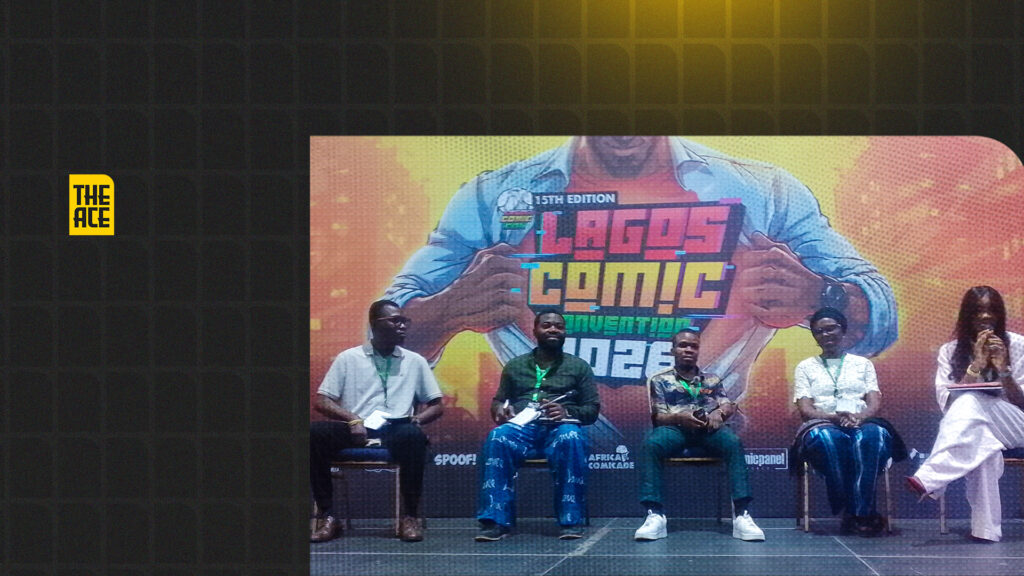
Abiodun Lawal, a partner at Heave Ventures, did exactly what his background suggested he would do during TheACE’s Main Stage panel at Lagos Comic Con 2026: he refused to let enthusiasm stand in for an investment case. His intervention set the tone for a session that turned out to be less a celebration than a public reckoning, one in which several distinct, and occasionally conflicting, voices ultimately shaped the conversation.
The panel, titled “From Report to Recognition: Building Institutional Support for African Comics”, followed two months in which the Nigerian Comic Book Industry Report, published by Bookause Nigeria in partnership with The African Comics and Cinematic Empire (TheACE), had received formal endorsements from both the Oyo State and Lagos State governments. The report had already identified the industry’s central problem: it was the absence of reliable data and formal financing, not a shortage of talent or audience, that continued to hold the sector back. The panel was convened to ask what should come next.
Erivic Adedayo, Convener of Comic Con Ibadan and creator of the Afroblot art style, answered from within the industry’s everyday reality. His argument centred on distribution: the simple fact that a creator cannot merely hand someone a comic and expect to be paid for it. He also addressed a common misconception, that investor interest automatically translates into a sustainable business.
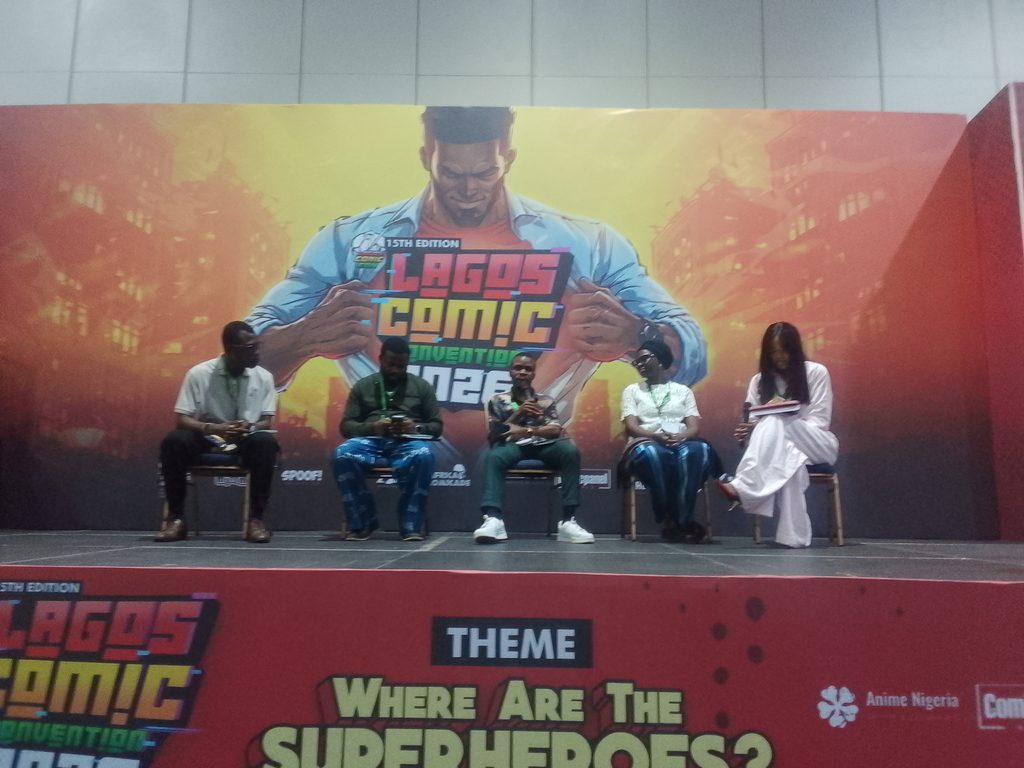
“It is not enough to create something pretty,” he said. “You have to build something great, and something great has to survive contact with a market that does not automatically know what to do with it.”
He pointed to Japan as an example of a country whose government takes the health of its comics industry seriously. Yet, even in such an established market, exporting a story still requires creators to bridge cultural gaps, not merely meet a standard of quality.
Abiodun Lawal picked up almost exactly where Erivic left off, but from the other side of the table. His contribution revolved around one blunt question: if he invested money in the industry, what would he receive in return?
“You need to speak my language,” he told the room. “The only language I know is numbers.”
He pressed for concrete answers, units sold, price points and returns on investment, rather than confidence alone. His intervention was less an attack on the industry than a demonstration of the very gap Erivic had described: the industry possesses genuine creative output, but that output has not yet been packaged in a form that capital knows how to evaluate.
The government’s response came next, and it was not an unconditional yes. Mrs Nike Quadry-Adebowale, the Ministry’s Deputy Director of Hotel Licensing, spoke on behalf of the Permanent Secretary, Mrs Bopo Oyekan-Ismaila, whose position was later published directly by the Ministry.
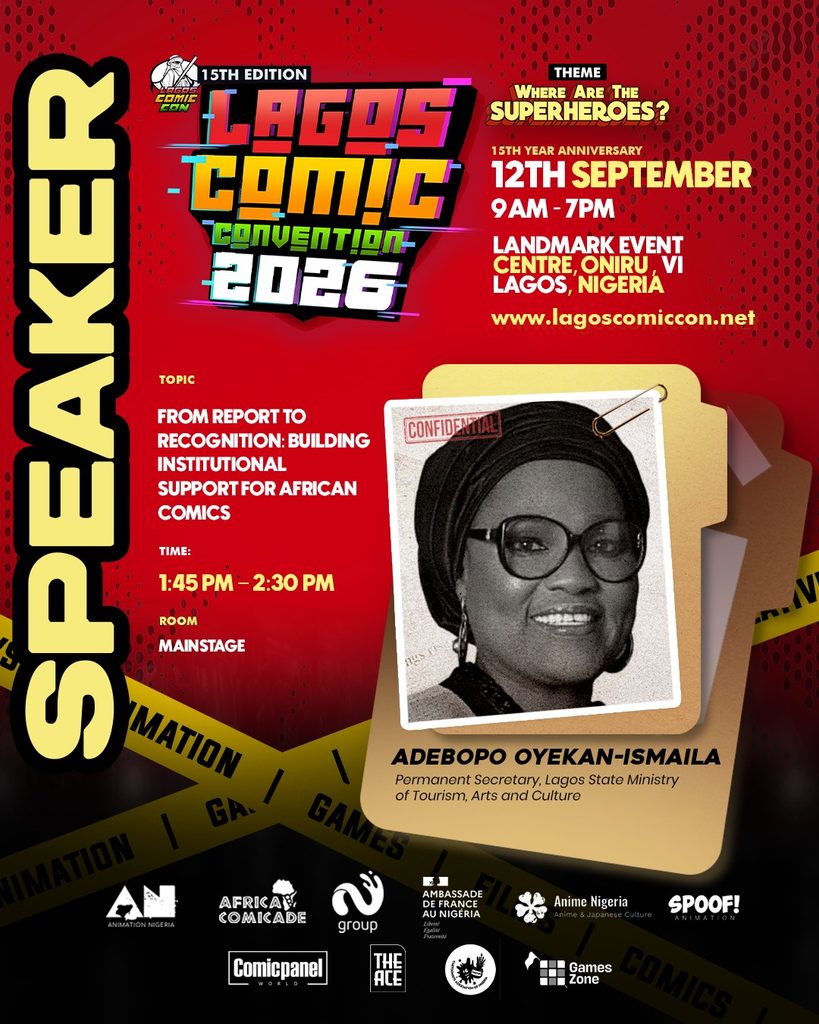
During the session, she remarked that she had not realised the convention had reached its fifteenth edition, a detail that stayed with the room. It was a small aside, but a telling one: some of Lagos Comic Con’s earlier editions were held at NECA House in Alausa, some distance from the Ministry’s own offices in Ikeja. The event, in other words, has never really been hard to find. What has been missing is the sustained, year-round connection that would have made fifteen years of growth impossible to overlook.
According to her statement, the government has many competing demands on its attention and is more likely to respond to the group that presents the most organised and sustained case, not necessarily the one that appears most loudly once a year. The recommendation was specific: the industry must establish its own association, with one body capable of advocating for reforms and funding on behalf of the sector. This should be supported by “sustained activities and engagements throughout the year”, rather than efforts concentrated around a single annual convention.
Mujeeb Jummah, TheACE’s founder, the person who commissioned the report, approached the issue from a related angle. He argued that the industry does have structure, just not a unified one. Everyone, he said, is building a separate version in isolation.
He identified Webtoon as a model worth studying: a single platform on which creators from around the world publish within a shared space and reach audiences far beyond their home markets. Africa already has local adaptations of that model, he noted, but they operate separately rather than collectively. Consequently, none carries the influence that a unified platform could command.
From there, he broke down the report’s recommendations according to the audiences responsible for implementing them: what the government could do and what private actors could do.
“The report was never meant to just describe the problem,” he said. “It was built so that whoever is in the room, whether that is a ministry or an investor, walks away with something specific they can actually act on.”
Nneka Evelyn Ojianwuna, Director of Bookause Nigeria, was unable to attend the session but shared her intended remarks in writing beforehand. Her argument rested on a simple premise: an industry of this size cannot afford to remain undocumented. If it does not tell its own story, others will tell it with “a lot of misrepresentations”.
She argued that government support must move beyond cultural policy in the abstract and translate into institutional endorsements, digital infrastructure and local-content quotas. She identified education, funding and intellectual property protection as the three most urgent areas for intervention. Reliable data, she wrote, “isn’t a luxury but a necessary infrastructure.”
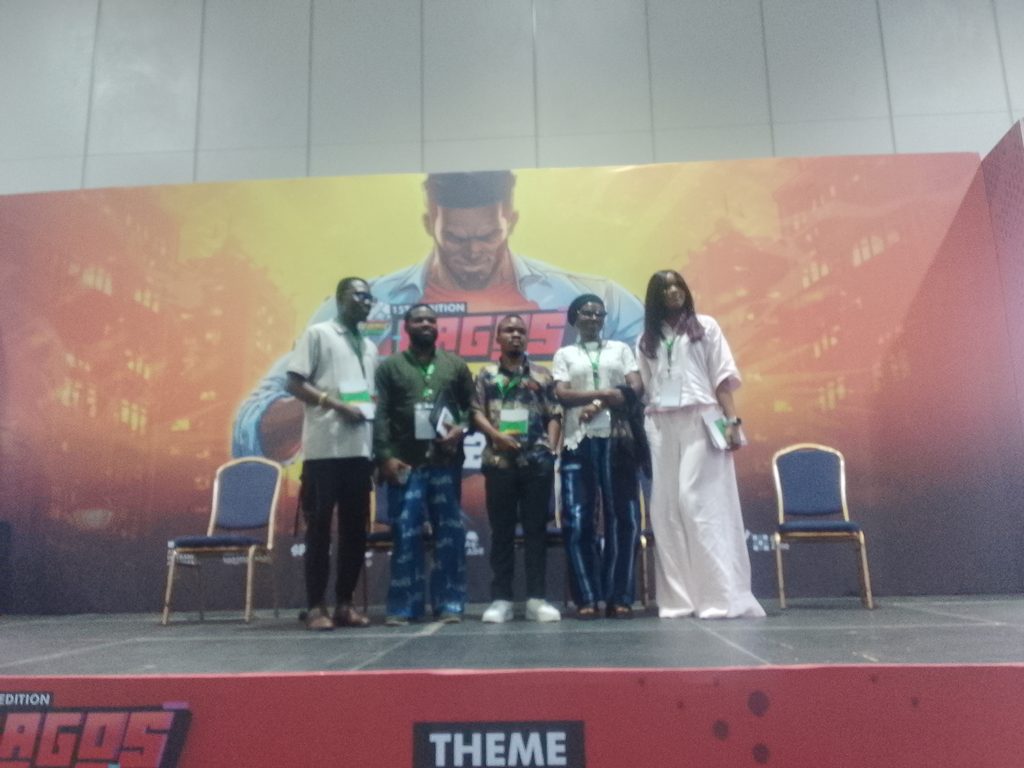
Ms Peace Echeomuha moderated the session, keeping each exchange pointed rather than ceremonial. She pressed the panellists beyond their prepared remarks and repeatedly redirected the discussion towards the specific answers the audience had come to hear.
By the end of the session, the most useful outcome was not a promise but an unplanned point of agreement. Mujeeb had begun his contribution by arguing that the industry needed one shared structure instead of many isolated ones. Independently, the Lagos State Government concluded the session by urging the same industry to establish an association for precisely that reason.
Two sides of the same conversation arrived at the same conclusion without coordinating it. That agreement is now the real task before the industry: no longer merely a diagnosis, but a solution specific enough to build.
The roadmap has been drawn, the data has been published, and the institutional doors are slightly ajar. What the Nigerian comics industry has never had is one representative body positioned to walk through those doors and ask for what the sector needs.
——————————————————–
——————————————————–
AI Use at TheACE
TheACE uses artificial intelligence tools to support research, drafting and analysis across Africa’s creative industries. All content is verified, edited and approved by our human editorial team to ensure accuracy, clarity and responsible storytelling. AI assists our work; it does not replace human judgement.