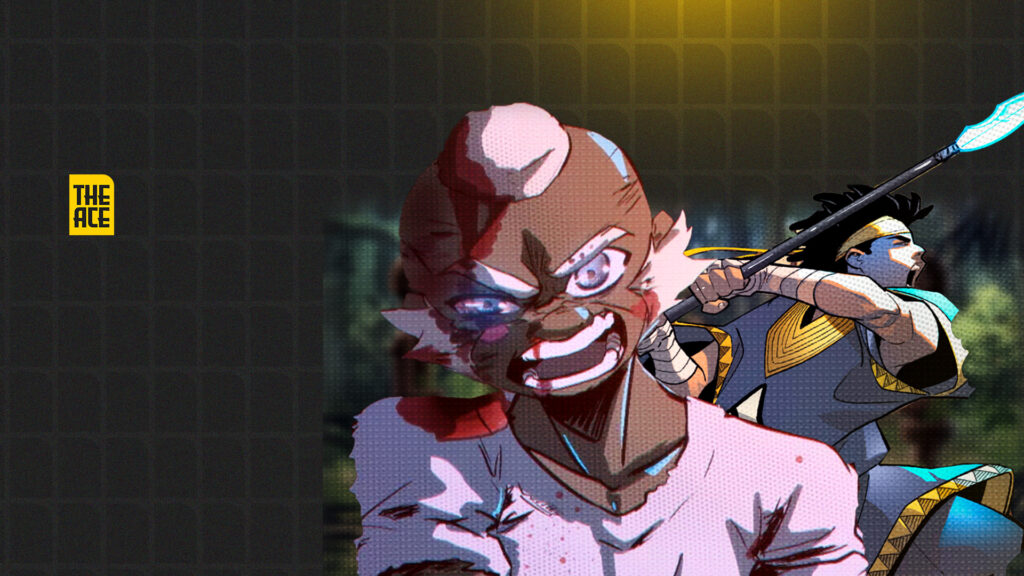
An animated fighter moves through a world built on mutupo, the Shona tradition of animal totems, in a project being developed by Zimbabwean creators. MUTUPO: Tournament of Totems, which heads to Kickstarter in October 2026, wears its Japanese influence openly, using a visual and storytelling language familiar to generations raised on Japanese animation while placing Zimbabwean cultural material at the centre of its world.
As the project reached wider audiences through TikTok and Instagram, its creators found themselves inside an argument that has followed anime-influenced artists outside Japan for years. Most of the response, according to the team, came from viewers excited to see African cultures interpreted through a form they already loved. A smaller group asked a different question: if the objective is to create something authentically African, why should Japanese influence be involved at all?
That argument would normally stay inside fandom — an old, familiar dispute over whether animation made outside Japan deserves the word anime at all. In September 2026, it became harder to keep there, because the relationship between African animation and Japan is no longer built on influence alone.
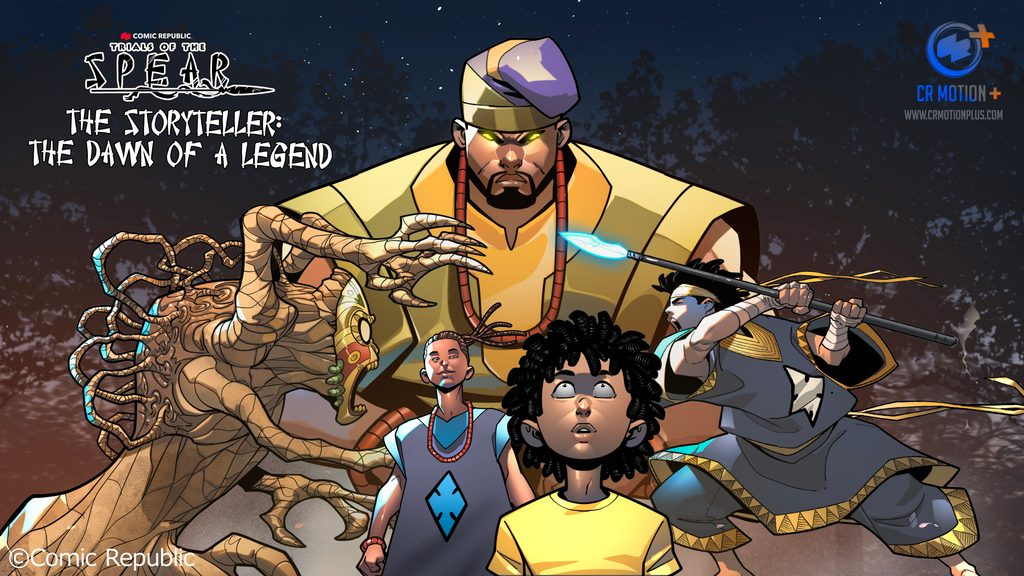
On 10 September, Toei Animation announced its first joint production with an African studio, partnering with Lagos-based CR motion+ on The Storyteller: The Dawn of Legend, a 20-minute short spun off from Comic Republic’s webtoon Trials of the Spear, produced by Takashi Washio for Toei and Jide Martin for CR motion+, and targeted for completion in spring 2027 ahead of a festival premiere. Toei will handle pre-production and production management, while CR motion+, the animation arm Comic Republic launched in 2024, leads the core animation. In its own release, Toei framed the deal around Nigeria’s roughly 200 million people and its already sizeable live-action film industry, and said the collaboration was designed to cultivate a category it explicitly called “Anime of Nigerian Origin” — a phrase that, coming from one of Japan’s oldest animation studios, does more to unsettle the old boundary than anything an African creator has said. Sony Pictures Entertainment is reportedly exploring further involvement. The deal grew out of the TAIDO African Animation Challenge, a six-month development programme run by the Japan External Trade Organisation (JETRO) with Arc & Beyond, a Tokyo-based non-profit backed by the Sony Group, which paired CR motion+ and Ghana’s Animax FYB Studios with Japanese mentors and screened their work in Tokyo on 4 March 2026. Toei sat on the review panel for that showcase before agreeing to invest in and co-produce CR motion+’s next project. JETRO has framed such deals as proof of what is possible by “leveraging the growing appeal of Japanese pop culture, including animation” to connect the two countries’ creative industries, and says it plans to keep building similar bridges through initiatives such as its Africa Soft Power Caravan, “Super Japan.”
That is a materially different relationship from the one CR motion+ described when Trials of the Spear first entered production. Comic Republic’s founder, Jide Martin, has said the studio financed and built the original animation pilot itself, months before any outside partner believed in it, and that Toei’s later involvement was a matter of technical support rather than authorship. “You have heard this story in someone else’s accent,” Martin wrote when the extended pilot was released. “Now hear it in ours.” The Storyteller reverses that order: Toei is inside the production from the start.
The question of who gets to call something African anime is therefore becoming less about permission and more about what happens once culture, production, ownership and audience identity stop pointing to one country.
Part of the confusion is baked into the word itself. Inside Japan, anime is simply a shortened form of animation and can refer to any animated work. In English-speaking markets, it hardened into shorthand for animation made in Japan specifically, and scholars of the form have long treated the term as unstable — sometimes naming an industry, sometimes a wider set of visual and storytelling conventions that industry produced. Visual style alone cannot settle the question: Studio Ghibli films, sports series, psychological thrillers, romance, horror and experimental animation look nothing alike and still sit comfortably inside the category. If anime is defined by place of production, an African project inspired by Naruto or Dragon Ball remains African animation no matter how familiar its visual grammar looks. If it is understood as a creative language that travels, the boundary stops being geographical at all — and modern production, financed in one country, directed in another and animated across several studios, makes the distinction harder still. Once African studios sit inside those production networks directly, as CR motion+ now does, the old line between Japanese anime and foreign anime-inspired work gets harder to draw.
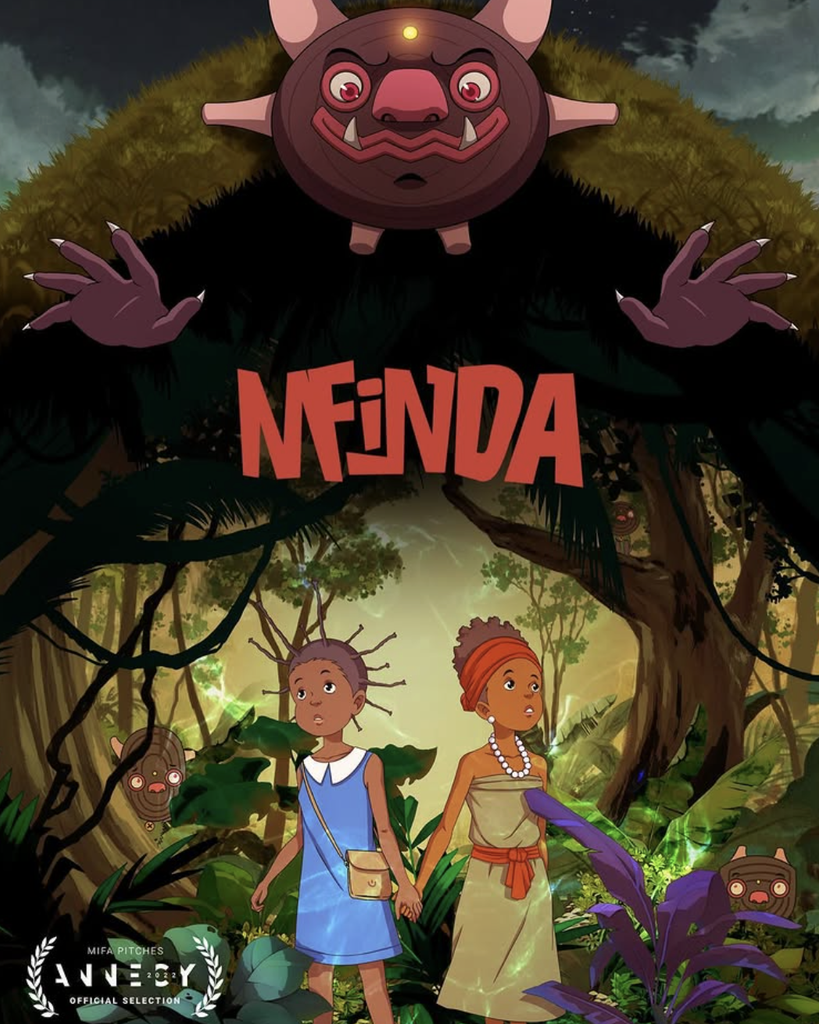
The term is already being used to describe projects with very different relationships to Japan. MUTUPO’s foundations are Zimbabwean; its connection to Japan is aesthetic and creative rather than structural, and no Japanese studio sits inside its production. In South Africa, Majesty — co-created by Lesego Mailula, whose studio has produced three comic-book issues and an animated series now in development — combines African mythology and spirituality with anime-informed storytelling while staying framed around African-owned intellectual property; Mailula is scheduled to lead a session titled “The Making of African Anime” at Comic Con Africa 2026, running 24 to 27 September in Johannesburg. Further along the spectrum, the US-based studio N LITE has trademarked the term Afrime, for “afro-anime,” around its flagship feature MFINDA, about a Congolese girl who enters a forest of spirits and ancestors. MFINDA is being produced by N LITE and N LITE Japan alongside Studio M2 and GKIDS, with Perfect Blue producer Masao Maruyama and Ninja Scroll collaborator Gisaburō Sugii attached, and a prequel manga serialising in Kodansha’s Biblio Sirius magazine from autumn 2026 — a deliberately international structure built years before Toei’s Nigerian deal. “Anime has a global fanbase amongst audiences of colour,” N LITE founder Christiano Terry has said of the project. And there is The Storyteller, in which a Nigerian property, a Nigerian studio and a Nigerian creative context sit alongside direct Japanese production management and investment.
If all four can plausibly appear in a conversation about African anime, the term is not describing one production model. For MUTUPO it names an aesthetic; for Majesty, a philosophy built around ownership; for N LITE, a trademarked category; for The Storyteller, an actual Africa-Japan production relationship. That range is why the argument cannot be settled by finding one correct dictionary entry.
The more interesting argument is about authenticity. Critics note that the continent already holds enormous visual traditions, myths and storytelling systems of its own, so leaning heavily on Japanese conventions can look less like exchange and more like dependence on an already successful foreign style. There is a serious version of that concern: an African setting does not automatically make a work distinctive. A creator can place Yoruba gods, Shona mythology or Akan symbols inside a story whose structure, humour and visual grammar are lifted wholesale from familiar battle anime, and the result is decoration rather than culture. If every emerging African action series leans on the same transformations, tournament structures and power systems because they are globally recognisable, the genre risks manufacturing a new kind of sameness rather than a new animation culture.
But the opposite demand — that African creators work untouched by outside influence — assumes a single, pure African aesthetic exists to be protected, when there is no more one African visual language than there is one African mythology. A Zimbabwean artist working from Shona cosmology and a Nigerian creator drawing on Yoruba tradition start from different places before anime even enters the picture. African popular culture has never developed in isolation: music, fashion, literature and comics across the continent have absorbed outside influence and reworked it through local experience, and Japanese animation has done the same in reverse, borrowing European architecture, Christian imagery, American music and Western science fiction without losing its own identity. That parallel does not make every act of borrowing automatically authentic. The more useful question is what happens to an influence once a creator has absorbed it: whether Shona ideas change a story’s logic, relationships and conflicts, or whether the culture sits decoratively on top of a structure that could have existed without it. The difference between imitation and transformation matters more than the difference between African and foreign influence.
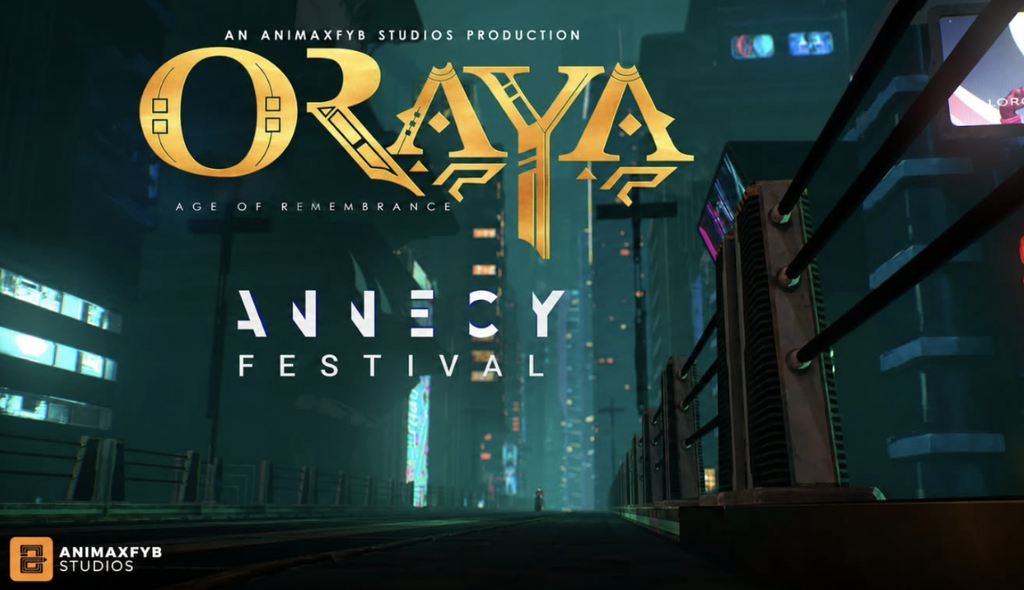
That debate has become more consequential because Japanese institutions are now building direct relationships with African studios rather than watching from a distance. Arc & Beyond’s TAIDO project leader, Miyuki Kitabatake, has described the goal as “pioneering new visual expressions the world has never seen,” built by connecting African talent with Japan’s production experience — and, elsewhere, has been more explicit about what that is not: “We don’t want to make ‘Japanese-style’ animation,” she has said of the ambition to support African stories made by African studios. JETRO’s deputy trade commissioner in Lagos, Hokuto Shibata, has called the resulting deals “an important first step toward deeper creative and commercial partnerships” between the two countries. The wider TAIDO framework was built with a specific safeguard attached: participating studios retain full ownership of the intellectual property they develop through the programme, a deliberate departure from the pattern that reshaped African music, where local labels and artists held the masters early on before international deals pulled much of the industry’s long-term value offshore as Afrobeats went global. CR motion+ is not TAIDO’s only success story, either — Ghana’s Animax FYB Studios, the programme’s other founding participant, has been pushing its own Afrofuturist franchise, ORAYA, toward international markets, including a presentation at Cannes’ Marché du Film. What the public announcements do not disclose is the finer commercial architecture of the Toei deal specifically — how revenue and future decision-making are split on a co-production built around outside investment — and there is nothing unusual about those terms staying private. But the ownership safeguard built into the wider programme means this question starts from a more favourable position than similar collaborations often do elsewhere. Even Japan’s own industry is not immune to structural strain: Kadokawa chief executive Takeshi Natsuno has warned that a landscape of small, fragmented studios makes it harder for Japanese animation to compete with companies the size of Disney — a reminder that production discipline and IP protection are separate problems, and Africa’s animation sector will eventually have to solve both.
The search for a definition carries its own risk, too: reducing an entire continent to one recognisable style. Africa has more than fifty countries with distinct histories, languages and visual traditions, and a Zimbabwean production drawing on Shona ideas, a Nigerian story rooted in Yoruba mythology and a Congolese fantasy built from Central African spiritual traditions may all get called African anime internationally without being culturally interchangeable. If the category is going to mean anything, its strength will depend on resisting a single, compulsory African symbol — not replacing the school uniform and the shōnen hero with one continent-wide equivalent, but building enough production capacity for Nigerian, Zimbabwean, Ghanaian, Congolese, South African and other creators to work from their own cultural material while still participating in the wider anime conversation. Authenticity is not measured only by how many masks, fabrics or traditional buildings appear on screen; it shows up just as strongly in how characters understand family, spirituality, authority and community. An African work should not have to keep announcing its Africanness to prove it belongs.
There is no authority capable of settling the argument. Japanese scholars disagree over anime’s boundaries, international audiences have spent decades stretching the term’s meaning, and African fans, critics, companies and creators are all already using it differently from one another. What has changed in 2026 is that the uncertainty has moved inside the industry itself. MUTUPO can reinterpret Shona ideas through anime’s visual language without a Japanese studio anywhere near its production. Majesty can fuse African mythology with anime-informed storytelling while building African-owned IP explicitly. N LITE can build a trademarked hybrid category around veteran Japanese producers and a manga tie-in with one of Japan’s largest publishers. Toei can sit inside a Nigerian studio’s production and put its own name behind a category it has publicly called Anime of Nigerian Origin. None of these fit the same definition, and that is precisely why the old argument over whether Africans are “allowed” to make anime has stopped being useful.
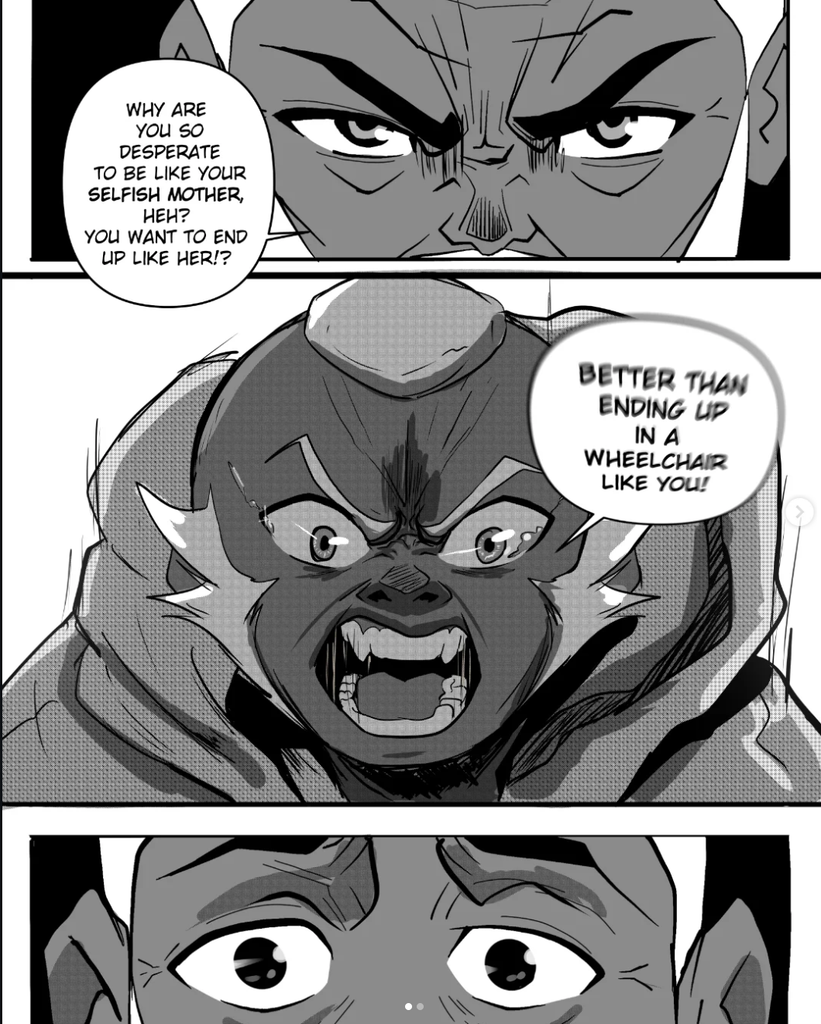
The influence already happened. A generation of African artists grew up watching Japanese animation, copying panels and frames as they learned to draw, long before major studios started paying attention to them. The more important questions now are what those creators do with that influence, whether they build something deeper than familiar convention, whether these collaborations transfer real knowledge into African studios, and whether the properties that come out of them stay commercially valuable to the people who made them. “African anime” may never get one clean definition — an aesthetic for one creator, a production philosophy for another, a trademarked category for a company, an identity for the audience watching all of them at once. That ambiguity does not need solving immediately. It may simply be what happens when a cultural form once consumed largely as an import starts being absorbed and transformed by African creators, just as the Japanese industry starts seeing them as collaborators.
Who gets to call it African anime will probably be decided less by whoever wins the argument online than by the work that eventually gives the phrase meaning.
Sources
Official statements
Japan External Trade Organisation (JETRO), “Japan-Africa Co-Creation Takes Shape Through Animation Partnership,” press release, 10 September 2026. https://www.jetro.go.jp/en/news/releases/2026/ee52ba4f1590a5da.html
Toei Animation Co., Ltd., “Toei Animation and CR motion+ (Nigeria) Join Forces to Produce Animated Short ‘The Storyteller: The Dawn of Legend,’” press release, 10 September 2026. https://corp.toei-anim.co.jp/en/press/COPY-COPY-press513558689267466053.html
Arc & Beyond, “TAIDO Project Creates First Major Animation Co-Production Linking Japanese and African Studios,” press release, 10 September 2026. https://arc-beyond.org/en/news/press-en/2028/
News coverage
Joseph Onyekwere, “Japan, Africa deepen creative ties as Toei Animation backs Nigerian studio,” The Guardian (Nigeria), 12 September 2026. https://guardian.ng/life/film/japan-africa-deepen-creative-ties-as-toei-animation-backs-nigerian-studio/
“Comic Republic, Japanese Agency, Arc and Beyond, Team Up for Animation Feature,” ThisDay Live, 15 November 2025. https://www.thisdaylive.com/2025/11/15/comic-republic-japanese-agency-arc-and-beyond-team-up-for-animation-feature/
“Trials of the Spear animated feature adaptation,” TheCable Lifestyle. https://lifestyle.thecable.ng/?p=421010
“Gkids, N Lite Set to Unveil First Afro-Anime Pic ‘Mfinda’ at Annecy,” Variety, republished via Yahoo, 28 April 2023. https://www.yahoo.com/lifestyle/gkids-n-lite-set-unveil-150000030.html
N LITE Media, official project pages for MFINDA. https://www.nlitemedia.com/
Primary and social sources
Jide Martin, CEO, Comic Republic, LinkedIn post announcing the Trials of the Spear pilot release. https://www.linkedin.com/in/jide-martin-44321a185/
MUTUPO: Tournament of Totems, indie anime pilot trailer and Kickstarter announcement, YouTube, 2026. https://www.youtube.com/watch?v=pDavdi16INU
MUTUPO: Tournament of Totems, Patreon page. https://www.patreon.com/MUTUPO
Lesego Mailula, guest profile, Comic Con Africa 2026. https://comicconafrica.co.za/guest/lesego-mailula1/
Comic Con Africa 2026, official event page (24–27 September, Johannesburg). https://comicconafrica.co.za/cca-home/
Written by Nehemiah Osarodion
Edited by Mujeeb Jummah
——————————————————–
——————————————————–
AI Use at TheACE
TheACE uses artificial intelligence tools to support research, drafting and analysis across Africa’s creative industries. All content is verified, edited and approved by our human editorial team to ensure accuracy, clarity and responsible storytelling. AI assists our work; it does not replace human judgment.