Lagos is often treated as the natural centre of Nigeria’s creative industries. For comic artists, animators, filmmakers and other creatives looking for collaborators, audiences and commercial opportunities, the concentration of studios, events and buyers makes the city an obvious destination. For many, building a career in the sector can seem to require moving closer to that concentration.
Symphonii Studios chose a different route. Based in Abuja, the creative studio has spent the last five years developing comics, animation and original intellectual property in a city that does not yet have Lagos’s concentration of comic and animation activity. For Anthony Emereni, the studio’s editor-in-chief, the decision was deliberate. Rather than join the growing cluster of creative companies around Lagos, Symphonii wanted to create opportunities somewhere they were less common and see what could be built outside the country’s more established creative centre. That choice has brought practical challenges, particularly when it comes to finding and recruiting talent.

When Symphonii needs a creative who is not based in Abuja, bringing that person into the city becomes part of the cost of building the team. Anthony did not provide a specific naira figure for the arrangement, but explained that when the studio recruits someone from outside Abuja, it provides accommodation for the first year. This gives the individual time to settle into the city before eventually securing a place of their own. It is a considerable commitment, especially for a studio trying to establish itself outside the location where much of the country’s creative activity is concentrated.
Anthony acknowledged that Symphonii might have progressed differently if it had operated from Lagos, but argued that location alone does not determine whether a studio succeeds. What has mattered more, he said, is the consistency and vision with which the company began. The difficulty of recruiting talent from outside Abuja is one side of the decision; the opportunity to contribute to a developing creative environment is the other. In Lagos, Symphonii would have entered a more crowded creative landscape. In Abuja, Anthony believes the studio has room to establish itself and contribute to an ecosystem around it.
For Symphonii, Abuja is therefore more than the location of its office. It is part of the direction the studio has chosen to pursue.
From commissions to a comic studio
There is a distinction between when Symphonii was registered and when the studio, in its current form, really began. The difference between those two periods offers a useful picture of how the company developed.
The business dates back to 2015, but its earliest years were considerably smaller. The team worked from home, taking on design jobs, portraits and other commissioned work. Anthony described that period less as the beginning of the present-day studio and more as a stage of survival, during which the team accepted creative work while gradually building towards something larger.
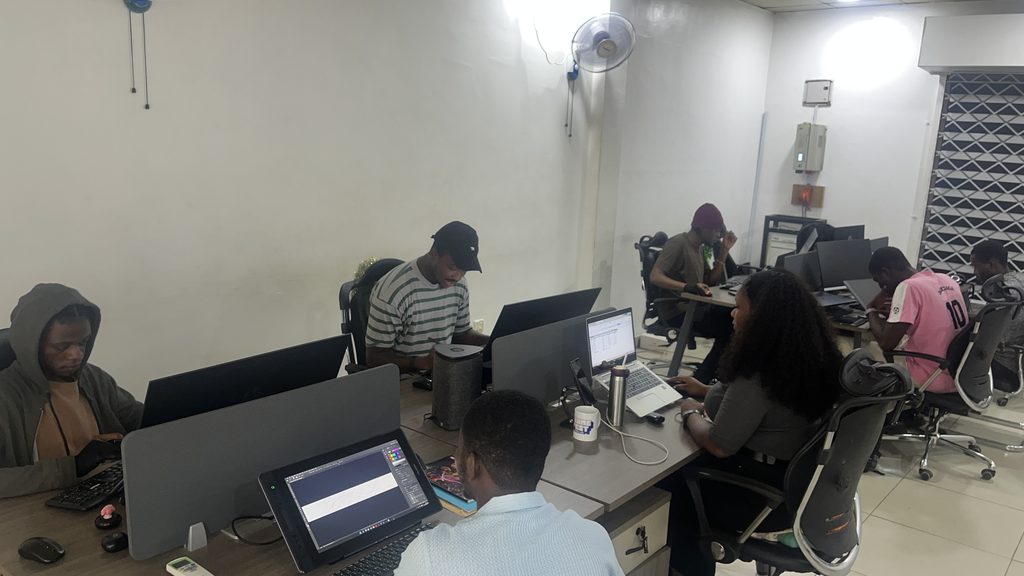
The transition came around 2021. Anthony attributed the change primarily to funding and a clearer projection of the direction the company wanted to take. With those elements in place, Symphonii opened an office, began employing staff and moved more deliberately into comics and original production. That is why the team considers itself roughly five years into its life as the creative studio audiences recognise today, despite the older registration date.
The difference between those two periods is significant. In its earlier years, the team relied largely on commissioned work to sustain its operations. By 2021, it was beginning to invest more deliberately in developing stories and intellectual properties of its own. The shift was not simply about having an office or employing more people; it reflected a clearer decision about the kind of creative company Symphonii wanted to become.
Mmanwu and the beginning of a universe
If one project represents that transition, Anthony points to Mmanwu.
The comic did not begin with an elaborate master plan for a connected universe. Its origins were much more informal: a discussion in which four people threw ideas around, exploring what kind of story they could develop together. Those involved were Victor Emereni, who handled the story; Confidence Elochukwu, the writer; Anthony Emereni, the editor-in-chief; and Ifeoluwa Owoade, the illustrator.
At the centre of their discussion was the masquerade. As they explored the subject, they recognised how many stories existed within the masquerade traditions found across Africa, and how much of that material remained available for creative exploration. Rather than treating masquerades simply as costumes or visual representations of culture, the team saw an opportunity to draw from the histories, stories and meanings associated with them. That recognition became the starting point for Mmanwu.
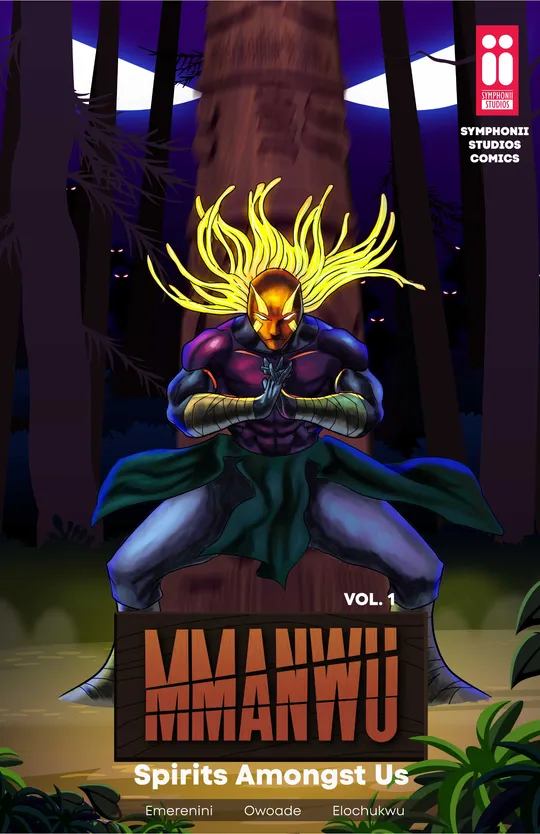
What began as a conversation around the possibilities of African masquerade traditions eventually developed into a comic project and, in time, something larger than the team initially expected.
Today, some of Symphonii’s other stories share connections with that world. Anthony explained that not every comic the studio publishes belongs to one continuity, but some of its larger properties are being deliberately linked. Characters introduced in one title can appear elsewhere, meaning that understanding one story may eventually lead readers back to another. The studio is gradually constructing its own mythology rather than forcing every title into a single universe from the beginning.
The way those stories are developed has also changed. During Symphonii’s earliest comic work, story development was largely a round-table process. The small team could sit together and collectively build an idea. Today, dedicated writers can develop a story before bringing it back to the larger team for review. Writers, artists and other members of the studio can offer different perspectives before a story advances. The process has become more structured, even though the collaborative approach that characterised the team’s earlier discussions remains part of its development.
That growth has not, according to Anthony, come at the expense of any particular comic or project. He maintained that the studio’s expansion has not affected the work in that way, and that its commitment remains centred on the goal that brought the team together in the first place: telling stories. The studio’s development may have changed how it organises its work, but Anthony does not describe that growth as a reason for individual projects to be abandoned or sidelined.
Taking the stories beyond the page
For Merci Rick, one of the most significant things Symphonii has done is take comics into what she describes as a transmedia space. In her view, comics should not be restricted to printed pages that readers look at and put away. Characters and stories can move between print, short films, animation and digital visual comics that people can access and share on their mobile devices.
It is an approach she believes Symphonii has been taking seriously. Having visited the studio several times, Merci also points to the environment the team has created. She describes it as welcoming, with people building, designing and animating within the same space. For him, that arrangement matters because it brings different stages of creative production together rather than treating them as separate activities.
Her assessment also extends to the studio’s ability to reach audiences beyond the traditional comic-reading community. Merci argues that some people still associate comic books with a particular kind of readership, often dismissing them as something for nerds. Moving characters into animation and other digital formats, she believes, makes it easier for people to encounter Nigerian stories without having to begin by picking up a comic book.
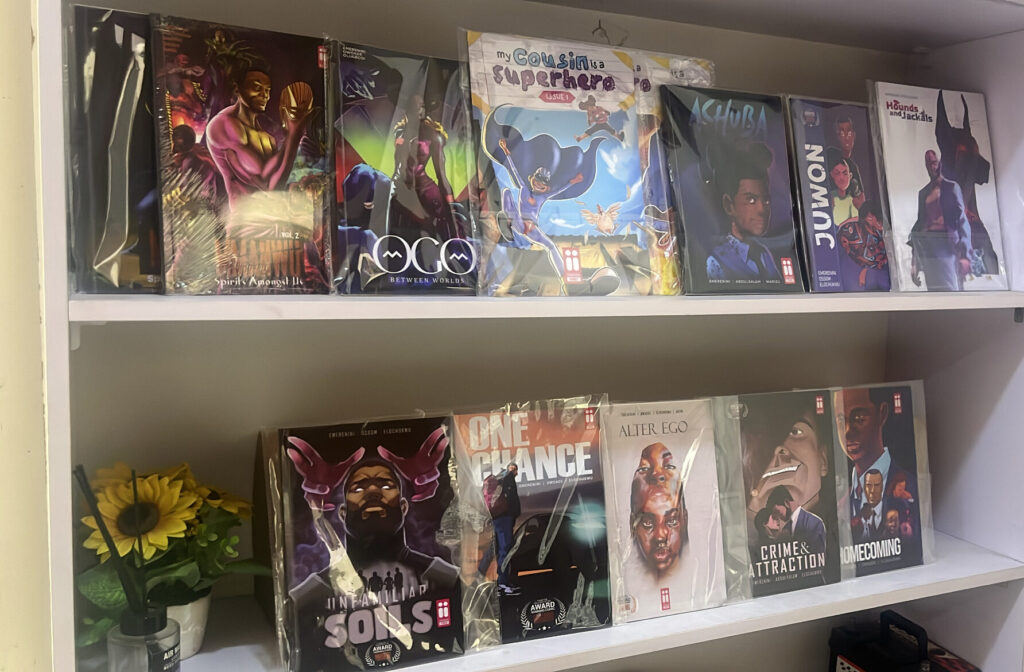
She offered a personal example through My Cousin is a Superhero, a Symphonii title her niece enjoys. Instead of only asking for animated stories produced elsewhere, she has become interested in a character created by a Nigerian studio. It is a small but meaningful example of what local storytelling can achieve when it reaches beyond the people who already follow comics.
Merci’s point is not simply that Symphonii produces comics and animation. It is that the studio is working to make its characters accessible through different formats, allowing people to encounter and share them in ways that fit their everyday media habits. In that sense, its contribution to Abuja’s creative environment extends beyond the individual titles it publishes.
When does a comic become a failure?
That commitment also shapes how Anthony thinks about the commercial performance of the studio’s work.
Asked whether Symphonii had produced a project it believed in creatively but which failed to make sense commercially, Anthony resisted describing any of its books as failures. His reasoning was that an intellectual property does not necessarily lose its value because it has not become commercially successful immediately after release. Some of the studio’s titles, he argued, have simply not received the promotional attention required to establish the full extent of their audience.
A comic can exist for years before finding a larger readership if it is eventually marketed, redistributed or adapted effectively. Rather than treat every title that has not yet achieved commercial success as a finished experiment, the studio intends to put more energy behind some of its existing properties.
It is a long-term way of looking at comics, treating them not only as individual issues whose commercial prospects are determined at release, but as intellectual properties whose value may be realised over time. The conversation did not establish a fixed point at which an underperforming title would be considered commercially unviable. What Anthony’s response does establish, however, is that Symphonii is reluctant to make immediate sales the only measure of whether a story deserves to continue.
That position places considerable importance on the studio’s ability to keep developing its properties and find new ways of bringing them before audiences. It also reflects a belief that the life of a comic need not end with its initial publication.
Frame Fest: putting Nigerian characters at the centre
That same interest in making Nigerian characters matter beyond a single publication appears in another Symphonii initiative: Frame Fest.
For Symphonii, the idea comes partly from something the team has repeatedly noticed at Nigerian pop-culture gatherings. Walk through many comic and anime conventions in the country and the costumes are immediately familiar: Naruto, characters from Japanese anime, Marvel and DC superheroes, and other international properties. There is nothing particularly surprising about Nigerian fans loving those characters. Symphonii’s question is slightly different: where are the Nigerian ones?
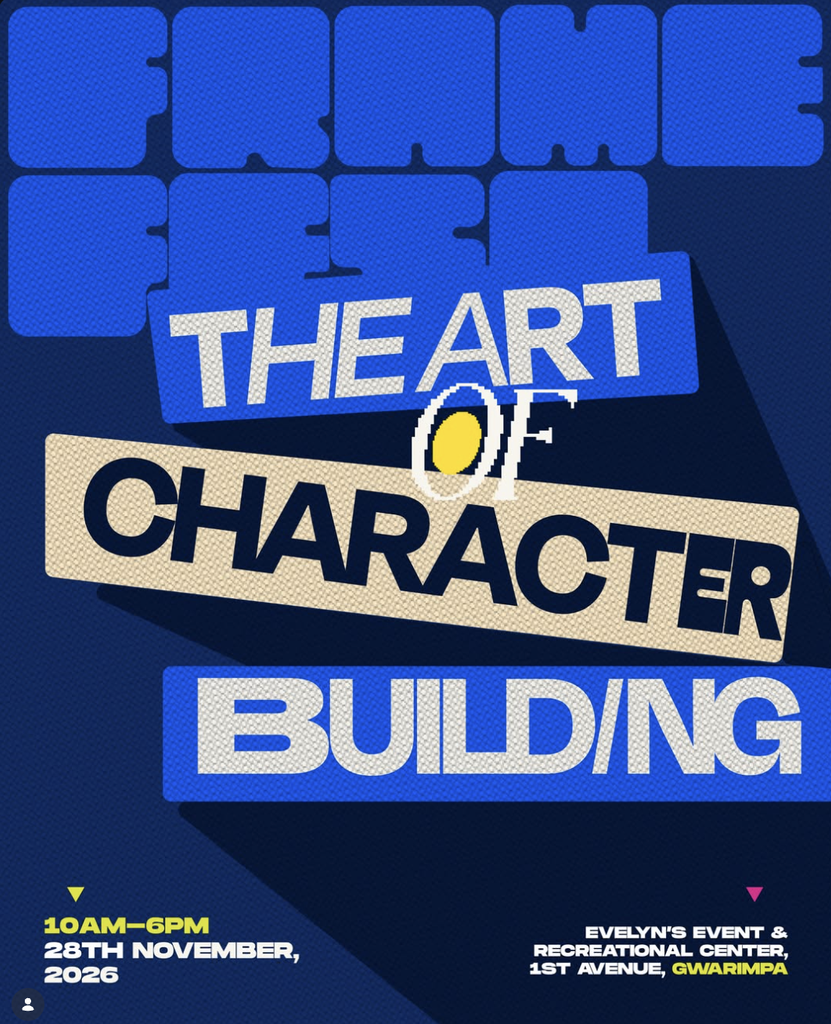
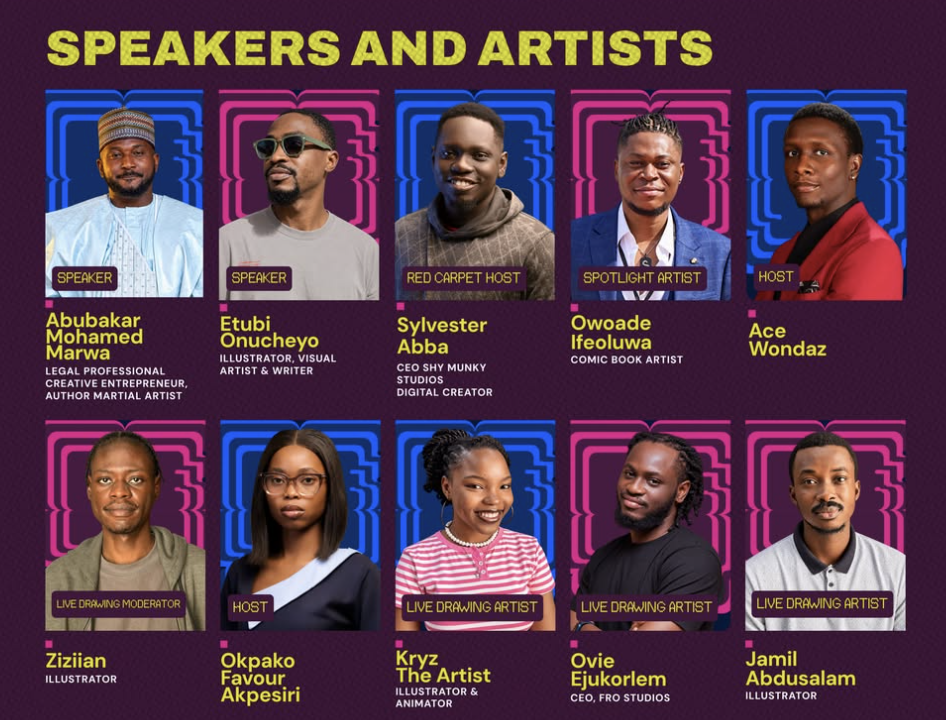
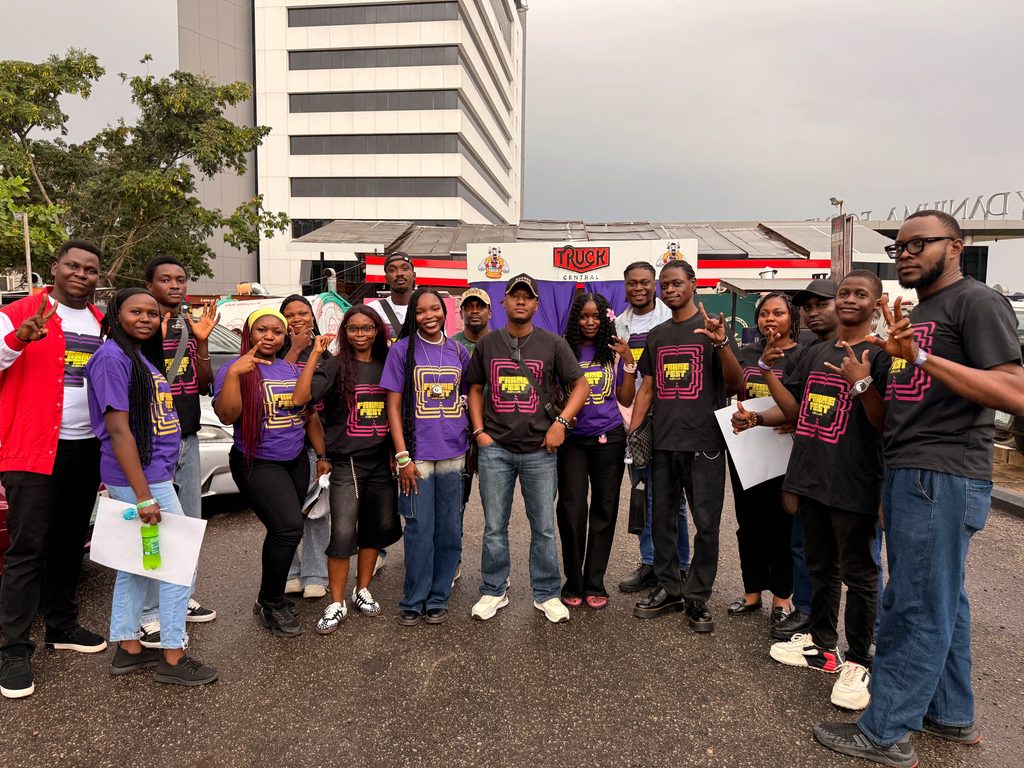
Frame Fest Abuja 2026 is being prepared as a celebration of Nigerian comics, animation, storytelling and the people creating them. Organised by Symphonii Studios, the event is scheduled for Saturday, November 28, 2026, at Evelyn’s Event & Recreational Centre, 1st Avenue, Gwarinpa, Abuja. It is expected to bring together comic book enthusiasts, animation lovers, digital artists and gamers through activities that include character design workshops, storytelling panels and high-performance gaming competitions.
The studio wants the event to offer more than a conventional gathering where attendees simply move between booths. Its broader intention is to create an environment where creators can present their work and audiences can engage with Nigerian stories through activities, performances and presentations.
Cosplay is an important part of that ambition. Rather than simply recreating the international characters already visible across Nigerian fan events, Frame Fest encourages attendees to consider characters created here. Symphonii is also keen to make one distinction clear: the focus is not limited to characters from its own catalogue. The Nigerian-character cosplay competition is open to characters from Nigerian comics and animation generally, regardless of which local studio or creator owns them.
The intention is not to turn Frame Fest into an advertisement for Symphonii’s publications, but to create a space where Nigerian characters from across the industry can receive the kind of fan participation often reserved for international properties. Prize money has also been attached to the Nigerian-character cosplay competition, giving fans another reason to engage creatively with locally produced characters.
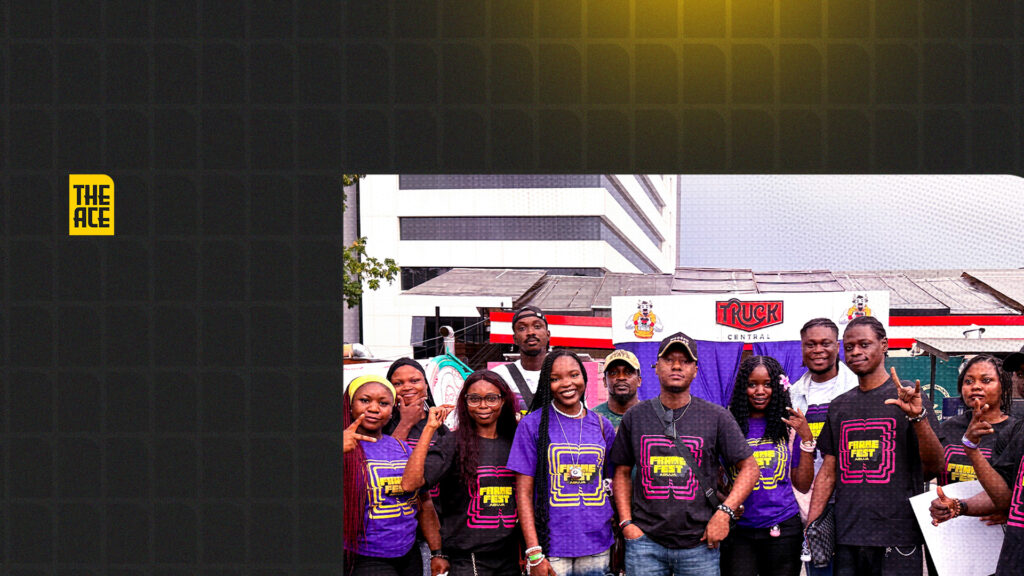
Merci Rick attended the first Frame Fest and remembers an event that exceeded his expectations. He recalls meeting animators, sketch artists and people interested in becoming part of the creative process. What stood out to him was that the event did not focus only on finished work; it also gave attention to the process through which animated characters and other creative projects came into existence.
That distinction matters because it suggests a role for Frame Fest beyond exhibition. For people who are still learning, experimenting or looking for a way into the industry, seeing the process and meeting people already working in it can be as valuable as seeing a completed comic or animation.
A second interviewee, who requested anonymity, offered a related perspective. They argued that personal growth within the creative industry should be accompanied by efforts to build the industry itself. As they put it, “we need to also take out time to build the industry that we exist in.”
They see Frame Fest as one way Symphonii has acted on that principle. Through its competitions, cosplay prizes and the opportunity it provides for people to celebrate the community, the event offers support that goes beyond the studio’s own publications. The interviewee also pointed to the studio’s growth as a brand, identifying titles such as Haunted and Jackals as examples of its developing body of work.
Beyond the audience it hopes to attract, Frame Fest also presents an opportunity for Abuja’s comic and animation studios to connect with one another. Symphonii is interested in collaborating with other comic studios in the city and creating room for more local creators to participate in the event. This is an important part of the invitation: Frame Fest is not intended to be a platform that belongs exclusively to Symphonii, but one through which different studios and creative communities can meet, share their work and explore what they might build together.
For other Abuja-based studios, the event is therefore an opportunity to engage with Symphonii beyond simply attending as spectators. The studio is signalling its willingness to work with other creators and contribute to a more connected local comic industry, where collaboration can help bring Nigerian stories before wider audiences.
Anthony acknowledged that Frame Fest is still growing. Symphonii wants to use its own reach and catalogue as a starting point, with the longer-term intention of bringing more Nigerian studios and creators into the celebration. There is also an Abuja dimension to the event. Members of the studio have travelled to Lagos for major creative gatherings and experienced the opportunities those events provide, but travelling from Abuja also means paying for transportation, accommodation and other expenses. Part of the idea behind Frame Fest is that creatives and fans in Abuja should not always have to leave the city to experience that kind of environment.
In that sense, Frame Fest follows the same philosophy behind Symphonii’s decision to remain in Abuja. Instead of treating the concentration of creative opportunities elsewhere as an unchangeable fact, the studio is attempting to create a local platform where Nigerian characters, creators and audiences can meet.
Building where the industry is not
Symphonii’s story is still developing. Its connected comic universe continues to take shape, and some of its existing books are still waiting for the promotional attention that could introduce them to larger audiences. Frame Fest is being prepared as another part of the studio’s effort to build a stronger relationship between Nigerian stories and the people who engage with them. Meanwhile, operating outside the country’s largest creative hub continues to come with practical disadvantages, particularly when the studio needs to recruit talent from elsewhere.
The accounts from Merci Rick and the anonymous interviewee provide two perspectives on what the studio has contributed so far. One emphasises its approach to moving stories across different media and the creative environment it has established; the other sees its events and competitions as a way of supporting the wider community. Neither perspective settles how large or lasting Symphonii’s influence on Abuja’s creative ecosystem will become, but both point to contributions that extend beyond the studio’s own catalogue.
Those contributions are central to what Symphonii is attempting to build. The decision to remain in Abuja has required more than simply establishing an office in a different city; it has meant making room for creatives who need to relocate, developing original properties and creating opportunities for audiences and creators to meet without always depending on events elsewhere.
Five years into its life as the studio audiences recognise today, Symphonii is no longer simply demonstrating that comics and animation can be produced from Abuja. Through its publications, its approach to transmedia storytelling and the preparation of Frame Fest, it is also trying to make the city a more active place for the creation and celebration of Nigerian stories.
Whether that effort will help establish Abuja as a more visible centre for comics and animation remains an open question. The answer will depend not only on what Symphonii produces, but also on whether the audiences, creators and supporting creative structures it hopes to attract grow alongside the studio.
Written by Nehemiah Osarodion
——————————————————–
——————————————————–
AI Use at TheACE
TheACE uses artificial intelligence tools to support research, drafting and analysis across Africa’s creative industries. All content is verified, edited and approved by our human editorial team to ensure accuracy, clarity and responsible storytelling. AI assists our work; it does not replace human judgment.