MYTH TO MARKET | Episode 03 by Nehemiah Osarodion
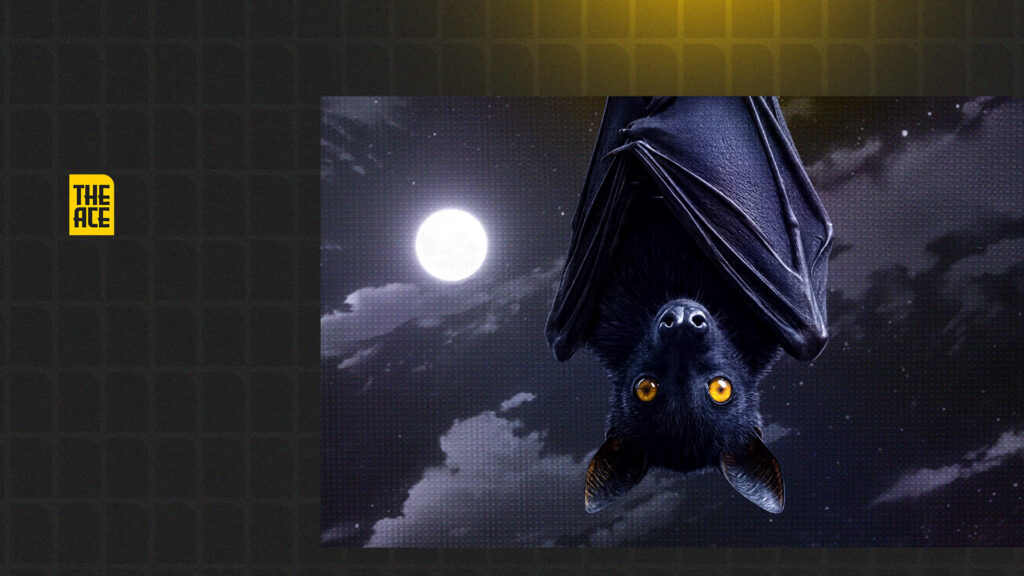
Last time on Myth to Market, we went back to a time before the world had taken shape, when the Benben emerged from the primordial waters and became a symbol of creation itself. But creating a world apparently was not enough. Someone still had to turn the lights off. And according to an old story of the Kono people of Sierra Leone, that responsibility was given to perhaps the worst possible courier: a bat.
To understand why that matters, imagine a world where night exists, but darkness does not. The Sun rules the day, and the Moon appears at night, yet when evening comes, people can still see clearly. There is no true darkness swallowing roads, forests or homes, and the night does not arrive with the same cold obscurity we associate with it today.
That is the world described at the beginning of this Kono tale. Among the Kono, the Supreme Being is known as Yataa, while Meketa appears as an older name. Yataa is understood as the great being above humanity, associated with the sky and the creation of the world. In this story, however, his role becomes surprisingly specific: he possesses something the world has never experienced before—darkness.
Rather than allowing it to simply descend across the Earth, Yataa places the darkness inside a basket and gives it to Bat. Bat is instructed to carry the basket all the way to the Moon, where it is to remain until Yataa arrives and explains what should be done with it.
It is an oddly ordinary beginning for something so fundamental to human existence. There is no great war between rival gods and no monster swallowing the Sun. Darkness is treated almost like cargo, something that can be contained, carried and delivered, and Bat becomes responsible for transporting one of the most important things ever to enter the world.
Bat begins the journey with the basket, but travelling to the Moon is apparently hungry work. After flying for some time, Bat grows tired and hungry, sets the basket down and leaves to search for food, and that decision is where everything goes wrong.
While Bat is away, other animals discover the unattended basket. They do not know what Yataa has placed inside it and, believing that it might contain food, they open it. Instead of finding something to eat, they release something the world has never known: darkness. It escapes beyond the basket and spreads into the world, and by the time Bat returns, there is no simply putting it back. What had been contained is now everywhere. For the first time, the arrival of night means the disappearance of light.
According to the story, Bat has never really stopped trying to fix the mistake. During the day, Bat sleeps. When darkness returns, Bat takes to the sky and flies through the night, still searching for the darkness that escaped from Yataa’s basket, hoping to capture it, return it to its container and finally complete the journey to the Moon. Yet morning always arrives before the task can be completed, and so the search begins again the following night.
It is a remarkably gentle explanation for something humans experience every day. The story gives meaning not only to the existence of darkness, but also to the behaviour of the animal at its centre. Why does Bat disappear during the day? Why does it emerge when the world becomes dark? Why does it spend the night flying back and forth beneath the Moon? Within the logic of the tale, Bat is not simply nocturnal. It is still carrying out an unfinished assignment.
Now, how about we get to the serious part? This is a story with no wars, action or super-powered humans, and that simplicity is part of what makes stories like this so easy to overlook. Modern fantasy has trained us to search mythology for warriors, monsters, magical weapons and gods powerful enough to destroy mountains. Yet mythology was never limited to explaining who could defeat whom. It also tried to explain why the world looked and behaved the way it did, sometimes through stories intimate enough to be told beneath the very night sky they were attempting to explain.
The Kono tale of Bat and the basket of darkness belongs to that tradition. It offers an explanation for darkness and for Bat’s nocturnal behaviour without requiring an enormous cosmic conflict. Instead, the world changes because someone got hungry, someone else got curious, and a basket was opened when it absolutely should have remained closed.
Perhaps there is a reason that idea still feels familiar. Let’s become a little irresponsible with the possibilities.
I mean, the traditional story can end with Bat searching the night for the darkness it lost. We do not need to rewrite that ending or pretend the original myth says anything more than it does. But once the mythology has been understood on its own terms, storytellers are allowed to ask what might be hiding inside its possibilities.
Every legend deserves another life, so we ask a very interesting question: What if?
This is Myth to Market.
——————————————————–
——————————————————–
A Note on Myth to Market
Myth to Market is an episodic feature exploring figures, objects, creatures and stories from African mythology and oral traditions, examining both what surviving traditions tell us about them and the possibilities they offer contemporary storytellers. The mythological accounts presented here are summaries intended for research, education and cultural discussion. The speculative section at the end is clearly separated from the traditional account and represents creative commentary rather than part of the original Kono story. Readers who want the fuller story are pointed to the sources below.
Want to know more?
- Patricia Ann Lynch and Jeremy Roberts, African Mythology A to Z, Second Edition, Chelsea House, 2010.
- Geoffrey Parrinder, African Traditional Religion, on Kono traditions concerning the Supreme Being and the story of Bat carrying darkness to the Moon.
- Scholarly discussions of Kono religion identifying Meketa and Yataa as names used for the Supreme Being among the Kono of Sierra Leone.
Side Note: Join our community to gain early access to more episodes of Myth to Market