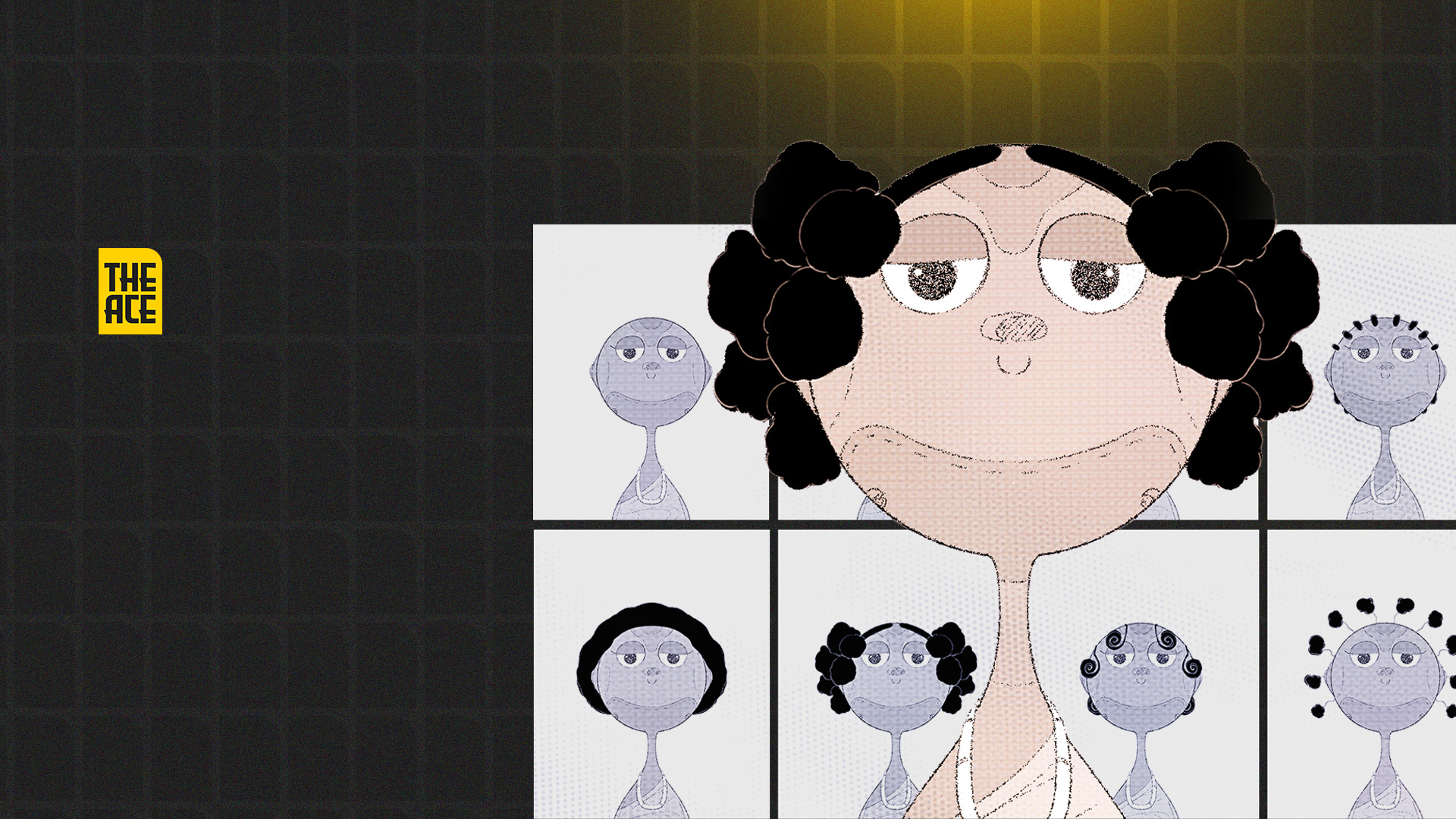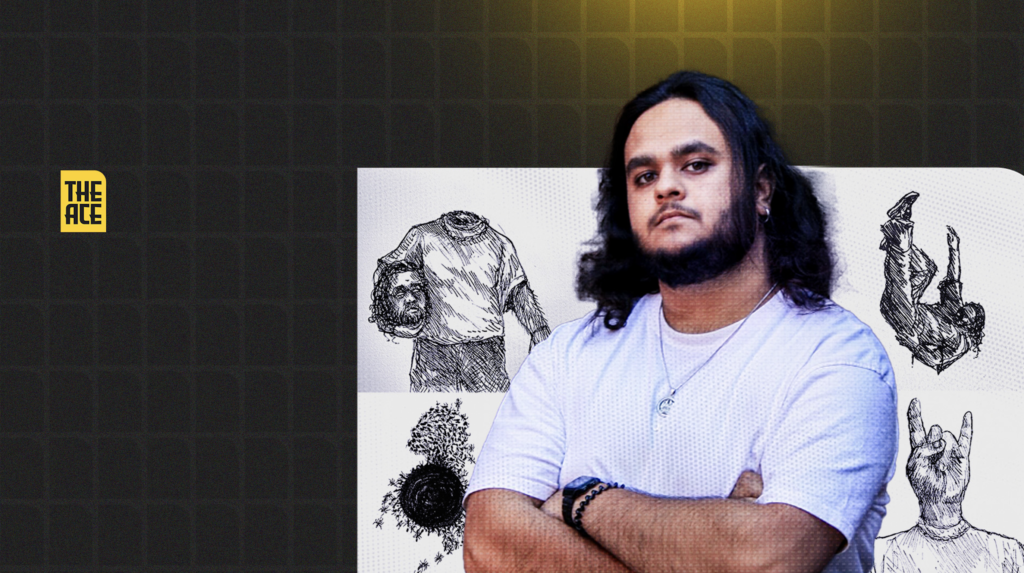
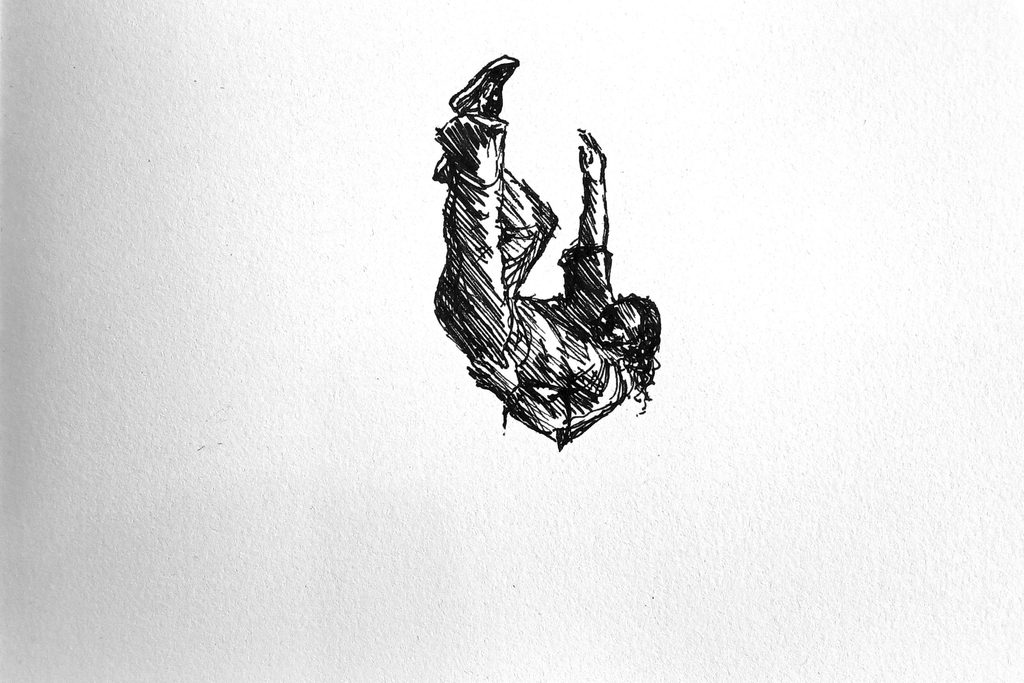
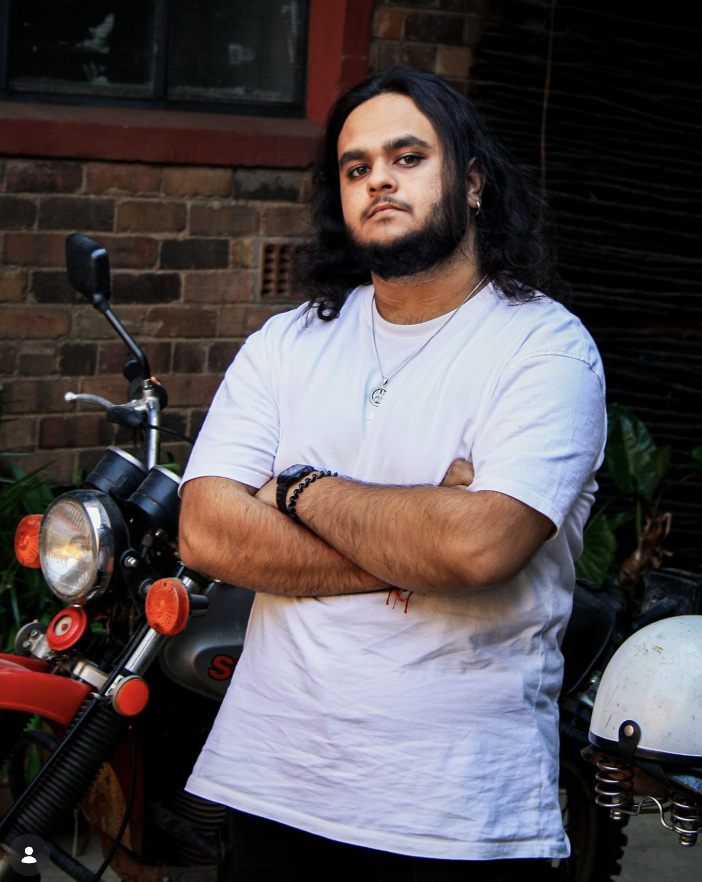
Ashay Parbhoo drew Never-Ending Journey in ink, one frame at a time, on sticky notes and in sketchbooks. He photographed each drawing, sequenced the images on his phone and finished a six-minute, hand-made stop-motion film at six frames per second. It has just won Animation at the 2026 Fak’ugesi Awards in Johannesburg.
Parbhoo is a Johannesburg-based multidisciplinary artist who also works in painting, photography and sculpture. He completed his Fine Arts degree with honours at the University of the Witwatersrand at the beginning of this year, and the film was one of three works he submitted for his final-year project in 2025. They “all spoke to ideas of soul-recurrence, consumption and interconnectedness”, he says, themes that “resurface often” in his work.
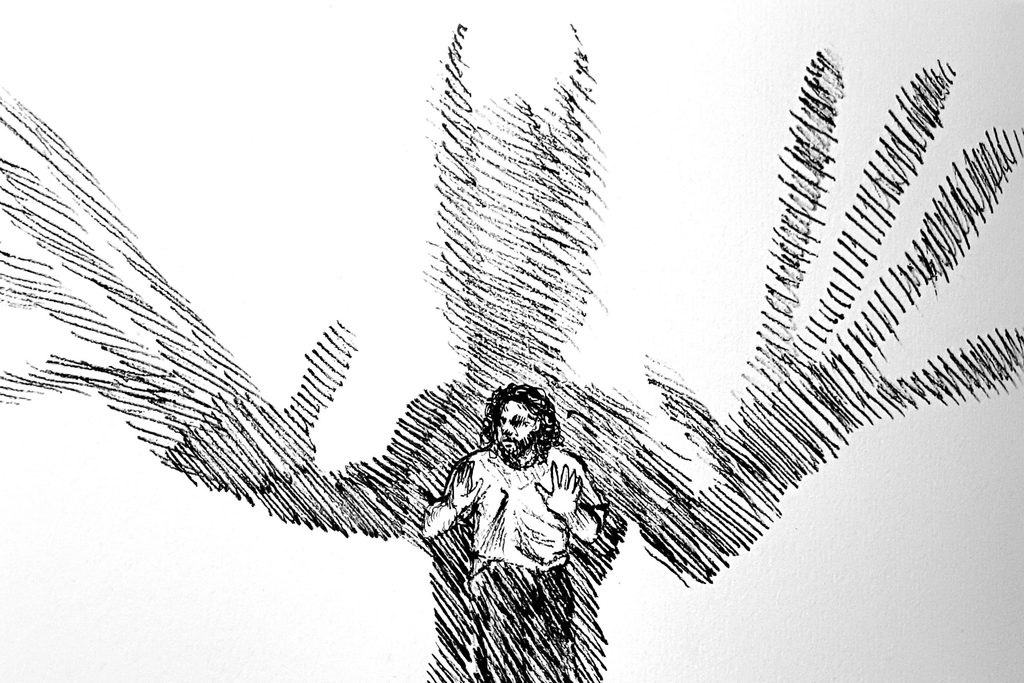
He describes the film as “the continuous unravelling of the self” and the way every small action has a cause and effect. Its character, who physically resembles him, moves through an internal and external journey that he says transcends time and space. He sums it up in a poem he wrote:
Your surroundings melt into you, and you melt into your surroundings…
Cause and Effect, Destruction and Creation, Non-being and Being;
All part of one simultaneous stasis…
The method came from necessity as much as choice. When he began animating in 2023, he had no equipment, so he returned to flipbook animation. “Sticky notes and my sketchbook were the best and easiest formats to access,” he says. He cannot recall how many notes he used, but he “filled up more than 5 sketchbooks”, and the project took three full months of focused work. He photographed each drawing, sequenced the frames in the FlipaClip app and edited the clips together in his phone’s gallery app.
Patience was the hardest part. He had more ideas than time and had to select what he had finished. “Perhaps one day I will release an extended version of the film with the parts I had cut out,” he says.
He did not expect to win. “I was blown away by the nomination alone,” he says, adding that the other nominees’ entries were “phenomenal”. His mother watched the livestream from home, and when his name was announced, she sent him a message about how she had always believed in him. “To me, that means the whole world!”
The win, he says, taught him “how important it is to share work as an artist, as you never know whose heart it will touch”. He plans to keep making animated pieces that spread messages of awareness and authenticity.
A film drawn on sticky notes and assembled on a phone has won a pan-African prize. How a degree project reaches a stage like that depends partly on the festivals built to receive it, and the continent now has several.
The wider circuit
The awards belong to the Fak’ugesi African Digital & Innovation Festival, which ran from 13 to 17 October in its 13th year under the theme African Imaginaries. It began in 2014 through the Wits School of Arts and the Tshimologong Digital Innovation Precinct, so the university where Parbhoo studied is also one of the festival’s founding partners. The awards, launched in 2022, cover animation, gaming, digital art, immersive media and creative technology. This year’s ceremony was hosted by Msizi James and streamed live, and the jury gave a Commendation Award to Lola Aikins’s Journey to Athlos. Eduardo Cachucho, a former festival director, has said he remembers the first awards less for the ceremony than for the faces in the room, an industry still finding its name watching itself being recognised.
Fak’ugesi treats animation as one strand of a wider digital programme, and its screenings this year were built with the Best of Cape Town International Animation Festival and other partners. Elsewhere on the continent, animation gets either a festival of its own or a named place inside a film festival, and several of those fall within a month of each other.
LIFANIMA, the Lagos International Festival of Animation, is the dedicated one. Founded in 2017 by Muyiwa Kayode, it held its 10th edition from 20 to 22 October at the Alliance Française in the Mike Adenuga Centre on Osborne Road, Ikoyi, after receiving, according to the festival, 1,298 short-film entries from more than 120 countries. It awards Best 2D, 3D, Stop Motion and Animation Commercial, a Stop Motion category added in 2021, and this year introduced the NOA Animation Award, with 22.5 million naira in prizes across the festival. That award is open only to Nigerian animators, who were asked to submit a three-minute film on the question “Who is a Real Nigerian?” At the time of writing, the festival had yet to make its winners public.
The Africa International Film Festival, AFRIFF, runs its 15th edition from 1 to 7 November, with its Globe Awards on the final night. Best Animation has been part of the Globe Awards since the festival’s first edition in 2010, and its New Voices day on 3 November is given to shorts, animation and masterclasses. Eight days after AFRIFF closes, the 22nd Africa Movie Academy Awards take place on 15 November at the Lagos Marriott Hotel. Animation has its own named prize there, the Jubril Malafia Award for Best Animation, honouring an animator killed in Jos in 2018. This year’s nominees come from Nigeria, Ghana, Egypt, Côte d’Ivoire and Mali, several of them co-productions with partners in Europe and the United States.
In Cape Town, the Cape Town International Animation Festival, run by Animation SA, describes itself as the continent’s largest dedicated animation festival and runs an annual student awards programme.
Why it matters
Each of these events does more than hand out trophies. They create deadlines, audiences and a shared sense that animation made in Africa belongs on the same lists as anything else. For a student working alone, the difference between an unfinished film in a sketchbook and a film on an international programme is often simply a date to aim at.
For animators planning ahead, the calendar is the practical guide. Fak’ugesi’s awards deadline has moved earlier each year, from 15 August in 2024 to 15 July in 2025 and 31 May this year. AFRIFF opened submissions on 6 May this year, with a regular deadline of 6 August and a late window to 26 August. Festivals reward the finished film, but Parbhoo’s advice to students runs the other way. “Sometimes rushing something just to finish is doing an injustice to the practice of creation,” he says. “When the work is ready for you, it will call you.”
——————————————————–
——————————————————–
AI Use at TheACE
TheACE uses artificial intelligence tools to support research, drafting and analysis across Africa’s creative industries. All content is verified, edited and approved by our human editorial team to ensure accuracy, clarity and responsible storytelling. AI assists our work; it does not replace human judgement.