Prologue: The Crown He Didn’t Know He Had
“Until I got eighteen, I didn’t know my royalty roots,” HRM King Kufulula tells TheACE. “Before that, I didn’t even know anything.”
It was his grandfather, the late King of the Bapindi, who told him. What came with the knowledge was not a throne but a promise: his grandfather made him swear that he would go to India for his undergraduate studies. He kept that promise after his grandfather died, and the road that followed ran from Congo to India and then to America, where he found himself homeless.
He describes that period as the greatest fight of his life, and says his royal roots proved bigger than anything he had seen in the movies. “Even after losing my father, the fighter never stopped,” he says, “because the crown is not just what people see on TV.”
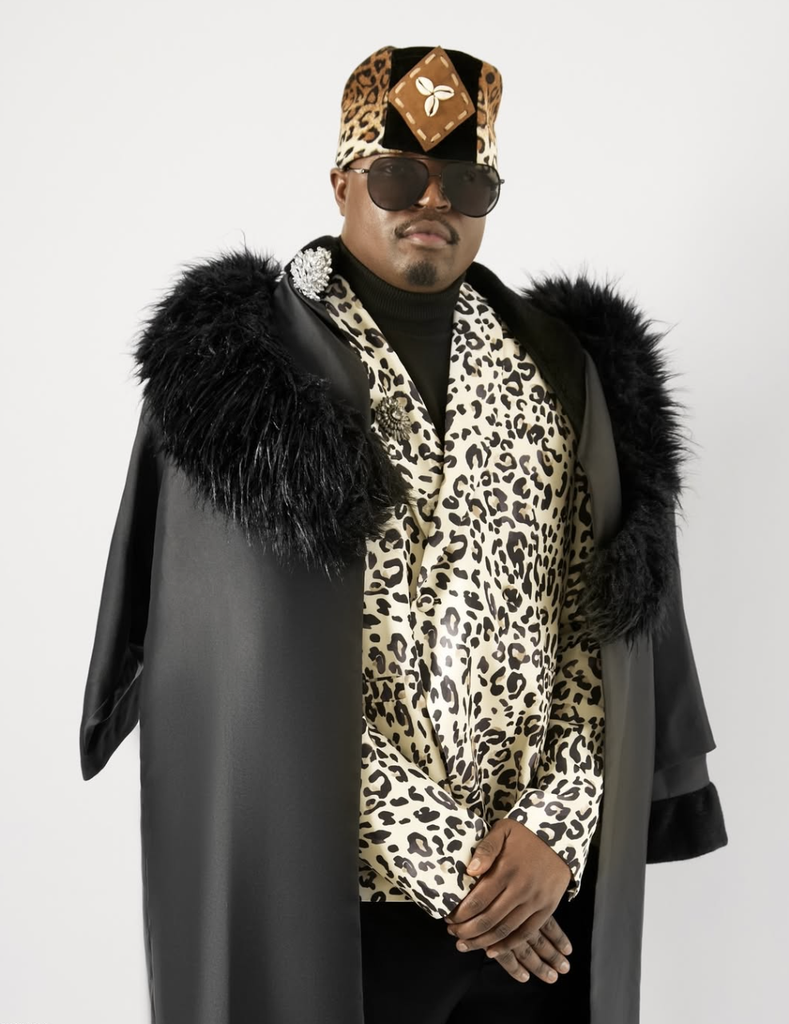
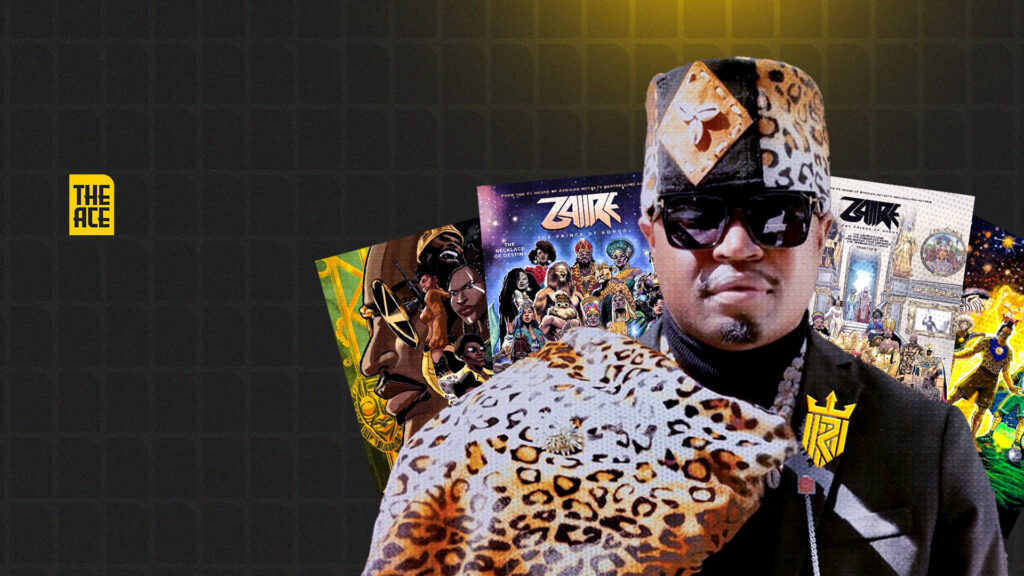
It is an unusual place to begin a story about comics, and it is the right one. Today, King Kufulula is the King of the Bapindi, whose kingdom sits in Bandundu, in the west of the Democratic Republic of the Congo, and the founder of ISOLELE Universe, a self-published comic world with more than three hundred original characters. Royalty, in his hands, has become intellectual property: a lineage turned into a universe, and a universe guarded like a lineage.
A crown is something a person inherits, but a universe is something a person has to build, and then defend. This is the story of the second. And the question after survival is always the same: what do you build when no one is watching?
Panel 1: The Chosen One
His answer was to build slowly, and in private. King Kufulula always knew he would make comics, but not when. “I knew that I would do those comics,” he says, “but I didn’t know what the right time was.”
So he waited, and while he waited, he built. By his account, the universe took shape in private over fifteen years, from 2006 to 2021, when it finally received the name it carries today. Isolele, in Kikongo, means “the chosen one.” The “HRM” in his own title, he explains, belongs to the same idea. “Isolele HRM,” he says. “Isolele Majesty.”
The delay did something strategic. By the time the first book reached readers, the characters, the mythology and the name had been settled for years, which meant nobody else had the chance to define them first. Patience, here, was a form of ownership. He built the world before anyone could take a piece of it.
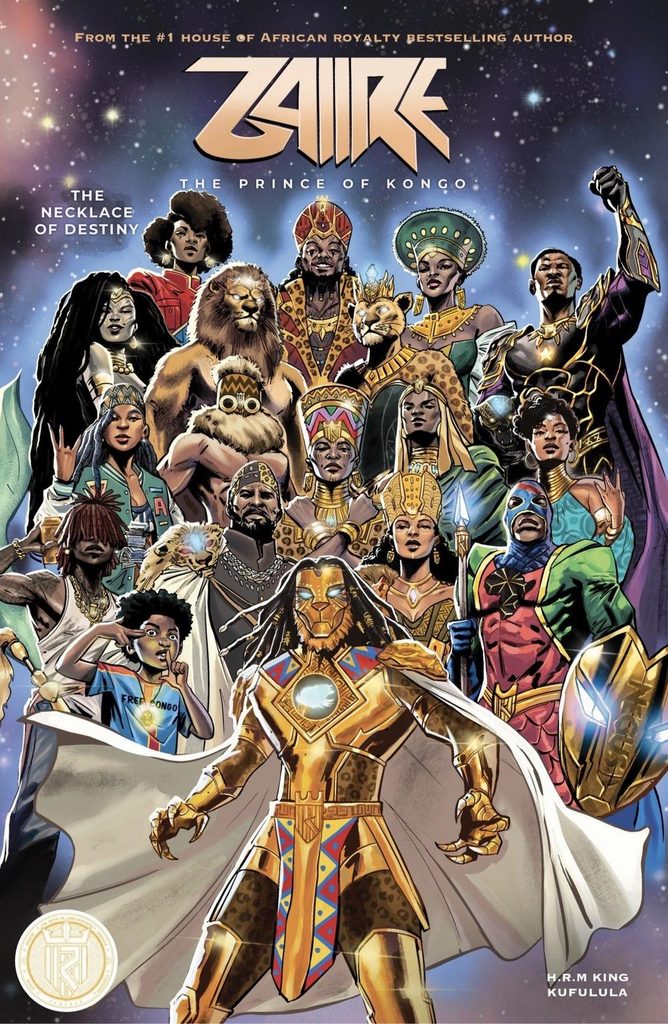
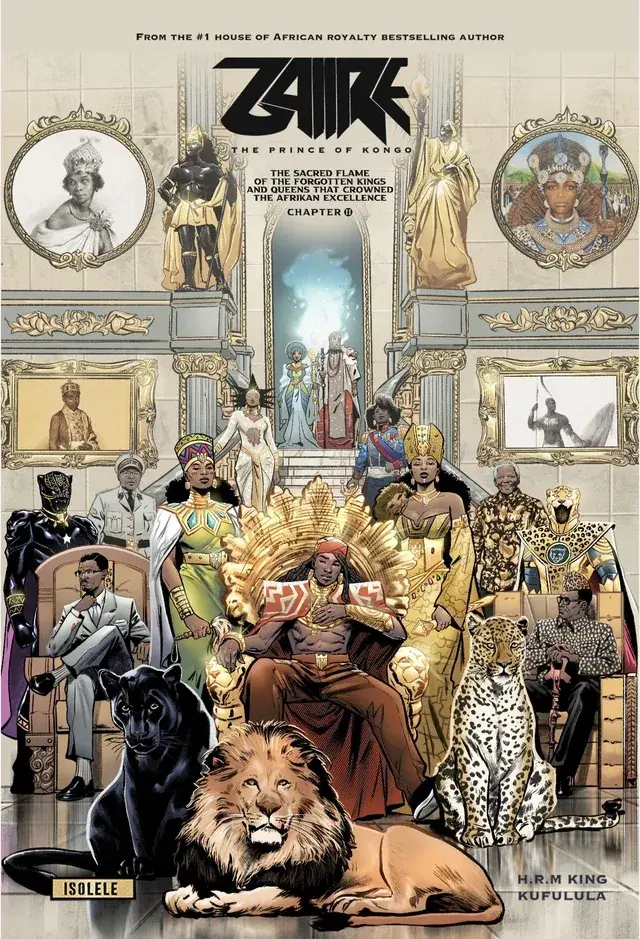
That first book, Zaiire: The Prince of Kongo and The Necklace of Destiny, was published on 3 April 2025, and it launched what he calls Katiomics, his own genre of African comics. Naming a genre is a confident act. It says the work is not borrowing a category from somewhere else; it is making one. Book II is due on 23 October.
The scale is already considerable. ISOLELE has 10 completed comics and 12 more in production, more than 300 original characters, and more than 40 contributors across 10 countries, many of them African creators. New profiles appear on the ISOLELE website every two or three days.
The ambition is deliberately long. The universe, he says, connects to the Twelve Tribes of Judah, and he expects it to outlast everyone now reading it. “It’s a universe that will exist after 20,000 years from now,” he says. “People are going to still talk about that.” It is a statement of faith as much as a business plan, and it explains why he was in no hurry to share the work before it was ready.
But a world built in private still needs a face. That is where the king who found out at eighteen drew himself into the fiction.
Panel 2: A Prince Raised as a Servant
“Zaiire is me.”
Zaiire, the hero of a planned nine-book series, is a prince raised as a servant who does not know he is royal. He was written by a king who found out at eighteen and then had to survive abroad. The parallel is not subtle, and that is its power. Asked whether the story is his own fight turned into a comic, he agrees, and says he has mixed it with fiction.
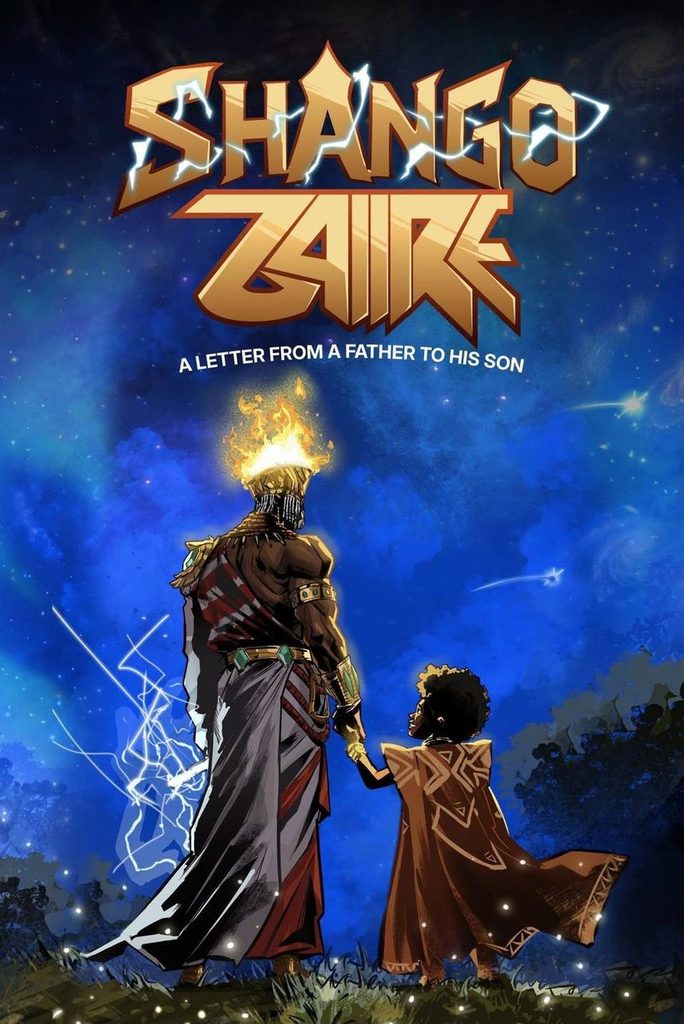
His mother is a Bapindi princess who becomes pregnant by Shango, the god of thunder, without knowing who he is. When Shango tells her he already has a wife, she runs. Her father, the king, has already heard. Humans and gods are not supposed to have children together, and he drives his own daughter out of the palace.
Before she leaves, she is given a box that did not come from this earth, and a Necklace of Destiny, to be handed to her son when he is strong enough to hold his power. Her brother, who expects to be king, learns that the boy will take his place. When Zaiire is four, his mother tells him they are waiting for people. He falls asleep on her back and wakes up in a car with strangers. His uncle has adopted him, and plans to kill him. Zaiire grows up in the uncle’s house, where everybody wants to be like him, and works there as a servant. He does not know he is royal.
The mythology is deliberately pan-African. The weld runs from Congolese royalty to Yoruba cosmology to space opera, and for Nigerian readers, the arrival of Shango in a Bapindi palace is a moment of recognition. The stories unfold in a fictional city. “We put all those most famous buildings of Africa,” he says, “we put it in one city,” with Zambia, South Africa, Ghana, Kenya and Nigeria all given a place on the skyline. It is continental world-building, and the clearest artistic statement the project makes.
The hero’s face is its own argument. He gave Zaiire locs because Africans with a lot of hair, he says, are always judged for it, and made him handsome in exactly the feature people judge. He gave him a big nose, a mouth and a face shaped like the readers he is drawing for. “He had to look like us,” he says. “Like when you look at that, oh, he looks like my cousin.”
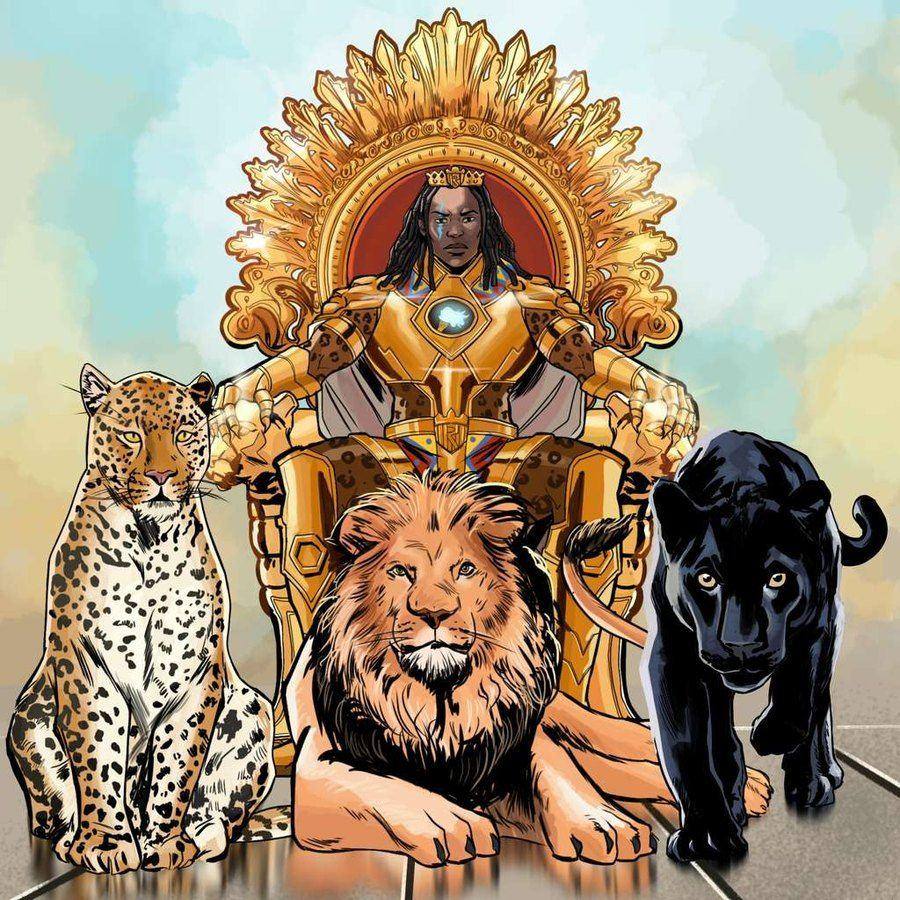
It is easy to pass over that line, but it names something specific: the distance between an African reader and the heroes global comics have long offered. Closing it is not only about representation. It is about who gets to decide what a hero looks like, and in a market where most superheroes are imported, a hero who looks like a cousin is a claim of ownership over the image itself.
Even the clothes are rooted at home. The characters’ costumes, he says, are built from what people wear, and in Congo that means la sapologie, the dandy culture for which Kinshasa and Brazzaville are famous.
The catalogue follows the same long view. Zaiire is planned as nine books, while Zaïko and Mokele are each planned as six. And Patrice Lumumba lives on in the universe as Mwindo Lumumba, the African Panther, an original hero created by Congolese artists and inspired by Lumumba and by the Mwindo epic of the Nyanga people. Lumumba’s legacy, he says, belongs to Congo and to Africa, and he would rather honour it through the work than debate it. If Zaiire is the self, Mwindo Lumumba is the national hero rewritten as protector.
To draw such figures is one act of ownership. To keep them yours after you publish is another.
Panel 3: Guarding the Kingdom
A kingdom needs borders, and King Kufulula’s are drawn into the artwork. Look closely at the characters of ISOLELE and a small logo appears in each image, even inside a necklace. “When you pay attention to each image,” he says, “there is a logo that keeps popping out everywhere.”
The logic is simple. “Somebody can steal our cards,” he says. The logo is another matter. “The logo is everywhere, everywhere.” A mark built into the work itself is harder to remove than a watermark laid on top of it, which makes it a quieter and sturdier kind of protection.
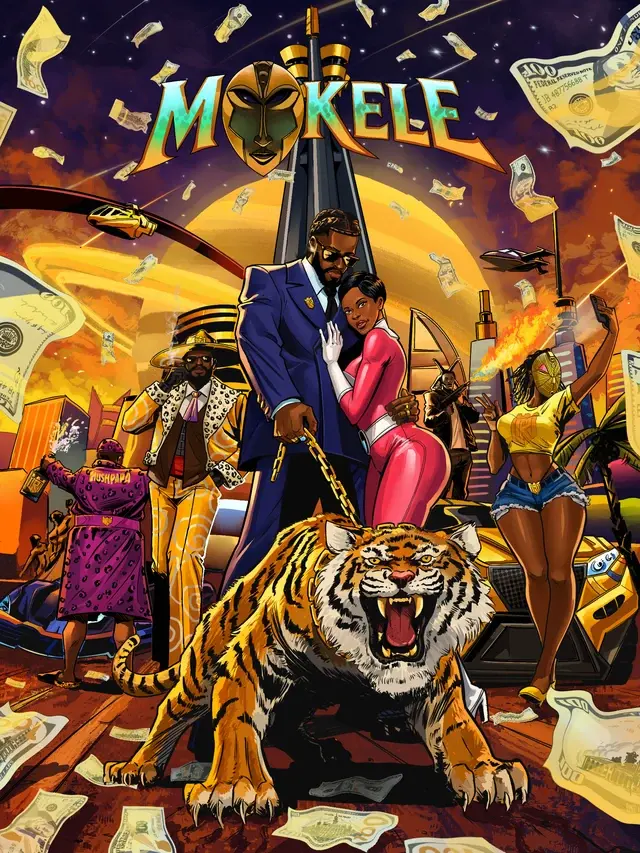
The same instinct governs the catalogue. Of more than 300 characters, most are kept hidden, revealed slowly through releases and the website rather than all at once. He writes the stories himself, and the artwork comes from a team that includes the illustrators Aris Aloko and Loïc Malo. He keeps parts of that team out of public view on purpose: he has seen illustrators and ideas taken from creative companies.
The books are self-published and self-distributed, and he says he registers what he creates. In Congo, he believes, that sets him apart: where others post to webcomic platforms, he says, “we create everything, we register everything.”
His method is maximalist: own the world, own the mark, own the release, and reveal slowly. It moves ownership from slogan to workflow, and it matters well beyond Congo. In an earlier TheACE conversation, director Nadia Darries warned that co-production deals can require creators to give up so much control of their own intellectual property that making the next film becomes uncertain. “We could lose enough ownership… that we won’t be able to make the feature film,” she said. King Kufulula’s route is slower and lonelier. It is also his own.
Yet no kingdom lives by locks alone. It lives by readers, and readers have to find you.
Panel 4: “Kids’ Stuff” and the Road Out
In Congo, he says, comics are still dismissed. “Oh, what are you doing with those kids’ stuff?” people ask him. It is a dismissal familiar well beyond Kinshasa, and it is one reason a self-published Congolese universe is a harder sell than its content suggests.
Outside the home market, the road is opening. Zaiire Book I, he says, has reached the bestseller shelf at Nuria Bookstore in Nairobi, and it is distributed in Kenya and the Republic of Congo. Readers can also find it through Proxy Livre in Brazzaville, on Amazon and at isoleleuniverse.com.
Then there is language, and this is where the strategy turns radical. Language is distribution. The books are published in French, English, Lingala, Kikongo, Swahili and Tshiluba, with Yoruba and Igbo editions finished and on the way, and the ISOLELE website runs in sixteen languages, from Portuguese and Arabic to Zulu, Xhosa, Chinese, Japanese and Hindi. A Congolese story that a reader in Kinshasa, Brazzaville or Nairobi can open in a language they already use, and that a Nigerian reader will soon be able to open in Yoruba or Igbo, is a distribution strategy built into the text itself.
The market he has not yet reached is Nigeria. “We are self-publishing,” he says, “but if there is a publishing company over there, we can work together.”
The point is structural, not personal. A Congolese founder selling in Nairobi and Brazzaville, publishing in six languages and preparing two Nigerian ones, is not a curiosity. It is evidence of where the next readership could come from if distribution followed language rather than borders.
If language is how the books travel, the festival is where the bodies gather. He does not only want books. He wants the venue.
Panel 5: Isolele Is Coming
King Kufulula has never been shy about scale. When an interviewer once told him how big Comic-Con is, he had an answer ready. “It’s good,” he told her, “but Isolele is coming, because we’re going to have our own Comic-Con.”
It now has a date. The ISOLELE Festival, a two-day festival of African superheroes, takes place in Kinshasa on 3 and 4 July 2027, with further editions planned for Kenya, South Africa, Brazzaville and Benin.
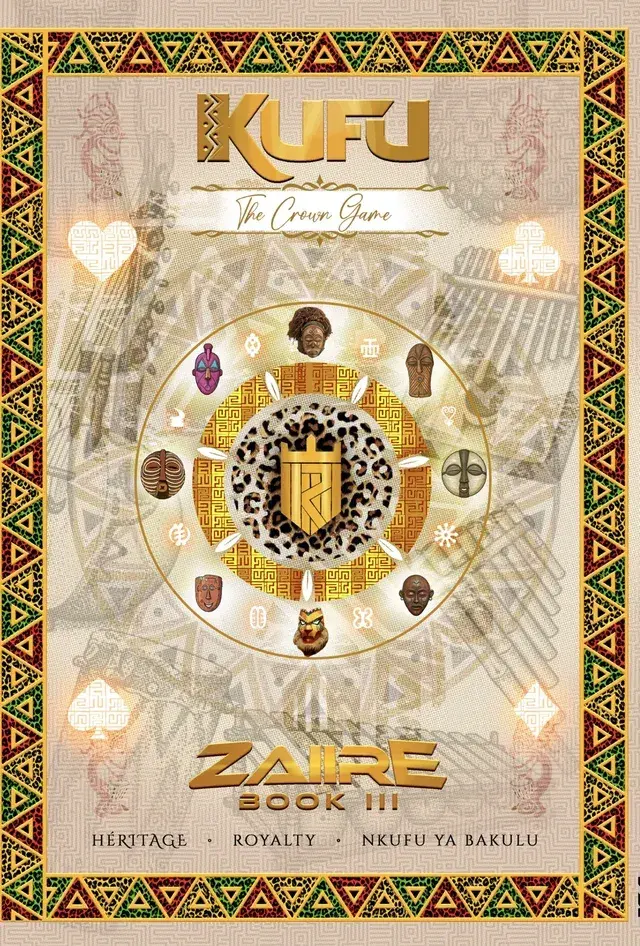
Around the festival sits a growing set of products. The Kufu card game, 116 cards with its own rules, arrives in December, with a card that outranks the Joker and cards for ancestors. A video game in the spirit of Grand Theft Auto, set in what he calls African reality and aimed at PlayStation, will be announced at the festival.
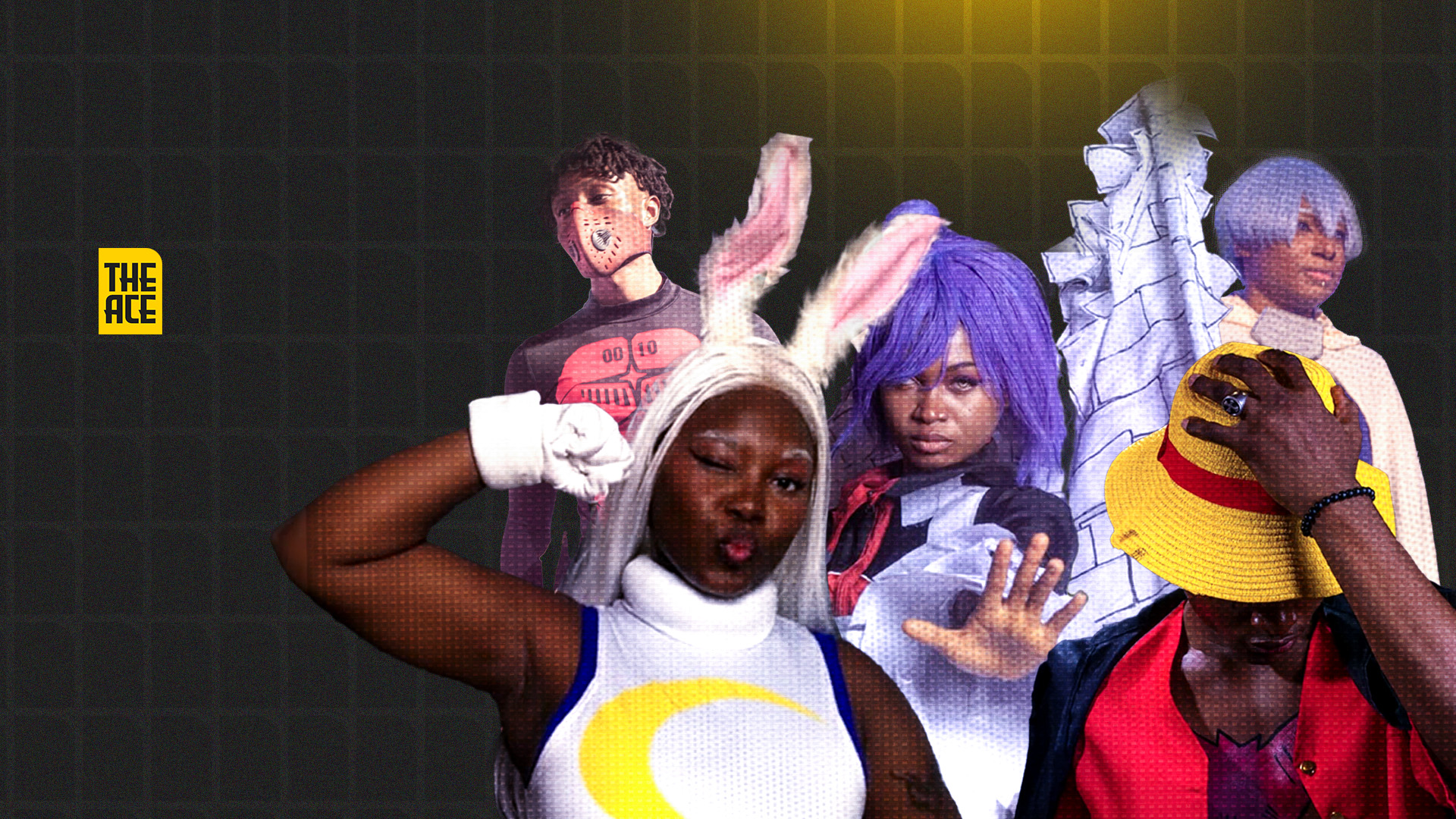
He also sees a gap at African conventions, where fans often arrive as imported anime characters rather than as local heroes. His answer is blunt. “We’re not going to wear Goku,” he says. “We’re going to wear our own stuff.”
Taken together, it is a full-stack play: comics as the bible, cards as playable lore, a game as an explorable city, a festival as the physical hub. ISOLELE is attempting all four at once, which is either audacious or overstretched, and the festival date will be the first public test. It is also the logic of the hidden logo applied to a whole ecosystem. He is not content to supply stories to someone else’s market; he is building the venue, the rules and the audience too. In her conversation with TheACE, Darries argued that the industry’s sustainability rests on one thing: “What we need is an internal audience.” King Kufulula is building one in the most literal way available, with a gathering of his own, in his own country, in his own languages.
Which returns us to timing, and to the line he ended on.
Epilogue: Now Is the Moment
Towards the end of the conversation, King Kufulula steps back from the work and speaks about what it is for.
“Now is the moment for us to tell our story our way,” he says. “It has been a long time. Africa has been through so much. When you look at the stars, everything is dark, and the stars always shine in the darkness. That’s us, Africans. We always shine in the darkness.”
You can read that as a manifesto or as a wound. Probably it is both.
What is certain is that a king who did not know he was royal until eighteen has spent fifteen years building a kingdom no one could hand him, character by character, language by language, logo by logo, and is now inviting the continent to Kinshasa to see it. The crown, as he put it, is not just what people see on TV. A crown is inherited. A universe has to be defended. He has chosen which one defines him.
Disclosure and method: TheACE spoke to HRM King Kufulula on 6 September 2026 for one hour, with follow-up responses provided on 12 October 2026 by Mr Kanda, Executive Manager, ISOLELE UNIVERSE. At the team’s request, TheACE has omitted the Disney matter and past third-party disputes reserved by the team for their documentary, and has not repeated unverified historical claims raised in the interview. The Shinkolobwe uranium background and the publishing context are added from the public record. Quotes have been lightly edited for clarity. TheACE and the team discussed listing ISOLELE Universe in TheLibrary, a forthcoming continental archive, and nominations for TheAfrica100. Books: isoleleuniverse.com, also Amazon, Nuria Bookstore in Nairobi and Proxy Livre in Brazzaville.
——————————————————–
——————————————————–
AI Use at TheACE
TheACE uses artificial intelligence tools to support research, drafting and analysis across Africa’s creative industries. All content is verified, edited and approved by our human editorial team to ensure accuracy, clarity and responsible storytelling. AI assists our work; it does not replace human judgment.