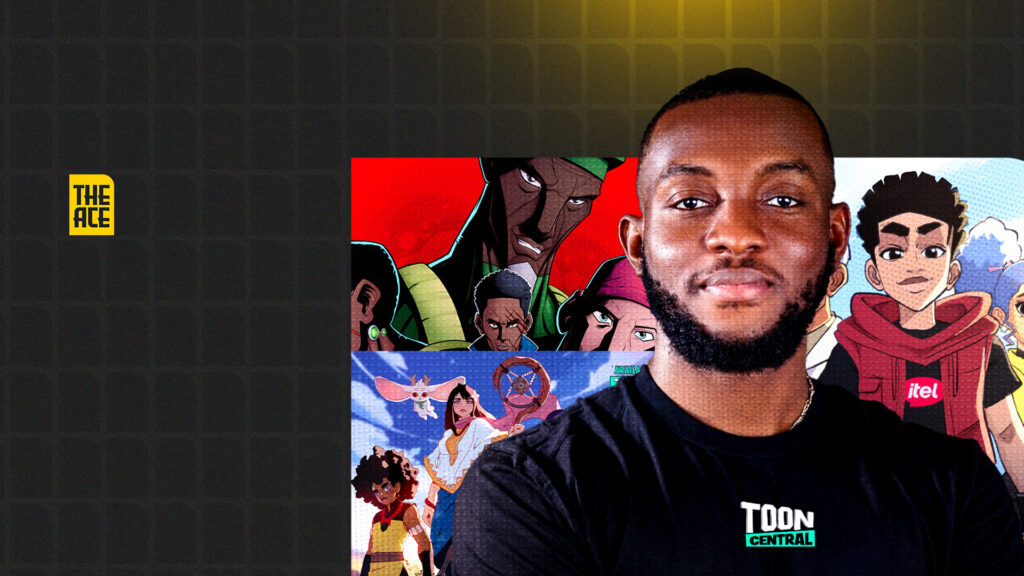
From a childhood fascination with Japanese anime to building a digital home for African comics, Emmanuel Ifeanacho, founder and CEO of Toon Central Hub, is on a mission to redefine how Africa tells its stories, values its creative talent and sees itself in the global imagination.
Before he was Silver Snow, before Toon Central, before Mafiki, Emmanuel Ifeanacho was a boy with a fascination for the worlds that existed beyond his immediate surroundings. Growing up in a close-knit and protective family, he spent much of his childhood indoors. It was during those formative years that he discovered a medium that would profoundly influence his creative and entrepreneurial journey: anime.
This was Nigeria before anime became as widely embraced as it is today. Being an anime enthusiast sometimes meant being subjected to what he calls “the Naruto treatment”: playful teasing and, occasionally, being made to feel different from one’s peers. Even in front of your high school crush, he recalls, they would call you Naruto.
“It was that bad,” he says. “Right now, I think about it, it’s funny. Back then it was damn embarrassing.”
But something remarkable was happening beneath those seemingly ordinary childhood experiences. Watching Naruto, he found himself picking up Japanese words and expressions from the screen. What had begun as entertainment was gradually becoming a gateway to another language and culture.

He came from a multilingual household: his father spoke Latin, Italian, German, Spanish and French fluently, while his sister added Spanish and French to her linguistic repertoire. Emmanuel, however, had initially shown little interest in learning French. Anime changed his relationship with languages, making their acquisition feel less like an academic exercise and more like an organic process of discovery. The appetite for languages and cultural exploration never left him.
That appetite would eventually carry him from a boy who wanted nothing more than to be free and paint to the founder of a platform seeking to do for African comics what Japan did for manga.
“Like an itch in my eye”
Earlier this month, we had a sit-down with Emmanuel, AKA Silver Snow, and asked him who he was before all of this. He answered plainly.
“Simply a boy that wanted to just be free and enjoy his life.”
He studied Fine and Applied Arts at university and, alongside his degree, undertook a Chinese language programme offered by the Confucius Institute affiliated with his university. He imagined a life of painting and selling his artwork abroad, travelling, meeting people and trying different cuisines.
He is still, by his own description, “a crazy gamer” and an avid anime enthusiast who works out to maintain discipline. Naturally introverted, he is also intentional about developing the interpersonal and communication skills that entrepreneurship demands.
But there was one trait running through all of it, one that would become the driving force behind his entrepreneurial journey.
“I’ve always been a problem solver,” he says. “Whenever I see a problem somewhere, it’s like an itch in my eye. I can’t help but scratch it.”
That instinct is what turned a painter into a founder.
The path to entrepreneurship, however, began with an unexpected change of plans. Emmanuel had learned that studying Chinese could open up scholarship opportunities abroad, where he hoped to explore new artistic markets and opportunities. He graduated top of his class in the Chinese language programme at the Confucius Institute and secured a place at Chongqing University.
Then came COVID-19, disrupting his plans to travel. He does not regard that experience simply as a misfortune.
“I believe God is the best of planners,” he says, “and maybe He didn’t want me to go for some reason.”
A practising Christian, Emmanuel approaches questions of purpose and direction through the lens of his faith: what is God’s plan in this, and where is He taking me?
With his plans to travel interrupted, he turned his attention to his artistic practice, opened an Instagram account to showcase his work and began freelancing. It was during that period that the contracts came, and with them, a clearer understanding of some of the challenges confronting independent comic creators.
Peanuts and the Gap in the Global Comics Industry
His first major contract was with Webcomics for an original webcomic IP of his called Widow’s Guilt. Although the experience provided valuable exposure to the international comics industry, the demanding production schedule and financial compensation ultimately proved unsustainable.
“They’d overwork me, and I’d be receiving peanuts for the work I was doing,” he recalls.
He subsequently moved to Webtoon, where he encountered another challenge, one that would significantly influence what he built afterwards.
While creators could publish their intellectual properties on established platforms, accessing monetisation opportunities often required meeting specific readership and engagement thresholds. Emmanuel also observed that many of the most prominently featured stories on these platforms reflected the cultural origins of their respective markets.

Webtoon, with its Korean origins, had helped popularise Korean storytelling, while Webcomics had provided considerable visibility for Chinese narratives. Where, he asked himself, was the equivalent platform that would intentionally champion African stories?
He is particularly interested in how existing monetisation models affect emerging African creators. Drawing from his experiences, he argues that audience and engagement thresholds can present considerable challenges for independent artists, especially those without an established social media following or the financial resources to sustain lengthy production schedules.
Creating comics is a labour-intensive undertaking. Writing, illustration, colouring, lettering and editing all require time, expertise and resources. For creators balancing these demands with everyday financial responsibilities, the prospect of working for extended periods without meaningful compensation can make sustaining an original comic difficult.
Many talented African creators, he observes, eventually abandon their projects, not for want of creativity or ambition, but because the economics of production make it difficult to continue.
There is also the question of visibility. While international platforms have made significant strides in diversifying their catalogues, Emmanuel believes there remains considerable room for stories rooted in African cultures, histories, mythologies and lived experiences.
For him, representation extends beyond the inclusion of Black characters. It encompasses the cultural foundations of the stories themselves: their worlds, philosophies, traditions and perspectives.
“So what hope does that give to the average creator here in Africa?” he asks.
Out of these questions, Toon Central Hub was born. It started in 2022 as a group chat of like-minded creatives, brought together by Emmanuel, with a promise at its heart: to build a platform where African creators could distribute their work and earn from it.

Alongside Emmanuel from the company’s inception was his sister, MaryAnn Ifeanacho, co-founder, Chief Operating Officer and Head of Story. An award-winning writer, MaryAnn invested in the business from its earliest days and contributed to the writing and development of its original intellectual properties. Her literary and storytelling expertise complemented Emmanuel’s background in fine arts, illustration and creative direction.
When Emmanuel earned a little over $400 from one of his early freelance engagements, he invested it in the platform. His reasoning about the business model was built from first principles and an understanding of the economic realities of his target market. While subscription-based services have proven successful in various markets, he believes that microtransactions offer a more flexible and accessible alternative for many African consumers.
Rather than requiring readers to commit to recurring subscription fees, smaller, incremental payments could allow them to engage with content according to their interests and spending preferences. Such a model, he argues, could leverage the continent’s considerable social capital while accommodating differences in purchasing power.
It was a business model conceived with both the creator and the consumer in mind. “But I digress,” he says, and laughs.
The $500 Website and the Lesson It Cost
Building Toon Central Hub was, he says, one of the hardest things he has ever done.
“A lot of sleepless nights, a lot of pains, a lot of anxiety. Will this thing work?”
He holds a firm view about the responsibilities that accompany entrepreneurship.
“Building a business is like raising a child. Regardless of how you feel, good or bad, you always have to show up for that child. You can’t say you’re tired. No one forced you to give birth to that child. You’re accountable for its well-being.”
Coming from a predominantly artistic background, Emmanuel entered entrepreneurship without formal business training. He understood how to develop intellectual properties, but building and managing a company required an entirely different set of competencies.
So he set about acquiring them.
Through videos, podcasts, books and practical experience, he immersed himself in sales, marketing, business development and outreach. He learned how to structure professional correspondence, draft proposals, develop business plans and prepare pitch decks.
He also developed a leadership philosophy grounded in leading by example. For Emmanuel, demonstrating commitment to the work and understanding the processes involved are important aspects of earning the confidence of a team and establishing a culture of accountability.
Then there was the website, and the expensive lesson that came with it. With an initial investment of $500, he commissioned a developer to build the platform, drawing examples of what he envisioned and sharing them as references. The resulting website, however, did not quite capture his vision.
Built on WordPress, the initial platform relied heavily on plugins to accommodate the various functionalities he wanted to introduce. A carousel that would allow readers to browse comics required a plugin. A portal through which creators could upload their work required another.
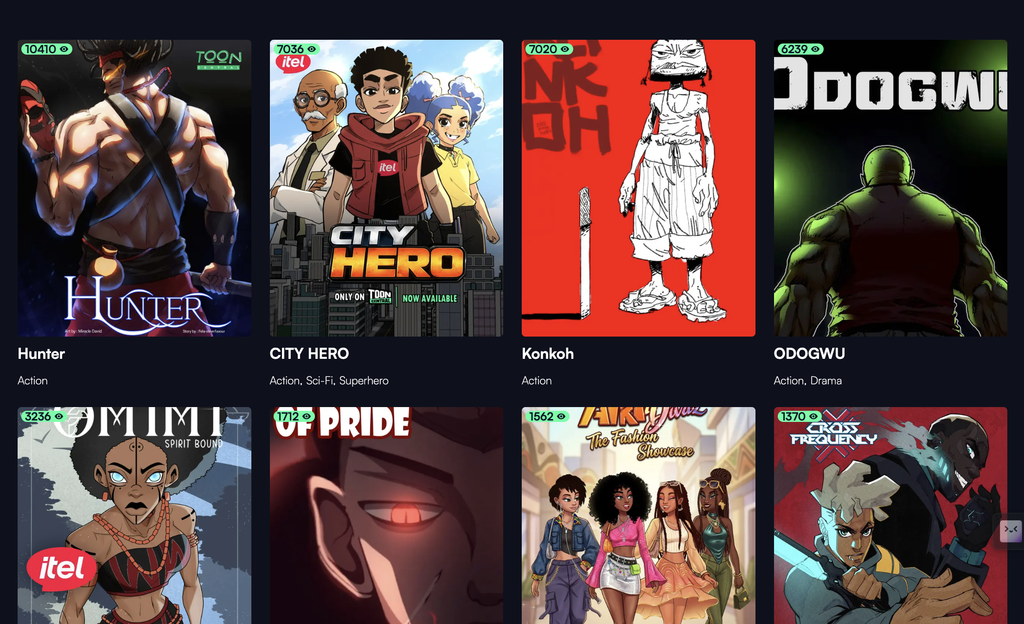
Fifty dollars, a hundred dollars, a hundred and twenty dollars: the costs gradually accumulated, funded largely through his freelance earnings. By January 2024, the initial development arrangement had come to an end. Emmanuel regards even that experience as providential, for it provided an opportunity to reconsider the technical approach to building the platform.
It was while working at Quiver, a game company in Enugu, that he gained a deeper understanding of the distinct roles involved in product development, particularly the importance of user interface and user experience design.
Translating his creative vision into a functional digital product required more than communicating ideas to a developer. It required a deliberate design process and a team with complementary technical expertise.
With that understanding came his first UI designer, followed by front-end and back-end developers, laying the foundations for the platform that exists today. The experience was an important lesson in product development, resource allocation and the value of bringing together the right expertise.
Heartbreak and the Loneliness of the Entrepreneurial Journey
If building the software was one mountain, filling it with content was another.
A content platform, Emmanuel points out, cannot necessarily be evaluated within the same timeframe as other kinds of businesses. He draws a comparison with Netflix, which dedicates considerable resources to developing its catalogue and retaining audiences.
For a content-driven business to demonstrate its commercial potential, it must first have enough compelling content to attract audiences and give them a reason to return. The conventional three-month validation period often recommended to early-stage founders, he believes, does not always adequately account for the peculiarities of such businesses.
At the beginning, Toon Central Hub’s catalogue consisted primarily of its own original comics. Emmanuel had to reach out to independent creators and encourage them to publish their work on the platform.
It was during this period that he encountered one of his earliest disappointments in business.
“In business, those who gingered you to start might not even support you.”
Some of the creatives who had expressed enthusiasm during the platform’s conception were unable or reluctant to publish their work once the opportunity became available. Others took considerably longer than anticipated to come on board.
It was a lesson in the distinction between enthusiasm for an idea and commitment to its execution, a reality many entrepreneurs encounter when translating a vision into a tangible product.
Rather than allow these early setbacks to stall the platform’s development, Emmanuel took the initiative to expand its catalogue of original intellectual properties. He invested his own resources, commissioned artists and oversaw the development of titles such as Head Over Heels, Caped Calvary and Crazy Chicken.
He took on multiple creative responsibilities, developing stories, directing artists, approving character designs and holding weekly meetings to ensure consistency in the artistic direction of the company’s productions.
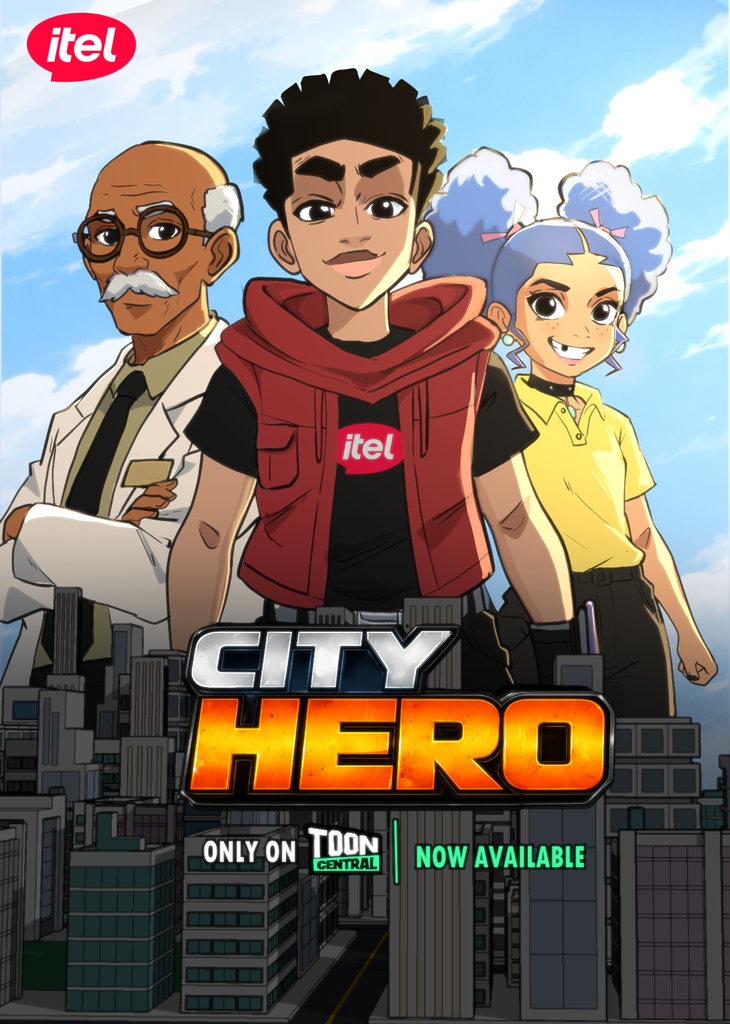
The development of these intellectual properties was also a collaborative undertaking. MaryAnn, as co-founder and Head of Story, contributed to the writing and development of several of the company’s original titles, some of which are yet to be released. Her publicly showcased projects include Head Over Heels, Citi Hero and, more recently, The Hero of Resonance, the flagship comic being developed in collaboration with Japanese idol Marina Kojima.
Through these productions, Toon Central Hub was gradually establishing itself not only as a distribution platform for independent creators but also as a developer of original intellectual properties.
Finding an Audience, Building an Ecosystem
Outreach remained challenging. As an emerging platform yet to establish a substantial track record, Toon Central Hub had to earn the confidence of creators who were understandably cautious about entrusting their intellectual properties to a new distribution channel.
Out of fifty approaches, Emmanuel recalls, perhaps one or two would yield a positive response.
“I kept pushing.”
The turning point came in 2025, when interest began to build and enquiries started coming in. By 2026, the tide had begun to turn considerably. Where Emmanuel had once spent much of his time reaching out to creators, the platform was increasingly receiving emails and calls from creatives interested in publishing their work.
“I just had a call with some Indians who want to post on the site,” he said when we spoke on 31 October.
The platform’s growing reach beyond Africa, including readership and interest from India, offers an encouraging indication of the international appeal of what the company is building.
The development of the minimum viable product (MVP) in 2025 marked another important milestone. Toon Central Hub’s participation in Super Japan in 2025 and again in 2026 provided opportunities to showcase its work, engage with international industry stakeholders and explore cross-cultural creative collaborations.
The positive reception to the platform reinforced the team’s confidence in its potential and informed the decision to proceed with its launch.
In April 2026, Toon Central Hub launched in early access. What began as a group chat of creatives in 2022 has since evolved into a platform housing more than 50 creatives and 70 stories, attracting over 100,000 site impressions and surpassing 1,000 weekly readers.
Its growing portfolio of partnerships, including itel, Keble and its Japanese collaborators, reflects the company’s expanding ambitions across digital publishing, intellectual property development, branded entertainment and international creative collaboration.
The company continues to refine its monetisation infrastructure. Several revenue-generating mechanisms have already been explored and implemented, while additional functionalities, including Google Ads integration and user-uploaded advertising, remain under development.
When we spoke on 31 October, Emmanuel expressed optimism about resolving these outstanding technical requirements before the end of the year, as the company works towards making the platform fully accessible.
For Emmanuel, these milestones represent the gradual realisation of the promise he made to that original group of creatives in 2022.
The Competitor Question, Answered with a Fintech
Toon Central Hub is not arriving into an empty space. Cameroon’s Zebra Comics, now ZEBRA, operates a platform through which creators can share their stories. Comic Republic has explored different monetisation models, moving from freemium to subscription. Galatoons and, more recently, Nerdwork+ are also contributing to the development of Africa’s digital comics ecosystem.
Does that mean the market is heading towards oversaturation?
Emmanuel does not necessarily regard market saturation as a negative development. The presence of multiple players, he argues, signals that there is considerable potential within the industry. The distinction will lie in how effectively each company positions itself and responds to the needs of its audience.
His example comes from an entirely different industry: fintech in Nigeria. In a market populated by numerous financial technology companies, one that stands out to him is OPay. Its appeal, in his view, lies not necessarily in introducing an entirely unprecedented financial service, but in making everyday banking more accessible, reliable and convenient through a seamless user experience.
Innovation, he argues, is often about identifying existing challenges and finding more effective ways to address them. That is the lens through which he approaches Toon Central Hub. A creator should be able to earn from their intellectual property relatively early, from around the fourth chapter, rather than having to meet extensive audience thresholds before accessing monetisation opportunities.
He identifies three reasons why competition is beneficial.
Firstly, it allows creators and consumers to appreciate the distinctions between the different platforms and the value each offers. Secondly, the emergence of multiple companies seeking to unlock the same potential within Africa’s creative sector validates the existence of that opportunity. Finally, competition encourages accountability, innovation and better service delivery, reducing the risks associated with excessive market concentration.
For Emmanuel, the growth of other African comics platforms is not something to be discouraged. It is an indication of an industry coming into its own. He is glad that so many are now trying.
Mafiki and the Bag from Aba
The name Toon Central Hub gives its broader creative vision is Mafiki. Just as Japanese comics have become globally recognised as manga, Chinese comics as manhua and Korean comics as manhwa, Mafiki represents Toon Central Hub’s ambition to cultivate a distinctive African comic identity.
Derived from the Swahili word marafiki, meaning friends, Mafiki is envisioned as a creative identity that draws from Africa’s rich cultural and artistic heritage while embracing contemporary visual storytelling techniques. But the idea behind it goes deeper than branding.
As a student of Fine and Applied Arts, Emmanuel developed an appreciation for the significance of art within many African societies. Historically, artistic expression across numerous African cultures has served purposes extending beyond aesthetics. Sculpture, painting and other forms of visual expression have often been vehicles for spiritual beliefs, historical documentation, communal memory and storytelling.
Mafiki, he hopes, will draw from that rich artistic inheritance while providing audiences around the world with opportunities to engage with the diversity and sophistication of African cultures, belief systems and traditions.
He is particularly interested in challenging the reductive portrayals of Africa that have sometimes dominated international narratives. He draws parallels with the ways in which Japanese spiritual traditions and Norse mythology have inspired globally successful works of fiction. From the spirits associated with Shinto traditions to figures such as Odin in Norse mythology, cultural belief systems have provided fertile ground for some of the world’s most recognisable stories.
African mythologies, philosophies and cosmologies, he believes, possess equally compelling storytelling potential and deserve to be explored with the same nuance, imagination and creative freedom. His explanation for why this matters runs through a series of examples to which he returns with evident feeling.
Imagine a luxury bag manufactured abroad and sold under an internationally recognised brand for $20,000. Its prestige alone might be enough to justify the price in the eyes of some consumers. Yet a comparable, or perhaps even superior, product manufactured in Aba and offered at a fraction of that price might struggle to command the same appreciation.
For Emmanuel, the comparison illustrates a broader challenge: the tendency to associate international recognition with quality while undervaluing locally produced goods and creative works.
Too often, he argues, African excellence receives greater recognition at home after it has already been celebrated abroad. He finds this particularly disheartening.
He thinks, too, of the old Ojukwu Camp in Enugu, the first National Youth Service Corps (NYSC) camp in Nigeria, established on a former military site from the Nigerian Civil War. For him, the condition of such a historically significant site raises important questions about how the country preserves and values its own heritage.
These examples, though seemingly disparate, are connected by a common concern: the relationship between cultural identity, self-perception and the value societies attach to their own creations and histories.
Emmanuel believes that developing a stronger appreciation for African heritage can influence not only how the continent is perceived internationally but also how Africans perceive themselves and their possibilities. It is here that Mafiki assumes a significance beyond entertainment.
While cultural attitudes can take generations to evolve, Emmanuel is particularly interested in reaching younger audiences, whose understanding of themselves and the world around them is still being shaped.
Through compelling stories, memorable characters and immersive worlds, he hopes to encourage a generation of young Africans to recognise the richness of their heritage and the possibilities inherent in their own creativity.
“I’m trying to rewire how a whole generation thinks,” he says.
Taking Mafiki to the Global Stage
He has a partner in that ambition. Marina Kojima is a Japanese J-pop idol formerly associated with the group Mirai Skirt, an entrepreneur and a professional with connections to Japan’s anime and music industries. She is also a brand ambassador for Toon Central Hub.
The collaboration represents an important opportunity to introduce Mafiki to international audiences through a creative exchange between Africa and Japan. At the centre of this partnership is Marina Kyoumei no Yuusha (The Hero of Resonance), a flagship intellectual property being developed in collaboration with Kojima.
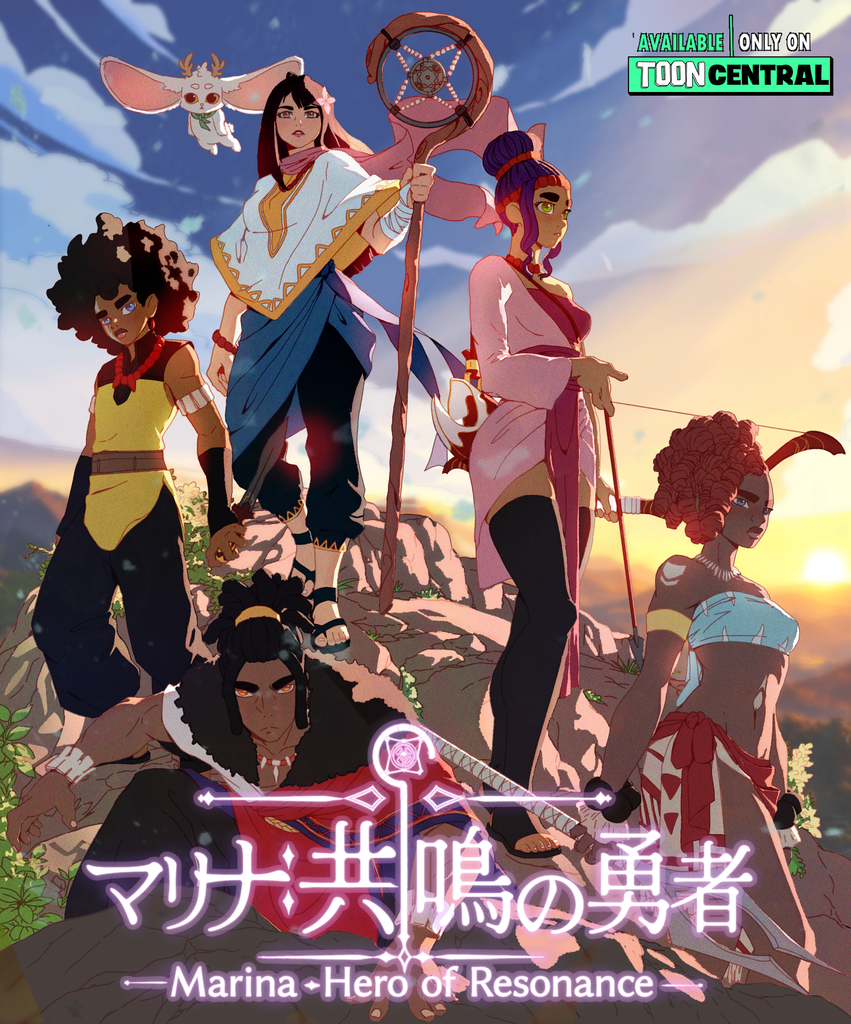
The project brings together African-inspired worldbuilding and Japanese popular culture, reflecting Toon Central Hub’s ambition to create stories that are culturally grounded while possessing universal appeal.
The plan is to introduce Mafiki to the world through distinctive intellectual properties capable of capturing the imagination of international audiences.
The comparison Emmanuel reaches for is Astro Boy, a landmark work in the history of Japanese manga and animation. Drawing inspiration from earlier Western cartoons, it nevertheless developed a distinctive creative identity and became one of the works instrumental in introducing Japanese animation to international audiences.
For Emmanuel, the example illustrates how cultural exchange and creative innovation can contribute to the emergence of a recognisable artistic identity, one work at a time.
There have also been discussions surrounding the possibility of adapting The Hero of Resonance into an anime. A contract has been signed in connection with the collaboration, although Emmanuel is careful to distinguish the long-term ambition of an animated adaptation from a confirmed production.
“This is not a guaranteed promise.”
The immediate priority is to develop the intellectual property, establish its world and build the foundations necessary for its potential expansion into other media.
The collaboration with Kojima represents a particularly meaningful development for a founder whose earliest exposure to international storytelling came through Japanese anime.
What began as an appreciation for another culture’s creative exports has evolved into an opportunity for reciprocal cultural exchange.
The Road Ahead
Toon Central Hub is still a young platform, but its progress since inception offers encouraging indications of the opportunities that exist within Africa’s digital comics industry. With more than 50 creatives, 70 stories, over 100,000 site impressions and a growing weekly readership, the company has begun to establish an audience for its vision.
Its partnerships, original intellectual properties and international collaborations provide additional avenues for growth as it continues to expand its catalogue, strengthen its technological infrastructure and refine its monetisation strategies.
As with any emerging content-driven business, the next phase will involve sustaining audience engagement, developing a commercially viable ecosystem and ensuring that the creators whose work gives the platform its identity can benefit meaningfully from its growth.
The ambition to make Mafiki a globally recognised creative identity by the turn of the next decade is considerable. Realising it will require sustained investment, compelling intellectual properties, strategic partnerships and the collective efforts of the creatives contributing to its development.

But for Emmanuel, the journey has always been about something more than building a successful company. It is about creating opportunities for African artists to sustain their craft. It is about ensuring that African stories can travel beyond the continent without losing the cultural richness that makes them distinctive. And it is about giving young Africans the opportunity to encounter heroes, worlds and possibilities that emerge from their own cultural imagination.
There is a certain symmetry to his journey. A boy who discovered new worlds through a screen, who learned another language through the stories he loved, and who found inspiration in characters created thousands of miles away, is now building a platform through which African creators can offer that same experience to audiences across the world.
They taught him, those anime, how not to give up, how to become better. He has spent the years since returning the favour.
——————————————————–
——————————————————–
AI Use at TheACE
TheACE uses artificial intelligence tools to support research, drafting and analysis across Africa’s creative industries. All content is verified, edited and approved by our human editorial team to ensure accuracy, clarity and responsible storytelling. AI assists our work; it does not replace human judgment.