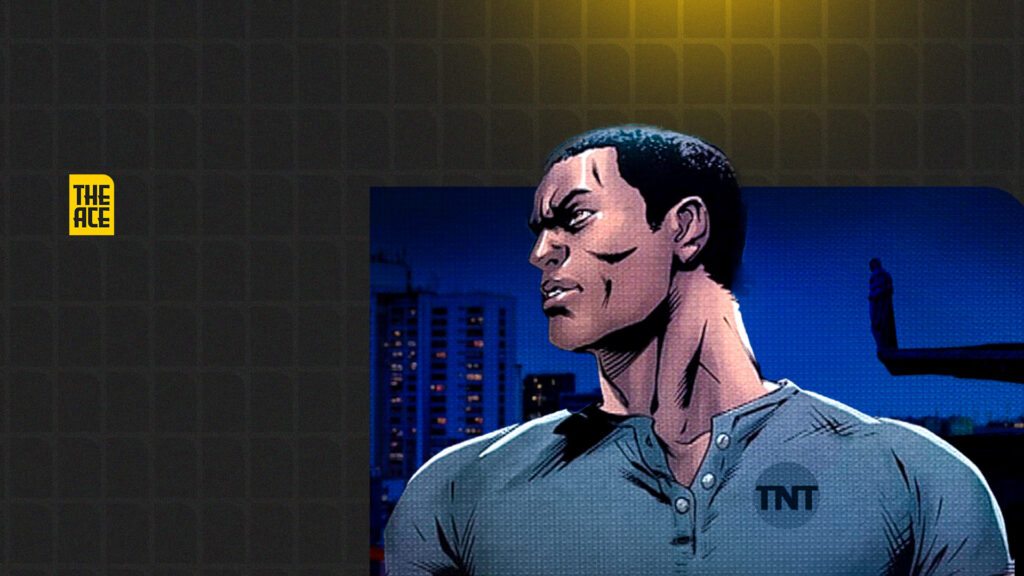
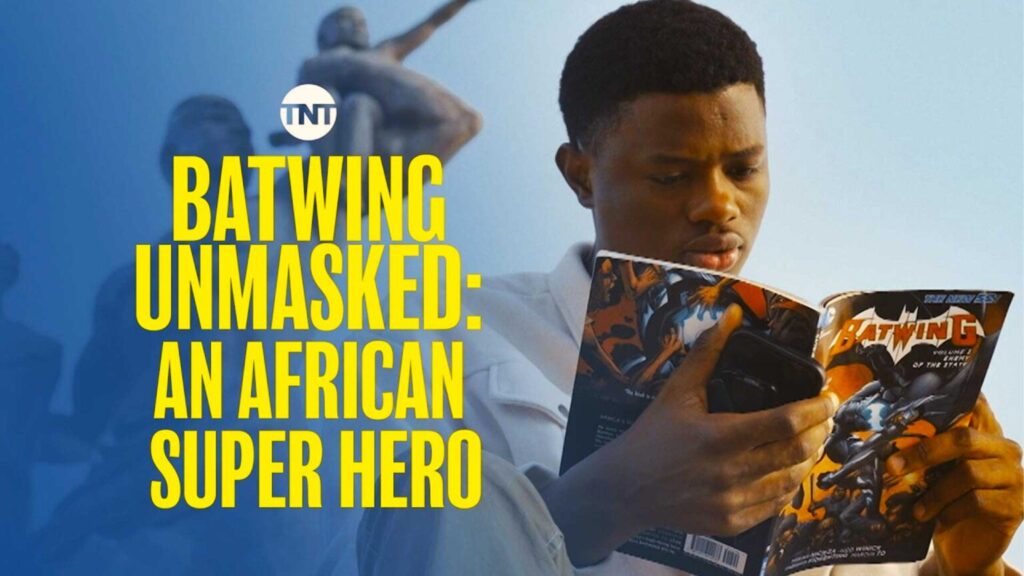
Every so often, a title gets repeated enough that it starts to sound like history. That is what happens with Batwing. In the promotional language around Batwing Unmasked: An African Superhero, the New York African Film Festival’s own programme note introduces David Zavimbe as “DC Comics’ first African superhero, introduced in 2011.” Read quickly, it sounds bold. It sounds neat. But it is also incomplete.
Batwing is important. That part should not be lost. As a Congolese police officer turned vigilante, Zavimbe brought a kind of grounded, visibly African realism into mainstream comics that had been rare for a long time. His story is shaped by corruption, war, trauma, poverty, and survival. He is not a fantasy king ruling from a perfect futuristic nation, and he is not a god walking among mortals. He is a man trying to do something decent in a country already carrying too much damage. That matters. But being important is not the same as being first.
The claim falls apart as soon as the timeline is checked. Batwing first appeared in 2011. Long before that, African and Black comic creators had already introduced heroes who fought for justice, carried symbolic power, or placed Africa at the centre of the story. The history is not vague, and it is not thin. It is simply often ignored.
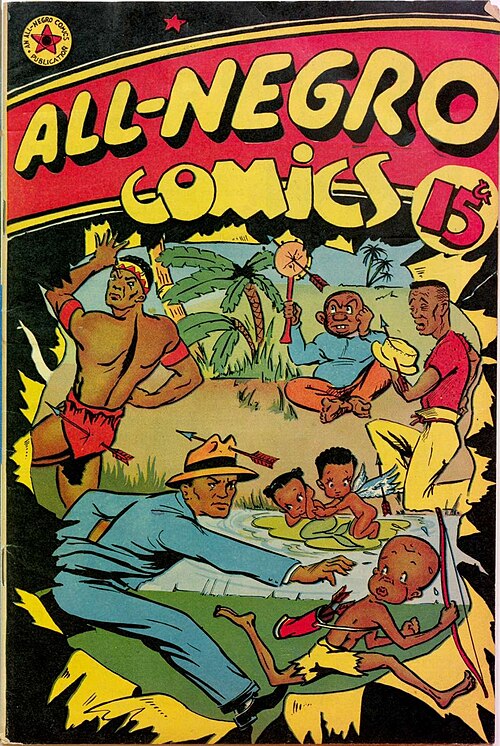
One of the earliest names that belongs in this conversation is Lion Man, who appeared in All-Negro Comics in 1947, decades before Batwing or Black Panther. Lion Man guarded Africa’s Gold Coast against those who would exploit its uranium deposits, and his creation was itself historic: All-Negro Comics was the first known comic book written and drawn entirely by Black creators. If the question is who came first, Batwing is nowhere near the beginning.
Then came Black Panther in 1966, a character who changed the scale of what an African superhero could mean in global popular culture. T’Challa of Wakanda did not just add another Black character to comics. He gave mainstream pop culture one of its most enduring African heroes, a reference point, an icon, and eventually a global symbol of Black possibility in superhero form.
Storm entered Marvel’s universe in 1975 and brought something else entirely. Born in Harlem to a Kenyan mother and an American father, raised for a time in Cairo before finding her powers among the tribes of the Serengeti, she became one of the first major African heroines in mainstream comics, and for many readers she remains one of the most enduring African characters ever created. By the time Batwing arrived, Storm had already spent decades proving that African characters could stand at the front of the story, not only beside it.
DC Comics itself had already introduced Vixen in 1981, thirty years before Batwing entered the scene. Mari McCabe, drawn from the fictional African nation of Zambesi, added yet another layer to the history of African-coded superheroes within mainstream comics. Her existence alone shows why the “first African superhero” label attached to Batwing collapses under the slightest pressure. DC had African-inspired heroism on its side of the map long before Batwing ever flew in.
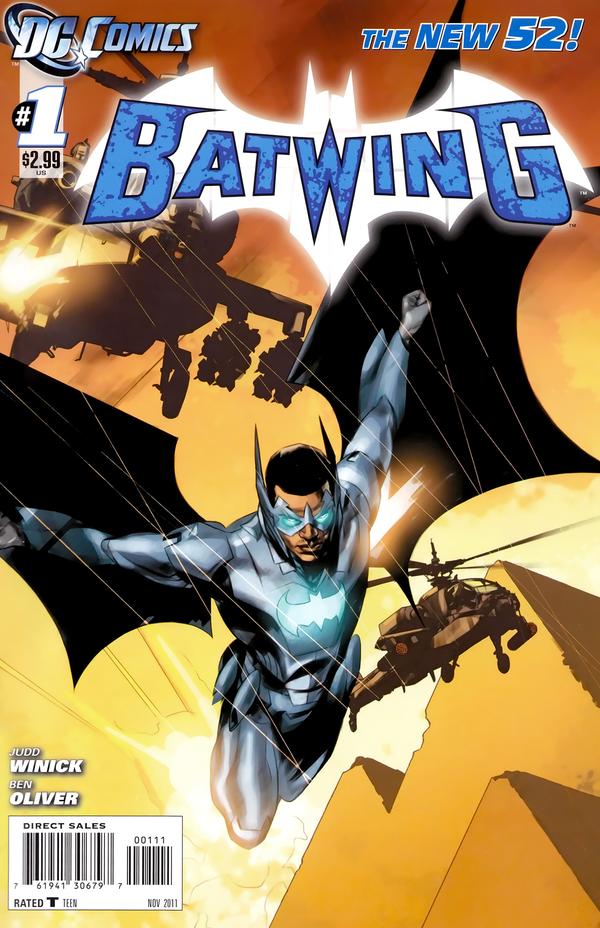
So why was Batwing billed as “first”? In context, it is marketing spin, and a narrow kind. DC had never had a solo African-led title before Batwing, so he was technically the first African hero to headline an ongoing DC series. Vixen came closest to that distinction a decade earlier, but her own book was cancelled in the DC Implosion of 1978 before it ever reached print. In other words, Batwing is DC’s first continental African title-holder, and arguably Congo’s first comic-book hero of this kind. That is a real and specific achievement. It is not the same as being Africa’s first superhero, and blurring the two, as the festival copy does. It turns a history into a slogan.
What makes this worth dwelling on is that the documentary itself does not appear to make this mistake. By several accounts of its festival run, Batwing Unmasked is more self-aware than its marketing suggests. South African artist Loyiso Mkize, one of the film’s own commentators, raises Storm as a hero who existed long before Zavimbe, discussing her alongside other African-coded figures who came before him. The film, in other words, already contains the correction. What gets lost is not inside the documentary. It is in the one-line description written to sell tickets to it, the version of the story short enough to fit on a festival programme, where nuance is the first thing to go.
That gap between the film and its framing is worth sitting with a little longer, because of who is doing the framing. Batwing Unmasked was produced by Federation MEAC for Warner Bros Discovery France, and it screened on TNT Africa, a Warner-owned channel. This is, in effect, the same corporate lineage that shelved Zavimbe a decade ago in favour of Luke Fox, a Gotham-based, African-American replacement, now producing a documentary that asks why Africa’s Batman was allowed to disappear. The film reportedly closes with actor Chukwudi Iwuji addressing DC Studios co-chief James Gunn directly, asking him to bring Zavimbe back. There is nothing wrong with a studio reckoning publicly with its own choices. But a corporation narrating its own institutional failure, while positioning itself as the one to fix it, is not neutral reflection. It is a redemption arc with a product at the end of it, and “Africa’s first superhero” is the kind of clean, shareable framing that redemption arcs run on.
None of this should be read as dismissing Batwing. If anything, his value is clearest once the inflated label is removed. What remains is a character who is grounded and vulnerable in a way the cleaner, more mythic superhero models rarely are. Zavimbe has no magic, no mutant gene, no superhuman origin to fall back on. He bleeds. He fails. He endures. That kind of vulnerability gives the character a different kind of power, rooted not in spectacle but in recognition, and for many African readers, that can matter just as much as invincibility.
So, the more honest way to tell the story is this: Batwing is not Africa’s first superhero. He is one more chapter in a much longer tradition of Black and African heroism in comics, a late arrival to a road that Lion Man, Black Panther, Storm and Vixen had already begun paving decades earlier. That does not make him less valuable. It makes the history around him more honest, and it puts the real question back where it belongs, not with the character, but with the corporation now asking Africa to thank it for remembering him.
Written by Nehemiah Osarodion and Mujeeb Jummah
--------------------------------------------------------
--------------------------------------------------------
AI Use at TheACE
TheACE uses artificial intelligence tools to support research, drafting and analysis across Africa’s creative industries. All content is verified, edited and approved by our human editorial team to ensure accuracy, clarity and responsible storytelling. AI assists our work; it does not replace human judgment.