Every shonen anime has the same episode in it somewhere. The hero, having just survived something that should have broken him, gets one quiet moment before the next arc begins, maybe a beach, a mountaintop, or a hospital bed. And in that moment, without any fanfare, everything changes. He does not know it yet. The audience does. That is the whole trick of the format: you watch the ordinary moment knowing what it is about to become.
Somewhere in Indonesia, in a year nobody at AniWe bothers to date precisely anymore, that moment belonged to a young Nigerian robotics engineer, Adeyemisi Gbadebo. He had just spent days coaching schoolchildren through the World Robotics Olympiad, students from Ile-Ife who would go on to represent Nigeria on a stage the country barely knew existed. The competition was over. He had a few free hours before his flight home, and somewhere near the venue, he found a shop that had no business meaning as much to him as it did: shelves of Akatsuki cloaks, action figures, posters of faces that, back home, only existed on flickering laptop screens passed between friends after dark.
Adeyemisi bought what he could carry. Nothing more dramatic than that. He was not building anything. He was just a fan a long way from home, doing what fans do when they finally find the merch they cannot get anywhere else. He had no idea he was packing a movement into his luggage.
A family habit, scaled up
Back in Ile-Ife, a small university town built around Obafemi Awolowo University, the kind of place where, as one of AniWe’s founders puts it, “a lot of things do not happen,” which is exactly why the people who grow up there tend to invent their own, that bag came home to a household already primed for it. His younger sister, Omotanwa Gbadebo, and a circle of friends who were basically family by then, having grown up trading cassette-era loyalty the way only childhood friends do, took one look at the haul and understood immediately what it meant.
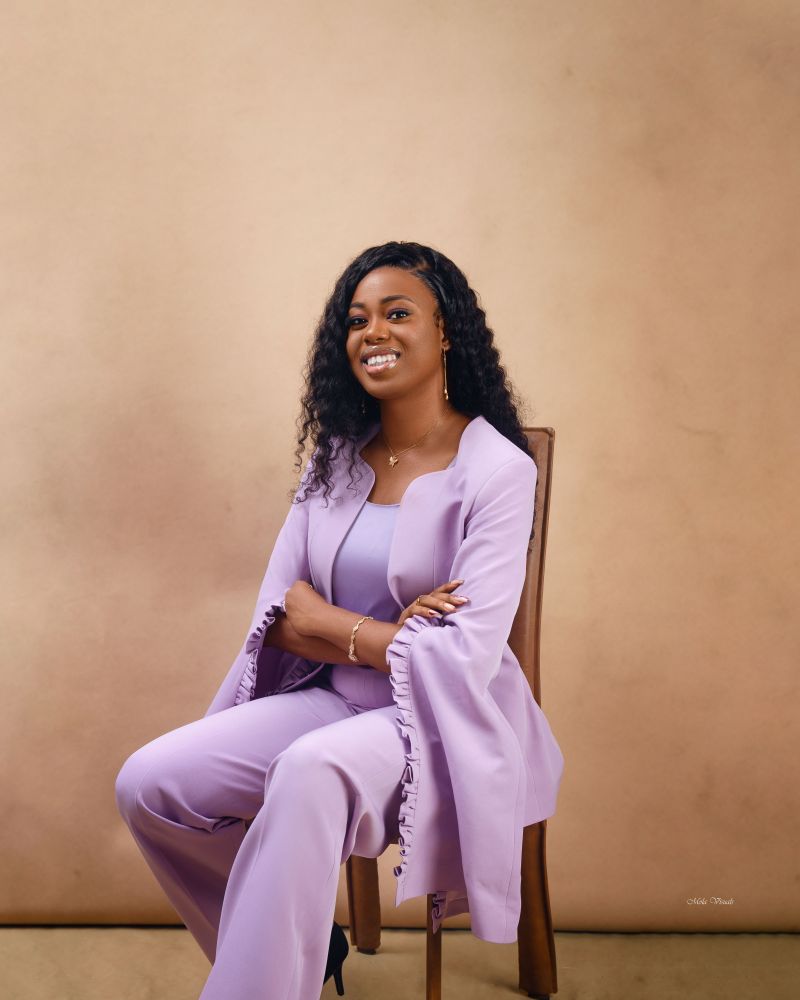
At the time, Nigeria’s anime ecosystem remained almost entirely informal. Without dedicated local retail stores or official distribution channels, fan communities relied heavily on flash drives, hard drives, and personal exchanges to pass around series in secret between people who had fallen in love with the same impossible anime. Now there was this.
“It’s AniMe, AniYou, and AniWe,” Omotanwa says, reciting the phrase AniWe was built on long before it had a name worth writing down. “So, it’s like ani-me, ani-you, ani-we.” Back then, in 2012 and 2013, it meant exactly what it sounds like: “You’d be like, oh, do you have Naruto? Okay, come on, give me Naruto, I’ll give you One Piece.” Whoever had the fullest hard drive was, for one afternoon, the richest person in Ife.
There is a reason that habit took root the way it did, and it has less to do with anime than with something older: the way families pass things down without ever formally deciding to. A parent’s private obsession becomes a child’s whole personality, whether anyone plans it that way or not. And Japan, as it happens, has an entire philosophy built around exactly that instinct. It’s called ie, and it describes a household where everyone works toward the same long horizon instead of their own short one, which is part of why family-run companies there can survive for centuries instead of one generation, a model analysed in family business studies by Ocean Investments (2025) and Brands of Kin (2019).
This is exactly how manga itself began. Osamu Tezuka, the man Japan still calls the God of Manga, grew up in a house where his father had drawn comics himself before marrying and never stopped stocking the shelves with them, and where his mother took him again and again to watch an all-female theatre troupe whose performers’ wide, luminous eyes would later define the entire visual grammar of manga character design, as documented in archival profiles by Google Arts & Culture and Tokyo Weekender (2022). One family’s private enthusiasm, passed to one child, became the seed of an industry so large that Japan alone now accounts for more of the world’s comic book revenue than any single other country on Earth (Grand View Research, 2026).
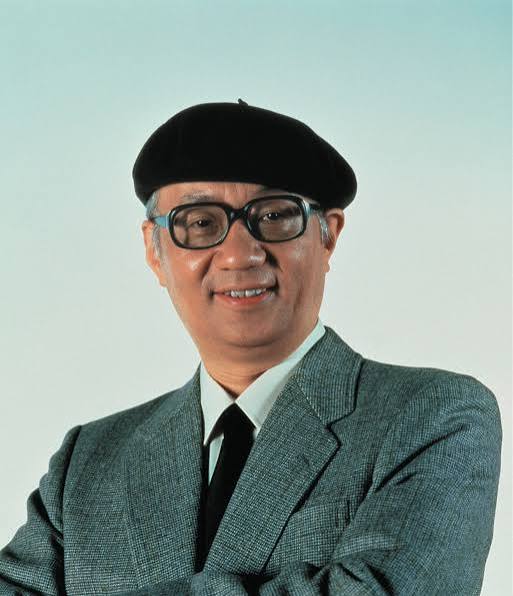
AniWe runs on the same current. Brothers bring something home. A sister and her friends pick it up and refuse to let it go. Small households, repeating the same quiet inheritance that built Tezuka’s empire, except this time the shelves being stocked belonged to a room in Ife instead of a study in Osaka.
From Ife to Ibadan to Lagos: how the fandom grew
By 2015, the flash-drive afternoons had become something that needed a name. AniWe’s first proper convention was held in Ibadan, in partnership with OAU’s iLab robotics team, the very group whose Indonesia trip had started all this. It was, by any honest account, a strange and wonderful thing to witness: lecturers running seminars on how to draw and animate, football-playing robots on the same floor as cosplay contests, video games running late into the night. A second convention followed in 2019, this time back at OAU itself, run largely by the friends Omotanwa calls “Sayo, Yemisi, Tolu, and all of the others that were like pillars in the movement since it began” while she herself was running things alongside studying medicine.
Somewhere in those years, the fandom started becoming a business without anyone quite deciding it should. Cosplay offers a clear example of that transition. During AniWe’s early activations, full costumes were a tough sell for attendees unfamiliar with public cosplay. “When we first started, people were not even really buying it,” Omotanwa recalls. To remove the financial and social barrier, AniWe offered costume rentals, allowing attendees to dress up for photos before returning them, a low-risk gateway that gradually built community confidence.
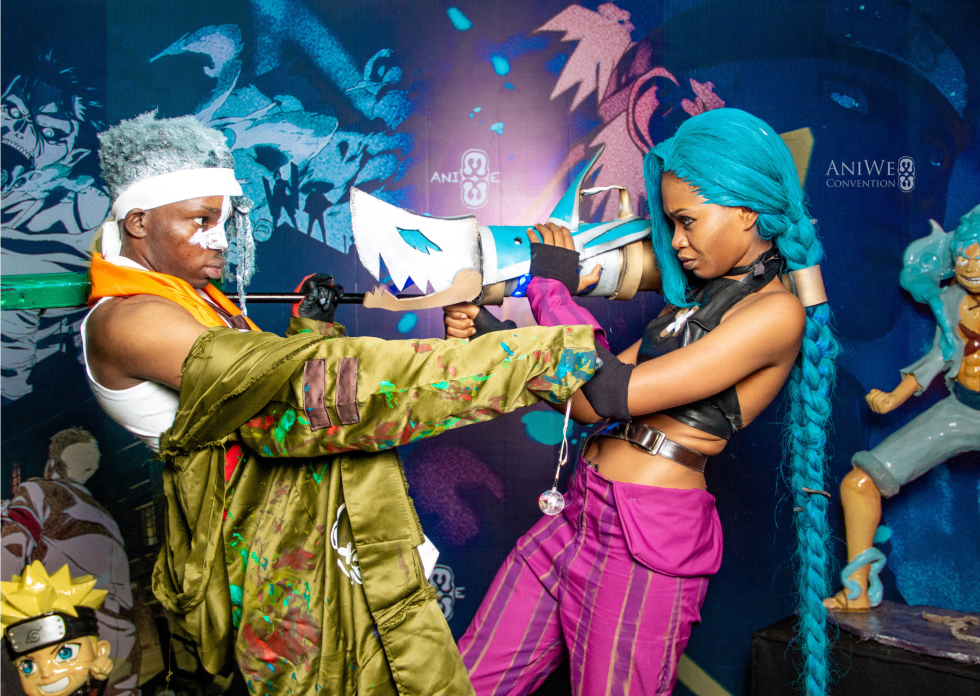
“You start to see people identifying themselves as, oh, I’m a cosplayer.” That confidence is the reason AniWe can now run an actual store at POP Landmark in Lagos, stocked with merchandise imported directly from Japan, with a second Lekki space already being built, half hangout, half content studio, for the creators the community has produced along the way.
It is also, in Janet Bepo’s telling, the reason the whole operation needed a director in the first place. Janet joined AniWe two years ago and now runs its day-to-day operations, and she describes the job with a kind of fond exhaustion. “Anime does a lot of things,” she says. “Like there is so much you have not even heard about. We have a store, we organise events, we have cosplayers, so there are different aspects to focus on.” What keeps it from sprawling into chaos, she says, is a founding culture where “everybody’s opinion matters”, where any team member can say this is how I think it should work, and be heard out on the reasoning, not just the seniority.
That same instinct- to weigh the merits, not the size of whoever’s asking- is exactly how AniWe decides which brands get to work with them at all. It is a question Janet has clearly been asked before, and her answer arrives without hesitation: “We just have to weigh the benefits against whatever it is they are offering us, see if they are worth it, see what their vision is, what their mission is, and see if it is something that the audience is interested in.”
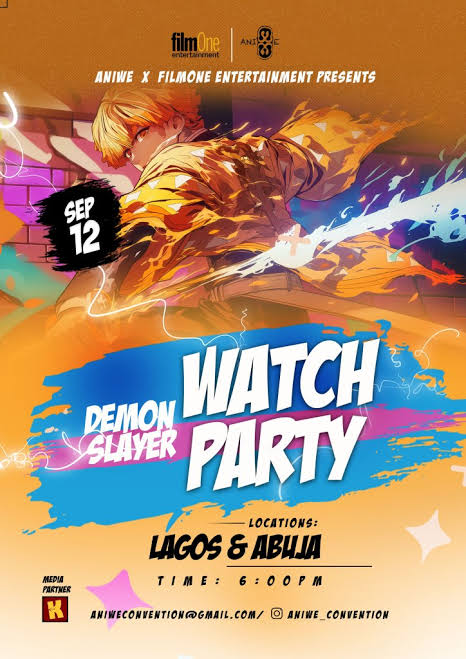
Film One found that out the hard way. Their early attempts to screen anime theatrically in Nigeria underperformed, right up until one of their managers attended an AniWe watch party for Solo Levelling, and finally saw, in person, the audience she’d been told didn’t exist. The partnership that followed has since produced a genuinely startling number: Demon Slayer’s theatrical run in Nigeria pulled in more than ₦73 million in a single release window, according to box office tracking reported by ComicPanelWorld (2026), a figure that underscored the economic power of Nigeria’s otaku demographic.
Ask AniWe whether they see any other creative communities in Nigeria as competition, and the answer arrives without hesitation. “I usually say that the community is not even large enough for us to start competing,” Omotanwa says, pointing out that a single convention in Japan can pull fifty thousand people over three days, and an anime expo in the United States claims six figures, numbers Nigeria’s entire fandom, online and offline combined, has not come close to yet. It is why AniWe’s December 2025 activation ran across seven Nigerian cities at once and did it by leaning on whoever already had roots in each one: Comic Con Ibadan, Anime Nigeria, Nerdwork in Port Harcourt, Shibuya Fest in Enugu, Uchiha Store in Abuja. “The vision is, you know what? Let our community members have fun,” she says. “Let’s build a community, let’s reach different people, let’s grow together.”
That same generosity of spirit shows up, a little more quietly, in how AniWe talks about the imbalance at most Nigerian conventions, where anime cosplay dominates the floor, and African comic characters barely register. Omotanwa does not see it as a rivalry either. “Anime is one of the reasons why people are this free now,” she says. It built the confidence, the safe space, the permission to dress up in public at all, and now, she says, it’s a matter of introducing that same audience to local comic creators, “let them know that we have people that can cosplay your costume.” AniWeCon 2026 is already lining up two or three comic book writers to start that conversation properly.
The Japan bridge: JAEBC and an “untapped” audience
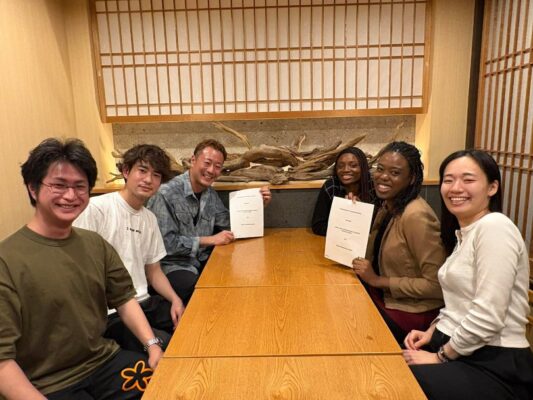
If there is a scene in this story that plays like the moment a shonen protagonist finally levels up, it is the one involving Japan itself, not the country Nigerian fans grew up idolising from a distance, but Japan as an actual, present partner. AniWe now has a working relationship with the Japan-Africa Entertainment Business Council, or JAEBC, a body built to create a proper, licensed pathway between Japanese IP holders and African markets, instead of the flash drives and bootlegs the whole community was raised on.
Ask when Japan’s biggest studios started taking African fandom seriously, though, and Omotanwa gently refuses the premise. “It is not really about the big guys taking African fandom seriously,” she says. The truth, as she tells it, is closer to something Japan itself never knew it was missing: “A lot of them are not particularly aware of Africa.” Most Nigerian fans have watched everything through VPNs and unofficial channels for years, real, loyal, paying attention, and completely invisible to the industry they loved. “We’ve not really been tapped because we are not tracked,” she says.
That invisibility is exactly what the last year has started to undo. AniWe has been invited to Japanese embassy events twice in the past year alone. They were personally hosted to dinner by Nigeria’s (acting) ambassador to Japan, Florence Akinyemi Adeseke, who went on to deliver the opening speech at the JAEBC event where Omotanwa was a host, and later invited the team back to the embassy for further conversation. “She has been absolutely amazing and supportive of the mission,” Omotanwa says. It is, in its own way, the same family logic the whole story keeps circling back to: someone with access opens a door and trusts the people on the other side of it to walk through properly.
What comes after the rage: AniWeCon 2026, “Beyond Fury”
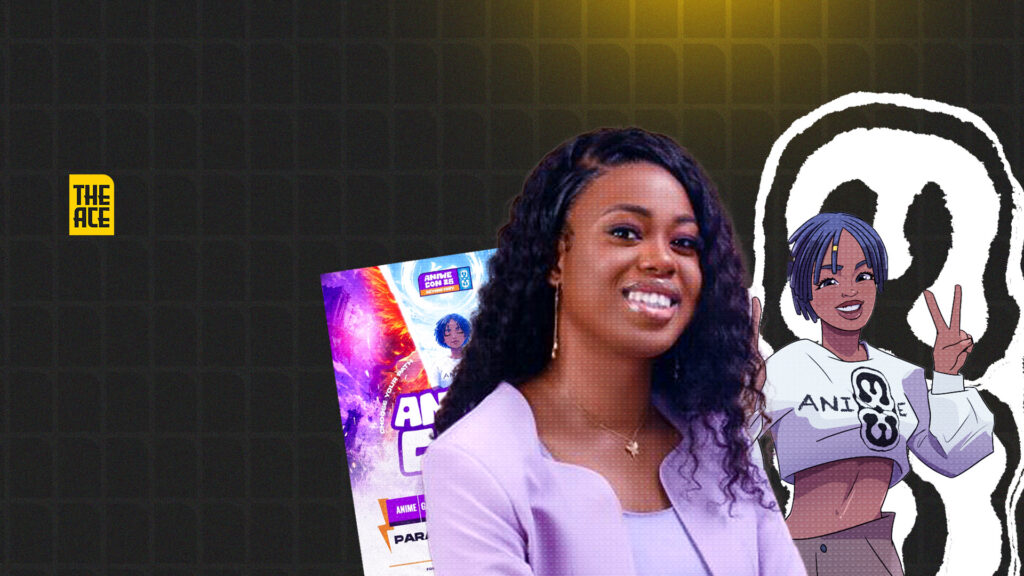
The trajectory is reflected in the thematic evolution of AniWe’s flagship gatherings. Their 2023 convention was themed ‘Rage,’ drawing on the classic shonen trope where characters discover their peak power through conflict. But as both the organisation and its audience have matured, the central question has shifted. AniWeCon 2026: Beyond Fury, scheduled for 15 August at the Paradise Event Arena in Lagos under the twin banners ‘Choose Your Path’ and ‘Choose Your Fun’, asks what happens after the initial outburst. As Omotanwa notes, every hero arc reaches a moment where raw fury gives way to deliberate choice, whether toward destruction, calm resolve, or community building.
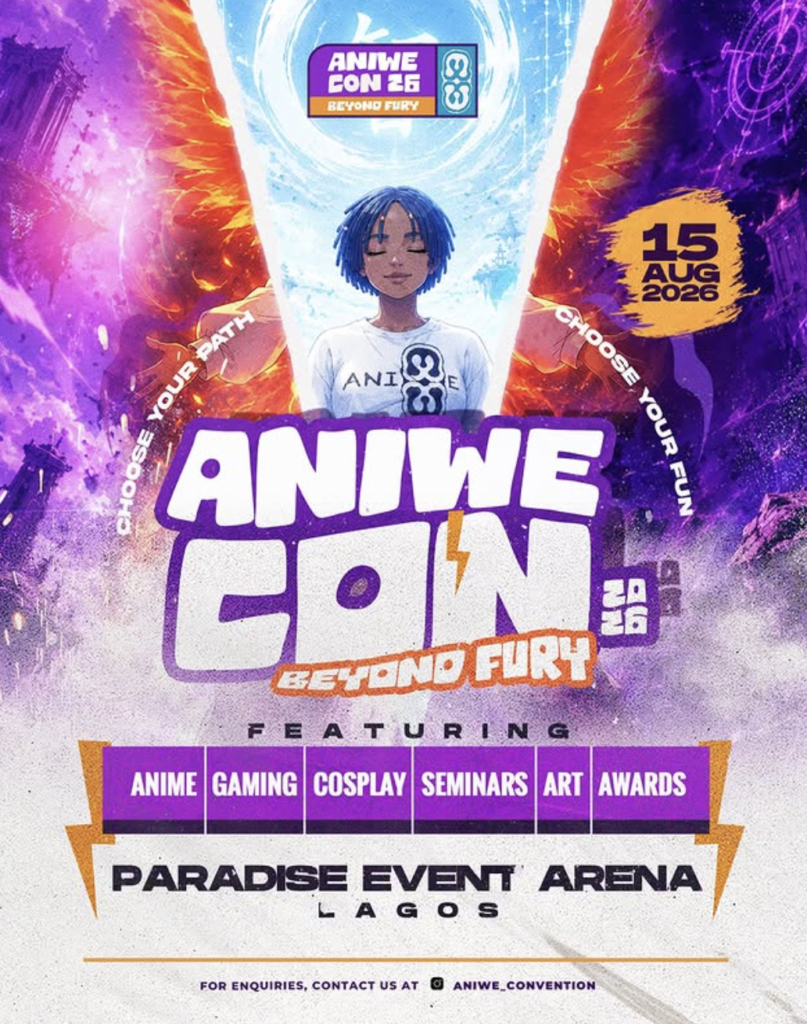
The event floor has been organised into six specialised tracks, with anime taking centre stage through theatrical community screenings backed directly by the JAEBC partnership, a first attempt at giving West African fans an official, licensed route to the content they have spent over a decade sourcing informally. Competitive gaming zones, cosplay runway judging, industry seminars bringing in international animation stakeholders round out the day, and for the first time, awards.
It is worth sitting with how strange that sentence would have sounded to two teenagers trading a flash drive in Ile-Ife over a decade ago. Back then, the biggest ambition in the room was getting a full set of episodes before the next school term started. Now there is an ambassador’s dinner behind them, an embassy relationship, a trade body built specifically to take their community seriously, and, on 15 August, a convention built to ask exactly the question their whole journey has been answering silently all along: after everything that got you here, what path do you choose next?
References
- Ocean Investments. (2025). Want Your Startup to Last? Try the Family Business Model. https://ocean.investments/want-your-startup-to-last-try-the-family-business-model/
- Brands of Kin. (2019). The Japanese Secret to Family Business Longevity. https://brandsofkin.com/the-japanese-secret-to-family-business-longevity/
- Google Arts & Culture. TEZUKA Osamu Manga Museum — Tezuka Osamu. https://artsandculture.google.com/story/tezuka-osamu-manga-museum-tezuka-osamu/xAWBRHnaUggA8A
- Tokyo Weekender. (2022). Spotlight: Osamu Tezuka – The God of Manga. https://www.tokyoweekender.com/art_and_culture/spotlight-osamu-tezuka-manga/
- Grand View Research. (2026). Japan Comic Book Market Size & Outlook, 2033. https://www.grandviewresearch.com/horizon/outlook/comic-book-market/japan
- ComicPanelWorld. (2026). Cultivating Otaku Culture: AniWe Builds Major International Pipelines Ahead of AniWeCon 2026: Beyond Fury This August. https://www.comicpanelworld.com/cultivating-otaku-culture-aniwe-builds-major-international-pipelines-ahead-of-aniwecon-2026-beyond-fury-this-august/
- TheACE x AniWe founding team interview, 11 July 2026 (primary source — internal transcript; all direct quotes from Omotanwa Gbadebo and Janet Bepo are drawn from this recording).
--------------------------------------------------------
--------------------------------------------------------
AI Use at TheACE
TheACE uses artificial intelligence tools to support research, drafting and analysis across Africa’s creative industries. All content is verified, edited and approved by our human editorial team to ensure accuracy, clarity and responsible storytelling. AI assists our work; it does not replace human judgment.