Before the 2026 World Cup kicks off on the 11th of June, every match ball must be charged. Not pumped, charged. The Adidas Trionda, football’s most sophisticated match ball, contains a motion sensor that transmits live data five hundred times per second to a VAR system powered by artificial intelligence. It is the most consequential piece of technology at the 2026 tournament, and it is also the object that an African animated series spent over a decade warning the sport about.
Supa Strikas understood the ball long before Adidas instrumentalised it. What the show’s writers saw, and what football is only now fully reckoning with, is that whoever controls the ball controls the game, and whoever controls the ball’s data controls something larger.
What the cartoon showed
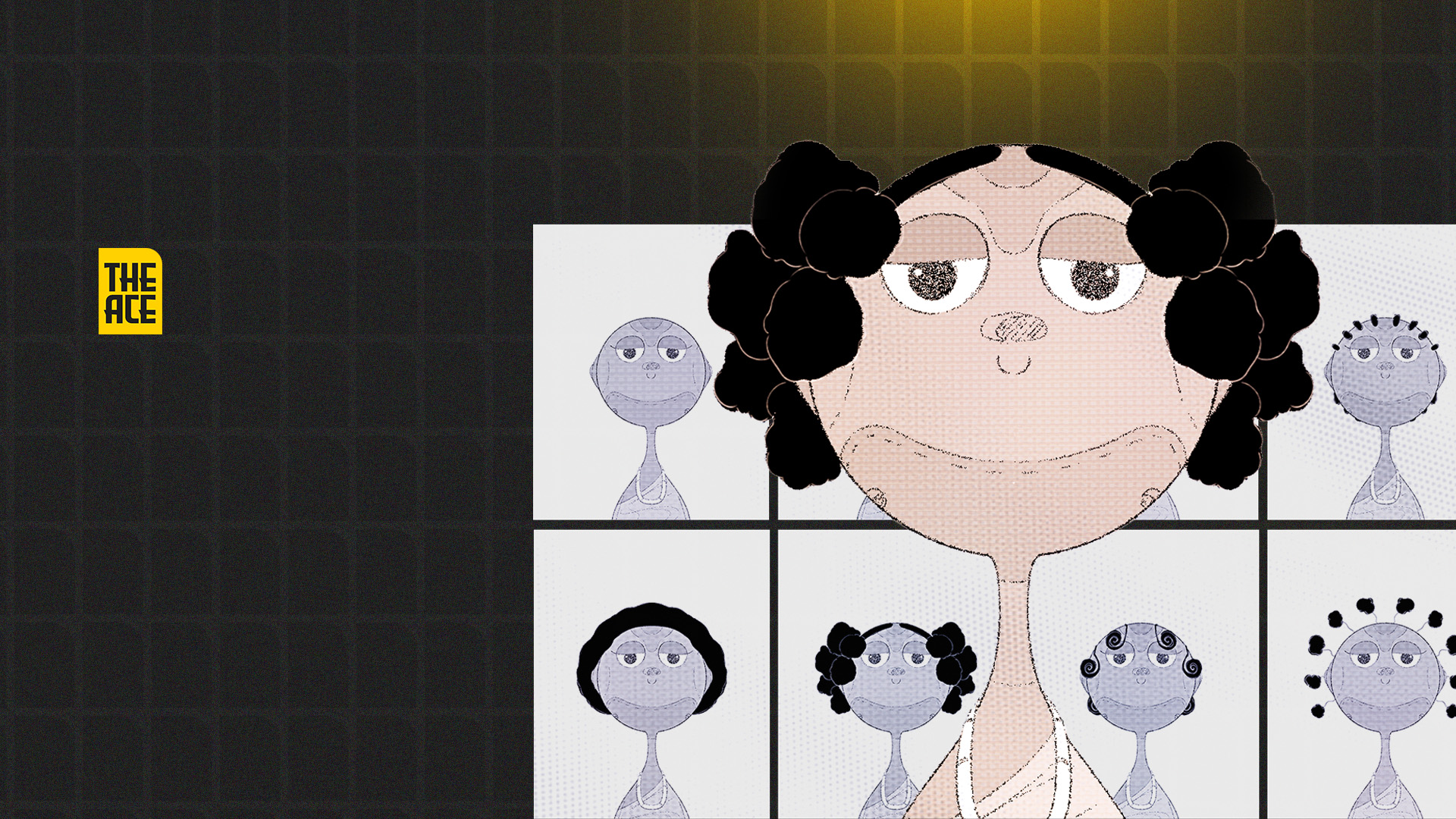
Supa Strikas began as a pan-African comic book series before becoming a South African animated series and ran from 2008 to 2020. It followed a fictional football club of the same name, a multicultural squad competing in the Super League and built its drama around a recurring cast of antagonists who consistently attempted to gain control of the game through external manipulation.

In “Ball Control” (Season 1, Episode 13), the scheming club owner Vince enlists Toni Vern, the show’s resident inventor and Technicali FC’s devious coach, to smuggle a remote-controlled ball into the Super League Final. The players on the pitch are performing with complete sincerity. The crowd is on its feet. The referee is watching. But the contest has already been decided by whoever holds the remote.
What made the episode remarkable was not its technical imagination. Remote control as a concept was hardly new. What was remarkable was the specific nature of the threat it identified: not a player cheating, not a corrupt official, but the ball itself as the point of interference. The episode understood, intuitively, that the object at the centre of the game was also its most vulnerable point. Control the ball, and you control everything.
Toni Vern and Technicali FC returned across multiple seasons. They were never simply cheaters. They were technologists who were obsessed with engineering certainty into a sport that runs on uncertainty. In “Suspended Animation” (Season 3, 2012), a coaching team used biometric monitoring and virtual reality training to investigate the neurological source of a player’s peak performance, treating a psychological and instinctive experience as something measurable and reproducible. In episode after episode, Technicali sought the same thing: to place football’s outcome inside a system they controlled, rather than leave it to the players, the match, and the moment.
The show always punished them for it. But its deeper intelligence was in the observation. Supa Strikas kept returning to this theme because its writers understood that the desire to bring technology inside the game was not a cartoon fantasy. It was a trajectory already underway.
The Trionda and the question no one is quite asking
The Adidas Trionda is not a cheating device. It does not move itself. No villain is holding a remote. FIFA’s stated purpose is precisely the opposite of Vince’s; greater accuracy, faster decisions, fewer errors, and a fairer contest.
However, the Trionda provokes discomfort among supporters. The anxiety is not really about the sensor, but what it represents: the continuing migration of football’s fundamental elements from the human and unpredictable, into the managed and the measurable. The ball is now a data source. Every touch it registers is processed by an algorithm before a human being evaluates the outcome. The game’s most basic object has been brought inside the information architecture of the sport. In other words, technology has not simply moved closer to football. It has moved into it.
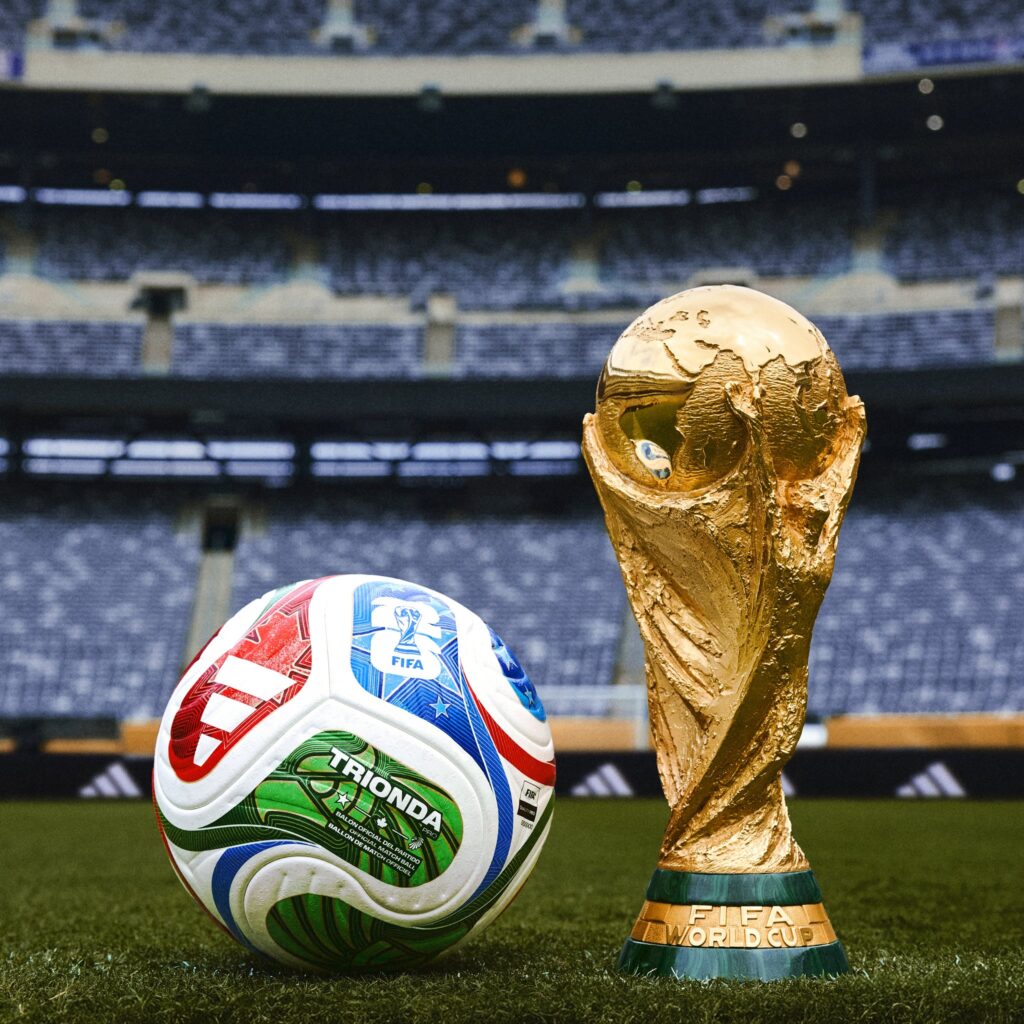
Before goalkeepers, defenders, and pundits raised concerns about Trionda’s visibility in flight, before coaches began flagging its unpredictable trajectory, adidas’ own general manager Sam Handy was telling the press: “With TRIONDA, every detail has an impact. It’s the most visually playful FIFA World Cup ball we’ve ever created, a piece of craftsmanship built for the biggest stage, that makes you want to hold it, admire it and above all, play with it.”
The tension between those two realities is exactly the kind of contradiction Supa Strikas was poking at in 2008. Not because the show’s writers were prophets. But because they were paying attention to a direction of travel that football’s mainstream was only beginning to sense.
Football’s Long Technological Journey
The comparison between Supa Strikas and the 2026 World Cup is not really about prediction. It is about the trajectory.
Football has never existed outside technology. Better boots, sports medicine, television broadcasting, video analysis and stadium engineering have transformed the sport for decades. But for most of its history, these technologies existed around football rather than inside it. The match itself remained stubbornly human. A referee’s judgment mattered. A coach relied on observation. Players depended on instinct. Supporters accepted uncertainty as part of the game’s identity.
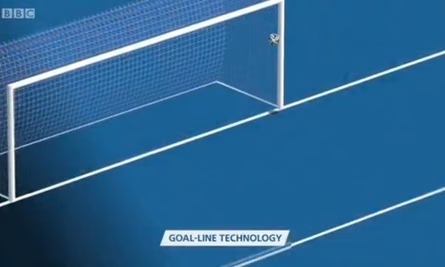
Over the past two decades, however, that relationship has changed dramatically. Elite clubs now monitor player movement through GPS systems. Performance analysts process enormous quantities of data to identify tactical patterns invisible to the naked eye. Recruitment departments rely on statistical modelling. Biometric monitoring influences injury prevention and recovery. Artificial intelligence is beginning to assist scouting, tactical preparation and opposition analysis.
Perhaps nowhere is this transformation more symbolic than in the match ball itself. The football, once a simple object designed to be kicked from one end of the pitch to the other, has become a source of information. Modern tournament balls generate data about movement, contact and position, feeding systems designed to assist officiating and analysis. The sport’s most basic object has entered the information age.
For administrators and engineers, this represents progress. For many supporters, however, it raises a deeper question: what happens when football becomes a system optimised for information?
What speculative storytelling does
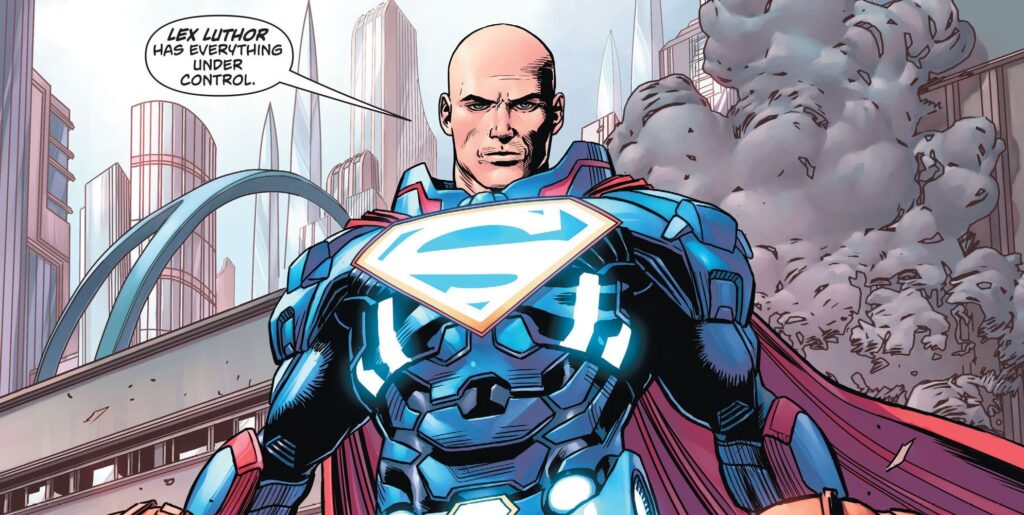
There is a well-documented history of popular fiction stumbling into uncomfortable proximity with real-world developments. In 1945, a Superman comic depicted Lex Luthor building a weapon described in terms that closely paralleled a nuclear device at the precise moment the Manhattan Project was classified and ongoing. The US War Department reportedly contacted the publisher. The writers had been briefed on nothing; they had simply extrapolated from the logic of where weapons technology was heading.
The Eagle, a British comic of the same era, imagined multifunctional household screens combining television, radio, and interactive computing decades before such devices existed. Again, not prophecy. Pattern recognition. The writers saw the current, sketched where it led, and let the story follow.
Supa Strikas operated in exactly this tradition. It is an African animated series, made primarily for younger audiences, without the international platform or the production budgets of its Western contemporaries. And yet, across twelve years and multiple seasons, it returned obsessively to the same structural question that the sport’s administrators, broadcasters, and governing bodies are only now confronting publicly: what happens to football when its parts stop being purely human?
This is the more interesting claim. Not that the show predicted a specific technology. But it identified a fault line between football as a living, human contest, and football as an optimised system, as well as dramatised it before the mainstream conversation caught up.
The game, and the art around it
There is something else worth noting about this World Cup, beyond what happens on the pitch. Sports Illustrated, in one of the more ambitious editorial art projects in the magazine’s history, commissioned 48 original illustrated covers for its June 2026 issue, one for each qualifying nation. Artists living in or closely connected to each country were asked a single question: What does the cultural heartbeat of football look like in your nation? Ten of those 48 covers belong to Africa.
Studio MUTI for South Africa. Mohamed Elwaid for Morocco. Ngadi Smart for Ivory Coast. Sonia Ben Salem for Tunisia. Amira Tanany for Egypt. Audrey d’Erneville for Senegal. Aires Melo for Cabo Verde. Salim Zerrouki for Algeria. Edizon Musavuli for DR Congo. Hanson Akatti for Ghana.
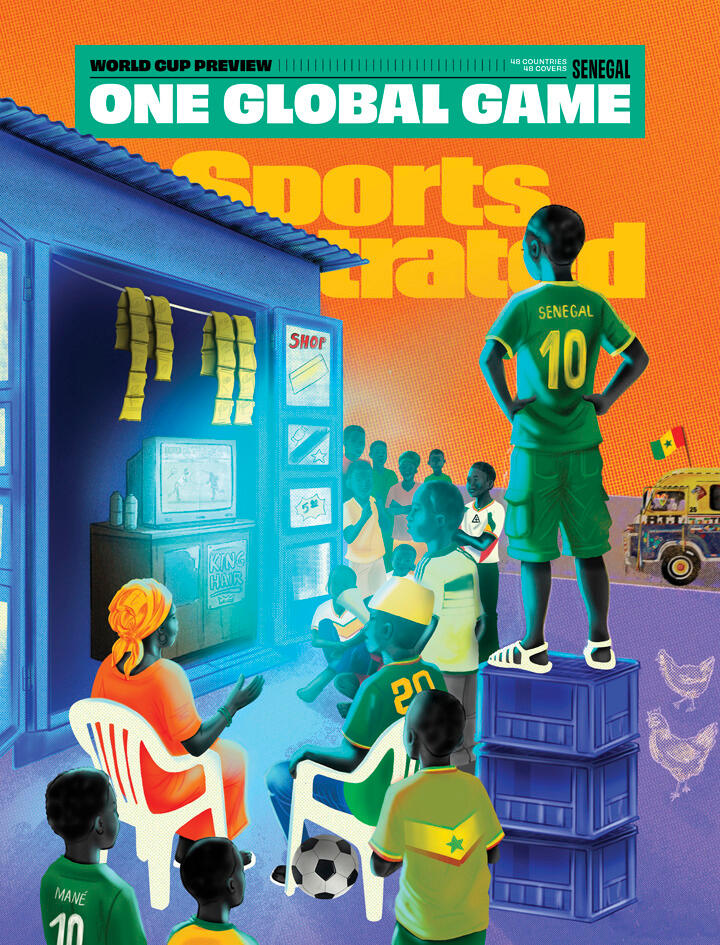
Ten artists. Ten countries. More than a fifth of the entire project. None of them needed the commission to validate the quality of their work — that quality is visible in their portfolios long before Sports Illustrated came calling. But the commission matters for a different reason: it confirms, at the level of one of the world’s most recognisable sports platforms, that African visual artists are now being trusted to define how their nations appear on the game’s largest stage.
This is not unrelated to the Supa Strikas conversation. Both stories are about the same underlying thing. African creative work, whether animation or illustration, whether made in 2008 or 2026, has consistently demonstrated the capacity to read the game at depth, to interpret it culturally, and to do so with authority. The difference between then and now is not the quality of the work. It is the size of the room the work is being invited into.
The ball, and what it keeps telling us
The 2026 World Cup is days away. Across 16 stadiums in three countries, 48 nations will compete in the most technologically mediated tournament football has ever staged. It will be welcomed by some, it will generate controversy for others the same way VAR did; the creeping sense that the margin between a human game and a managed one is narrowing in ways supporters did not agree to and cannot easily reverse.

An African cartoon drew that margin clearly; it understood that the ball was the game’s centre of gravity, and that whoever controlled it controlled everything. In 2026, Adidas and FIFA confirmed the cartoon’s central intuition: the ball is no longer neutral. It is embedded, instrumented, and integrated into a system larger than the match itself.
Supa Strikas did not predict the Trionda. It was noticed early, clearly, and from a continent whose creative output the global mainstream was barely paying attention to, that football’s future was going to be fought between competing ideas of what the game is for.
That argument is now live. On the biggest stage the sport has ever built.
Written by Nehemiah Osarodion, Mubarak Jummah, and Mujeeb Jummah
Image source: Google, FIFA, Screen Rant, Supa Strikas
--------------------------------------------------------
--------------------------------------------------------
AI Use at TheACE
TheACE uses artificial intelligence tools to support research, drafting and analysis across Africa’s creative industries. All content is verified, edited and approved by our human editorial team to ensure accuracy, clarity and responsible storytelling. AI assists our work; it does not replace human judgment.