“It’s kind of a suicide financially,” Abir Gasmi laughs down the line from Tunis, “but please do it. Because we need it.” Then, more evenly, as if she has made the calculation before and settled it long ago, she adds: “The passion is more powerful than the money.”
She is talking about what she would tell a young Tunisian, or any African creator, who wants to leave a stable career for storytelling. It is the same leap she made herself, years ago, when she walked away from computer engineering to write for comics. Nobody told her it made sense, but she did it anyway, and the laugh that carries the line suggests someone who has long since made peace with the financial reality of that decision.
We spoke to her twice, on a video call into a warm August afternoon in Tunis, when the heat empties the medina’s alleys until evening and sends people looking for shade along Avenue Habib Bourguiba instead. Old Tunis, when you picture it properly, is a walled maze of covered souks and centuries-old mosques, with scent and colour crowding the same narrow passages before it opens without warning onto that French-built boulevard, wide and lined with cafés.
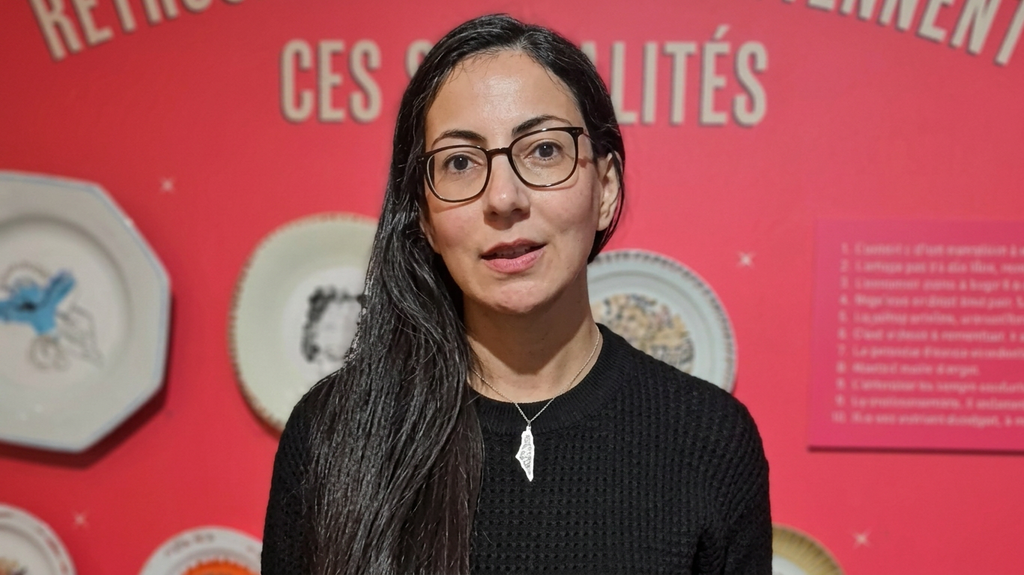
Our first attempt at this conversation ended in a dropped call, which felt, in hindsight, like a fitting metonym for African creative work generally: brilliant, and half at the mercy of the infrastructure carrying it. We rescheduled, came back, and talked properly about the work, the collective, the books, and the widening disconnect between the continent’s own comic communities that Gasmi, more than most, has had reason to think about.
From Circuits to Scripts
Gasmi’s journey into comics began far from the creative industries. “Actually, I’m a computer engineer,” she confirms, almost as an aside, the kind of detail she would rather people find out for themselves than lead with. It is the sort of fact that sounds like a plot twist because it is one. Somewhere along the way, between the desk job and the nine-to-five and the whole track laid out in front of her, she realised she did not see herself doing it. “I was kind of called to join the creative side,” she says. “Like I was called to write for cinema.”
The real beginning, though, was smaller and stranger than a calling. A friend, an illustrator, started a comic story and could not finish it. Gasmi wanted to know how it ended badly enough that she offered to write the rest herself. “That’s how it started, actually,” she says. “I found myself completely sucked in. I couldn’t stop any more.”
Cinema came first, technically. She had been writing scripts for film before comics ever entered the picture, but cinema demanded things she did not have: a crew, money, and technical infrastructure that most independent creators in Tunisia simply do not have access to. Comics offered a way around all of it. “It could be done by being on your own, in your room, without a lot of technical support,” she says. “I found comics to be the perfect balance between writing and images.”
Underneath the practicality was something more personal, and it is the thread that runs through nearly everything she has made since. “I’m also very attached to the cultural heritage that we have in the region,” she says. “That heritage needed to be passed on.” Comics, unlike film, could be made without waiting for anyone’s permission, and that turned out to matter more than she expected.
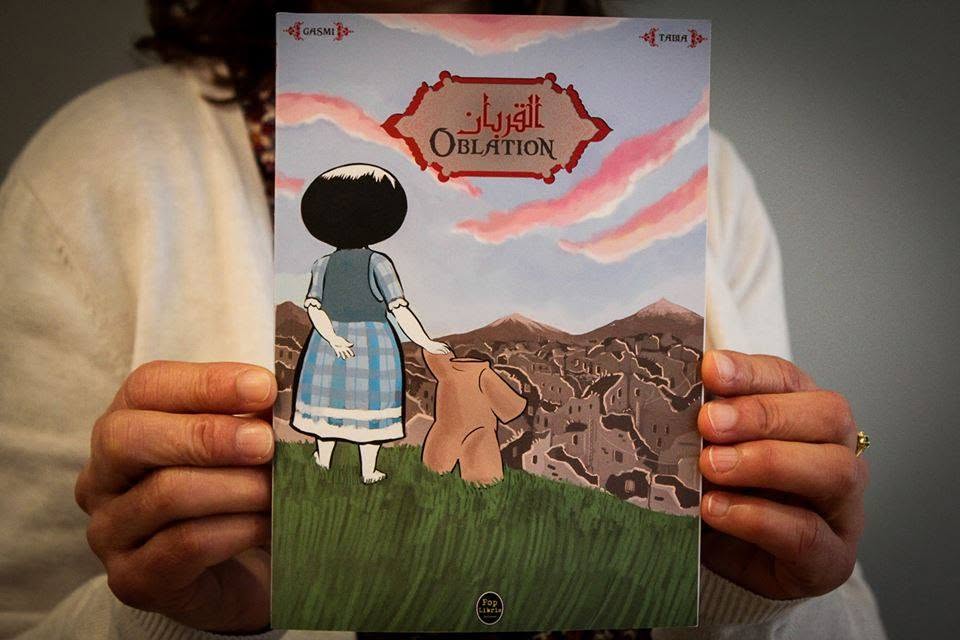
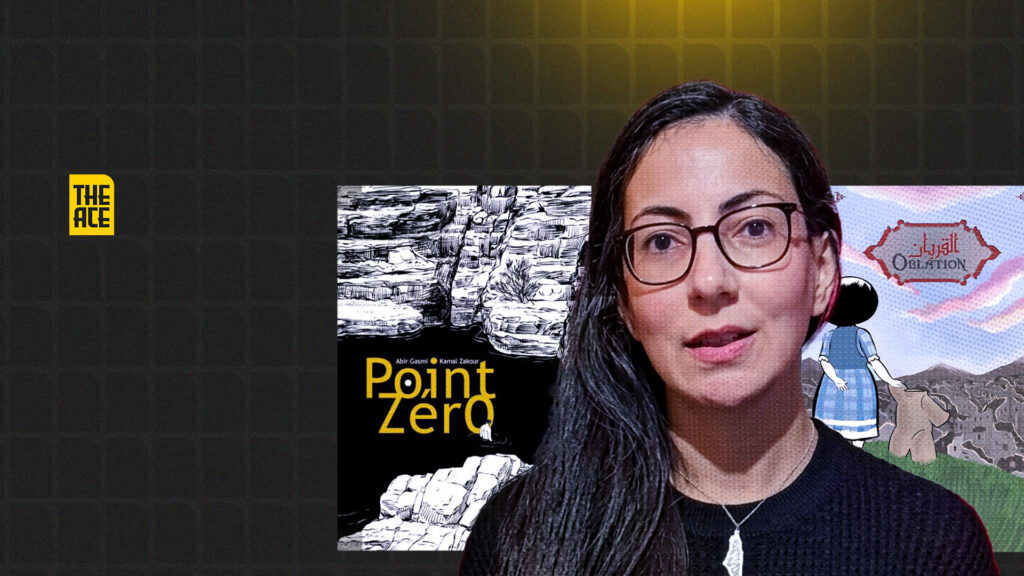
Her first published work, fittingly, had no words at all. Oblation, released in 2014 through the Tunisian publisher Pop Libris and co-created with illustrator Moez Tabia, was a silent comic told entirely in pictures. It came about almost by accident, as a competition entry where the prize was simply getting published. “I didn’t even think it would get published,” she says. “It was the very first thing I did.” The book went on to be recognised at Algiers’ international comics festival, a first, quiet sign that the instinct behind it, trusting a story to carry itself, was the right one. It was published in Arabic and French; an English version exists only because Gasmi made it herself, for friends who could not read either.
Lab619: A Laboratory, a Barcode, and Politics in Dialect
That instinct to make things on her own terms, without waiting for permission, is also what carried Gasmi into the collective that would define the next decade of her working life.
Lab619 was born in 2012, in the immediate aftermath of the Tunisian Revolution. It did not start as a comics project at all. In the beginning, it was illustrators doing visual commentary on what was happening in the country, political cartooning, mostly online. A small book covering Tunisia’s first three post-revolution elections became an unexpected success, and the group realised they had something worth continuing.
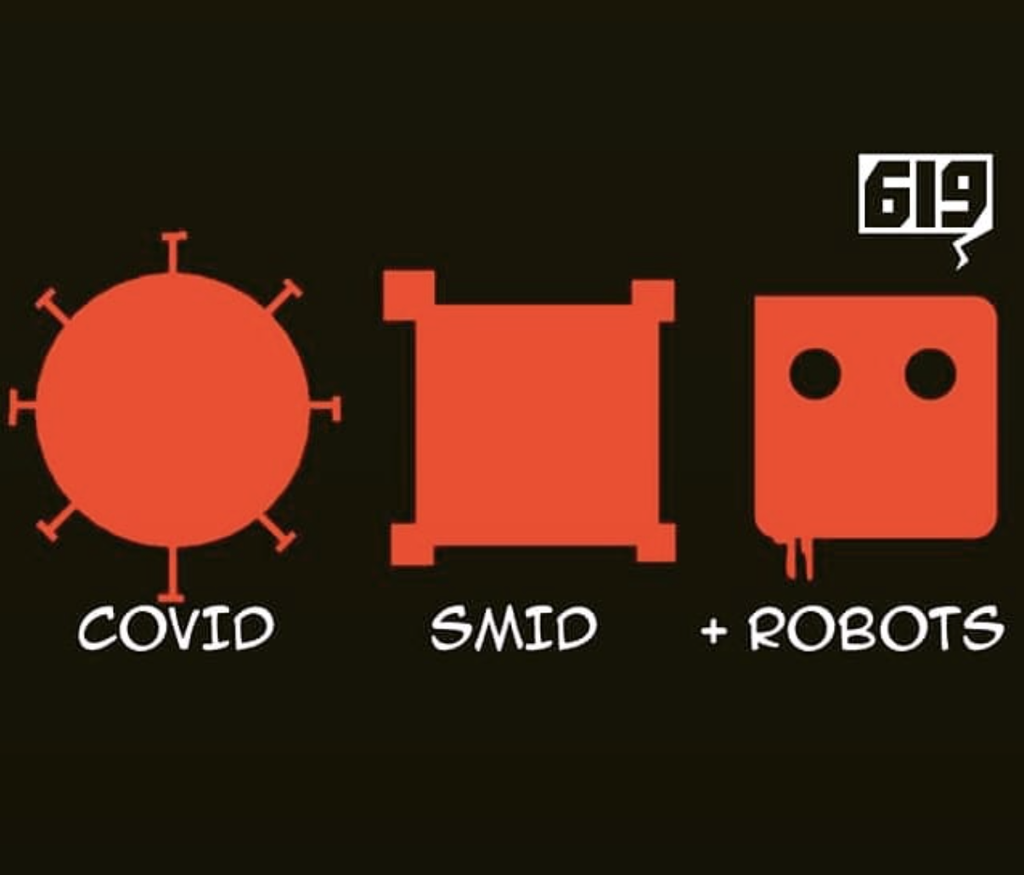
The name carries its own story. “619 is the first three numbers of the barcode of television products,” Gasmi explains. “It was our mark. And ‘lab’ for laboratory, because we really were searching for an identity, a visual identity, and to tell stories that look like us.” What made the collective distinctive was not only its politics but its language: Lab619 wrote in Tunisian dialect rather than the classical Arabic that dominates regional publishing, a deliberate provocation. “Usually in the region we write with classical Arabic,” she says, “so it was new for people to read something in dialect.”
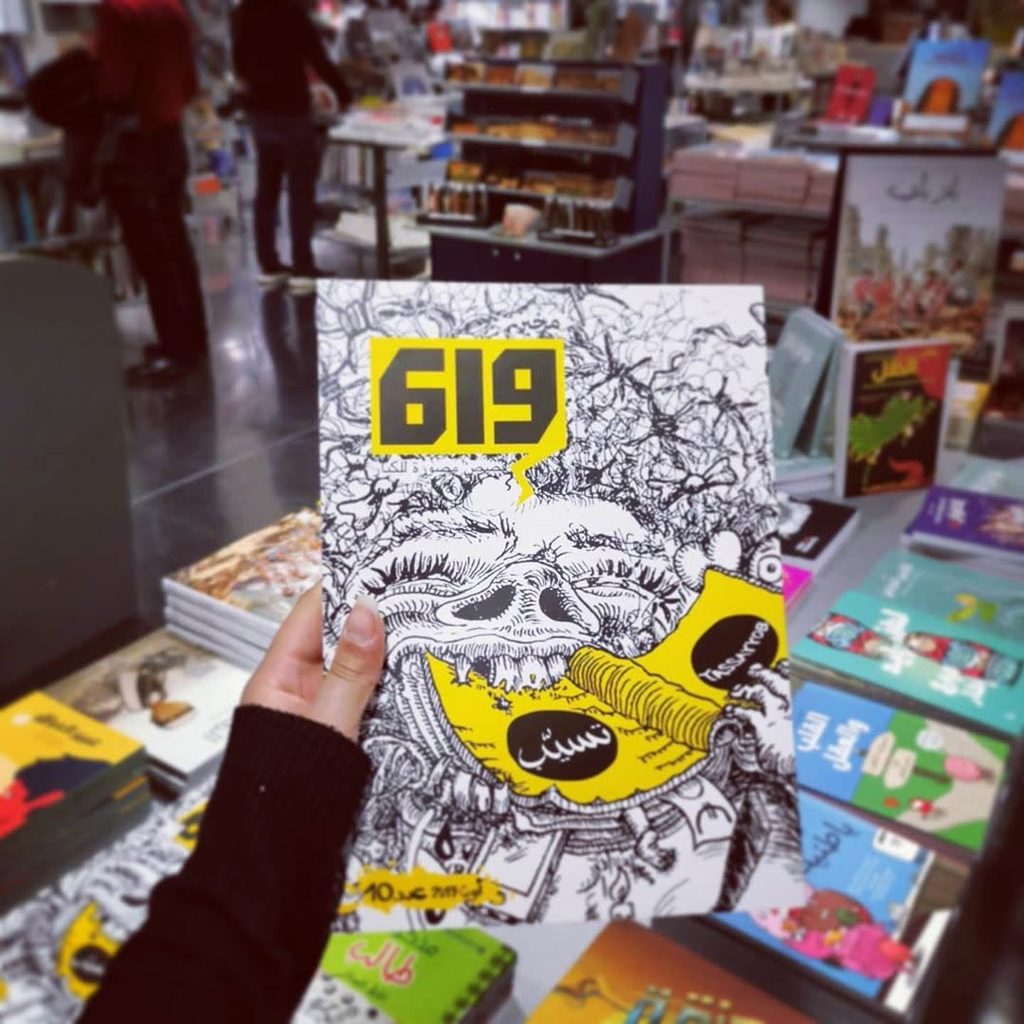
The structure was deliberately horizontal, with no executive board and no single editor, and for five or six years Gasmi served as its coordinator. Over ten issues and roughly seven years, the collective ran entirely on its own funding, with artists coming and going with each release. “We fully enjoyed a new freedom of expression,” she says. It was also part of something larger than Tunisia alone. Similar collectives were forming across the Arab world at the same time, and Lab619 collaborated with several of them directly.
It ended in 2019, and not for one clean reason. Financial sustainability was part of it, since an independent, self-funded magazine can only run on goodwill for so long. Some of it was simple generational drift: after years of shared ownership, people wanted their own books, their own names on the cover, and that is exactly what Gasmi did next. There was also a regional dimension, with a tightening around freedom of expression that made the kind of experimentation Lab619 was built on harder to sustain across much of North Africa. The ending was not a scandal so much as a natural evolution, shaped by the question of what could actually be sustained.
Point Zero: The Desert as a Main Character
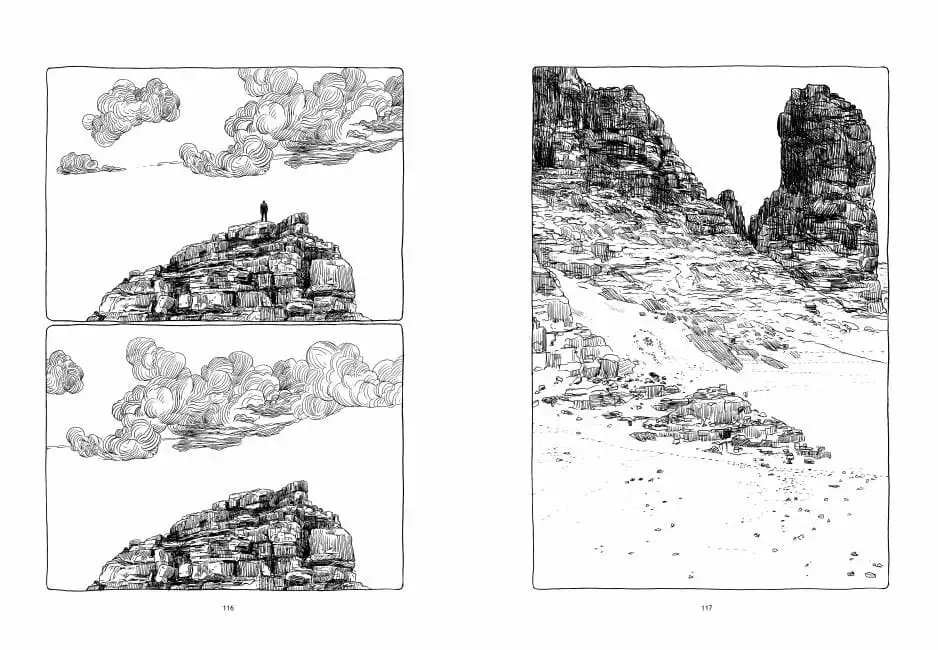
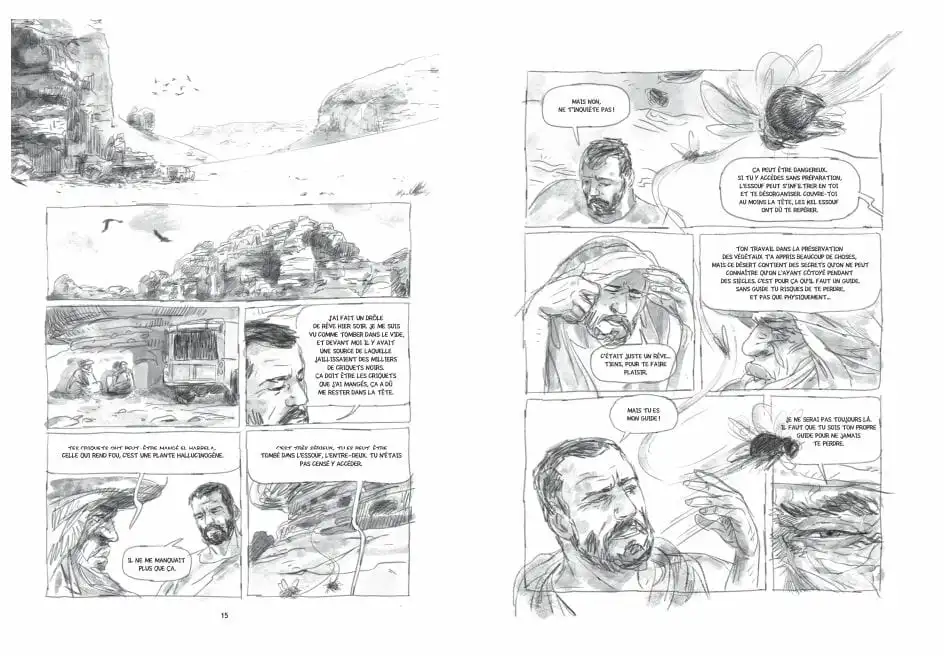
It was inside Lab619, in fact, that the seed of Gasmi’s most significant individual work was planted. The book that would go on to secure her standing internationally, Point Zero, started life as a short story tested inside one of the collective’s own issues back in 2018, “a sort of test,” as she puts it, “to see if it could catch people’s attention.” It caught the attention of a French-Italian publisher, who pushed for a full graphic novel. Gasmi and her creative partner, illustrator Kamal Zakour, who is also her husband, developed it through the following years, and it was published in 2023.
“It’s my husband as well, so it makes it easier to work together,” she says. “Definitely the easiest way to collaborate.”
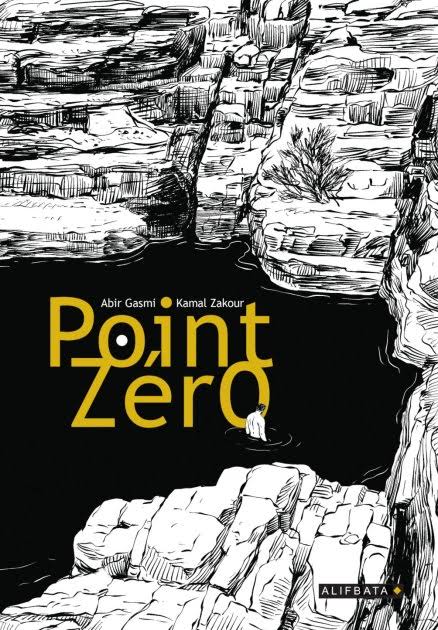
The story is built on something intensely personal: a man based on Zakour’s late father, who spent thirty years in the Sahara working alongside Tuareg communities in southern Algeria and Mali, developing strategies to fight the locust invasions that came up from the south. In the story, he becomes convinced the next invasion will end the world, and rides out into the desert to stop it alone, guided by a Tuareg companion he talks with every night. Gasmi had been drawn to the desert for as long as she can remember, and researching the book, she spent four to five years immersed in Tuareg culture. “I was absolutely fascinated,” she says. “A big part of the book ended up being about the Tuareg themselves.” What began as her husband’s father’s story grew, through those years of research, into something closer to a shared inheritance, hers as much as his by the time it reached the page. Through the nightly conversations between the two travellers, she found a way to weave together the desert, Tuareg culture and Arabic storytelling, presenting the desert itself as a main character rather than a backdrop.
The recognition that followed mattered to her precisely because it was not guaranteed. “The major thing was to be recognised as a comic book author,” she says. “When you do short stories, you’re not taken seriously.” Point Zero went on to win the Mahmoud Kahil Award for comic strips in Beirut, a CairoComix prize, and, in 2023, the grand prize at FIBD-Alger alongside Tunisia’s FABA award for best novel in Arabic. Most of the earliest recognition, though, came from Europe. “We got critiques and exhibitions, and we got to talk at festivals,” she says. “It confirmed to me that our voices were important in that conversation.”
A Residency at the Heaven for Comics in Europe
That European recognition eventually led Gasmi and Zakour somewhere very specific: Angoulême, a mid-sized city in south-western France that has spent the last fifty years quietly becoming the closest thing European comics have to a capital.
“It’s a city in France known for a huge comics festival,” Gasmi says. “It’s the centre of comics in Europe.” At its heart sits La Cité internationale de la bande dessinée et de l’image, a complex built around a museum holding tens of thousands of original comic pages, a specialist library, an arthouse cinema and, most significantly for working creators, La Maison des Auteurs, a residency programme that has hosted several hundred artists since it opened in 2002. Writers and illustrators can stay for three months, a year, sometimes two or three, living alongside hundreds of other comic artists in the same small city. Some, Gasmi notes, simply never leave. It is the kind of dedicated, publicly funded infrastructure that has no real equivalent anywhere in North or West Africa, and it goes some way towards explaining why the road out of Tunis so often runs through south-western France rather than across the Sahara.
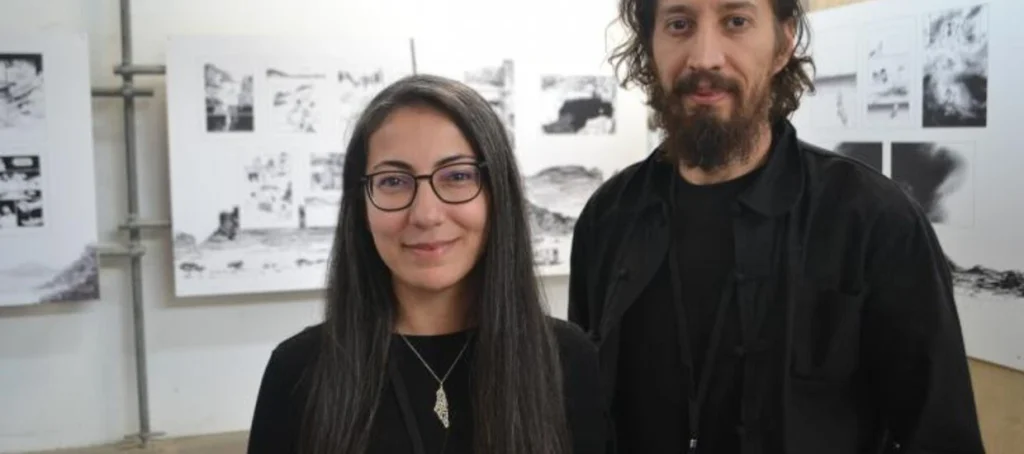
In early 2025, Gasmi and Zakour took up a residency at Angoulême’s Cité des Auteurs through the Institut français’s PAIR programme for international artists, and their work was shown in the festival’s collective exhibition that January and February. There, the pair began developing a new project entirely, a science-fiction trilogy grounded in Arab storytelling traditions rather than borrowed ones. For Gasmi, the residency was more than exposure. It was proof that a Tunisian, trilingual story could hold its own at the very centre of the form it was often assumed to sit outside of.
Naming a Nameless Project
That new project is the one Gasmi is most reluctant to describe in detail, and the reluctance itself says something about how it is built. It is a science-fiction trilogy that, in her words, she and Zakour do not actually want to call science fiction or comics.
“We’re actually looking for new words,” she says, “because that’s a futuristic story that’s absolutely based on our culture.” The comparison that comes to mind is manga, or manhwa, terms that describe not just a format but a cultural point of origin, a way of telling stories that belongs to a specific place rather than borrowing wholesale from somewhere else. Gasmi and Zakour want the same for their project: something built entirely from local legacy, stripped of the inherited conventions of both Western science fiction and mainstream comics.
“We’re trying to forget everything we knew about comics and about science fiction,” she says, “and build something outside of the rules.” It is, she concedes, experimental and uncertain. “I don’t know how this is going to end. But yeah, we want to change the rules.” Confidentiality keeps her from saying much more, since the project is not ready for a public reveal, but the ambition is the same instinct that shaped Point Zero and Lab619’s dialect experiment, pushed one step further: not just telling local stories, but refusing borrowed language to tell them in.
The Disconnection
That hunt for a new vocabulary points to something bigger than one trilogy. If even the words for “comics” and “science fiction” feel imported, it raises a fair question about how well the rest of the continent’s comics world actually understands itself, region to region. For a platform built on pan-African comics coverage, one of Gasmi’s more pointed observations landed close to home: the cultural distance between North Africa and the rest of the continent is real, and it runs both ways.
“Especially since we are more of a Francophone region, maybe we don’t get to have people who speak English as an audience,” she says. “There’s somehow a disconnection right now, culturally, between North Africa and Sub-Saharan Africa, which is really a shame, because we have much, much more in common than with Europe.” She feels a stronger kinship stretching further outward, across what she calls the Global South broadly, than she sometimes feels within the continent itself.
Language sits underneath most of it. Point Zero, for all its acclaim, has still not found an English-language publisher. “The language is still maybe an issue,” she says. “We haven’t found a publisher to do it in English, for example. But I think digital copies can solve the problem, honestly.” When we described a planned collection of 100 notable African comics, with slots allocated evenly across regions, the same problem surfaced immediately. Select a North African title, and a reader elsewhere on the continent may not be able to read a word of it. “Only the person within that region understands the nuances,” Gasmi agreed, “and what qualifies as the best story that truly reflects their culture.”
That gap in understanding is not only about who can read the work, though. It is also about who gets to sell it at all. “Distribution is a real issue,” she says. “How to get books across boundaries. It’s very complicated to get books published in Tunisia out of Tunisia, customs and stuff like that.” Her own books sell better in Europe, and specifically in France, than at home or across the wider Arab region. The fact that a Tunisian comic can travel more easily to a shelf in Paris than to a shelf in Lagos illustrates the wider distribution problem, and it is one we intend to come back to.
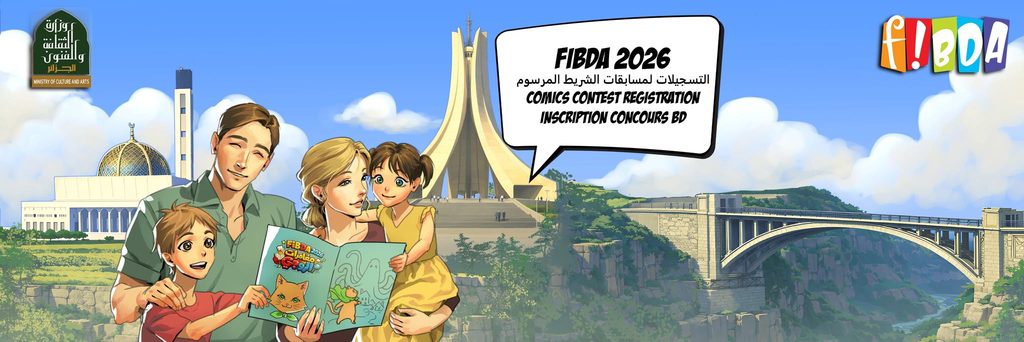
Even so, Gasmi is not without hope for where the African bridges might form. She points to FIBDA, the international comics festival held in Algiers, where a great many Sub-Saharan artists are invited each year. “That’s where most of the connections happen,” she says. “It’s really destined for authors from the continent, a good opportunity for people to gather and create things together.” Her instinct, more than anything, is for a wider network of African festivals and conventions, so that books might circulate between north and south directly, rather than only by way of Paris or Angoulême.
The Financial Reality
Return, for a moment, to that opening line. “Economic suicide” was not a throwaway joke. It was a diagnosis, and one she has lived.
The comic book market in Tunisia, by her account, has never fully shaken its reputation as something for children. “People never really took comic books seriously,” she says, “because for a long time, comic books were mainly for children.” Lab619 spent years pushing against that, publishing material meant for adults only to have parents pick it up for their own children anyway. Publishers, meanwhile, remain risk-averse. “Most publishers don’t want to take the risk, because it costs money to produce comic books and they’re not sure they’ll sell,” Gasmi says. “So, what we do usually is find a small publisher here, and then maybe a bigger publisher in France. We publish a lot in France because the market is much bigger.” It is the same road that leads to Angoulême, only travelled for a different reason.
The parallels to Nigeria’s own comics scene are hard to miss. We described a model built on the belief that the real money in comics comes less from sales than from the intellectual property itself and what it can eventually become, a company that, after a decade of building, secured animation and international distribution deals well beyond the page. Gasmi recognised the shape of it immediately, and laughed again when the comparison to her own “economic suicide” line came up. “Are comic authors able to live off only comics?” she asked. The honest answer, on both sides of the conversation, was rarely, and never in a straightforward way. Creators patch together income from gigs, side projects and whatever platforms will actually pay them on time, some going fully independent, others giving work away for free to generate the gigs that do pay. There is no single structure that works for everyone. Some in the space have stopped calling it an industry at all, preferring “community”, because there is no shared standard, just individuals figuring it out one workaround at a time.
Gasmi’s advice to anyone considering the same leap she made remains blunt because of the financial reality involved. She believes the decision can amount to financial suicide, but she would still encourage young creators to pursue it because, in her view, the passion behind the work can ultimately be more powerful than the money.
Stories Are Our Power
By the end of the conversation, what stayed with us was not only the difficulty but also the certainty underneath it.
We asked whether African comics are too preoccupied with proving their Africanness, and Gasmi pushed back on the framing entirely. “Are people too concerned with their own identities? I think not enough,” she said. “For centuries, we’ve been told stories about ourselves. It’s time that we get to know ourselves, by ourselves.” She went on to describe storytelling as a way of reclaiming power, saying, “It’s a way to get back our power, actually. Because stories are our power.”
It is the same conviction running under everything she told us: the dialect she insisted on writing in, the years spent researching a culture that was not hers by birth but became hers by devotion, and the hunt for a word that does not yet exist to describe a story that could not be told any other way. Whatever that new project turns out to be called, it is clear that Gasmi wants it to emerge from the culture that shaped it rather than sound as though it borrowed its identity from somewhere else.
TheACE thanks Abir Gasmi for her time and candour. Follow TheACE for updates on TheAfrica100, our upcoming curated collection of 100 notable African comics and animation works, publishing as an e-magazine in January 2027.
Written by Mujeeb Jummah and Nehemiah Osarodion
——————————————————–
——————————————————–
AI Use at TheACE
TheACE uses artificial intelligence tools to support research, drafting and analysis across Africa’s creative industries. All content is verified, edited and approved by our human editorial team to ensure accuracy, clarity and responsible storytelling. AI assists our work; it does not replace human judgment.